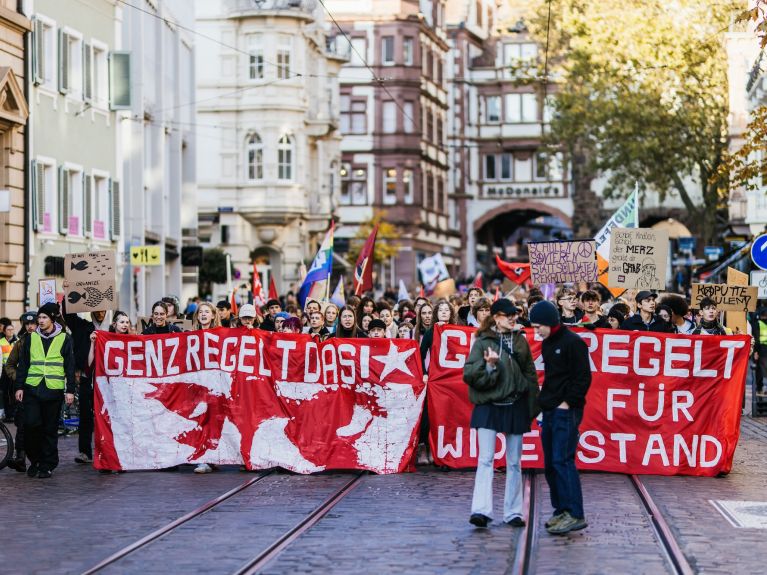
In the wake of youth protests: violence overshadows the concerns raised by young people
Following peaceful demonstrations by young people at the weekend, the mood turned violent in some cases. The rioting must not be allowed to divert attention from the legitimate concerns, however.
Berlin (dpa/d.de) – Around 120,000 people took to the streets across Germany for the nationwide “Gen Z regelt” (i.e. Gen Z takes charge) day of protests on 31 October. The initiative’s demands include more money for schools and psychotherapy, affordable living costs, a fairer distribution of burdens, a no to military conscription, and consistent climate action.
“We have demonstrated peacefully and want to follow up on this,” stated “Gen Z regelt” spokesperson Emma Hübner. Hübner stressed that it was very sad that there had been unrest afterwards. Following peaceful demonstrations, there had been rioting on Saturday evening, especially in Frankfurt am Main and Cologne. Germany’s Education Minister Karin Prien condemned the riots in the wake of youth protests but is determined to address important issues that were raised by the protestors. Talking to the German Press Agency, the minister said: “The fact that violent individuals essentially hijacked the demonstrations in some places has diverted attention from the issues that really matter to the young generation.” She said that she particularly regretted this, adding that the majority had taken to the streets peacefully. “I hear what they are saying and want to engage in a deeper conversation with them.”
Prien emphasised: “The concerns raised by the young people are justified and extremely relevant.” She said that reforms to pensions, nursing care and healthcare had to be implemented as a matter of priority so that enough money would be available for urgently needed investments in education and the future generation. “We must make education the permanent number one priority for society as a whole in our country.”


