It's Cancer's Turn To Be Afraid, Ghana
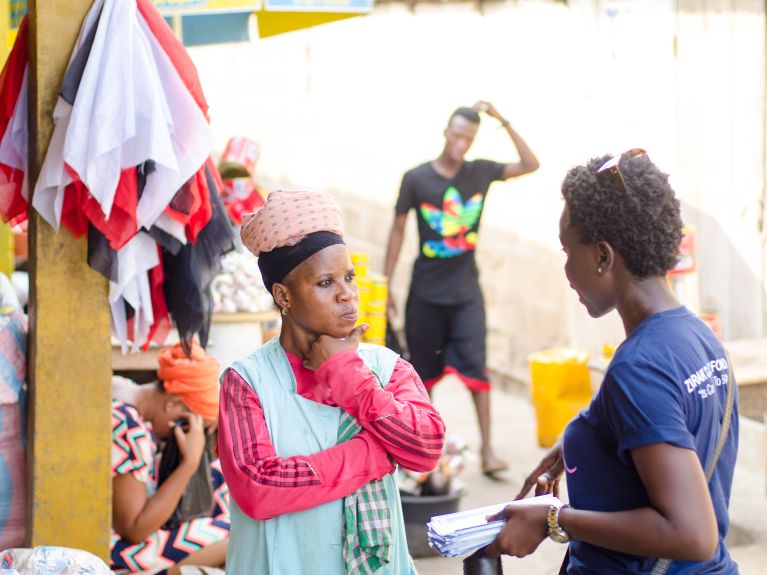
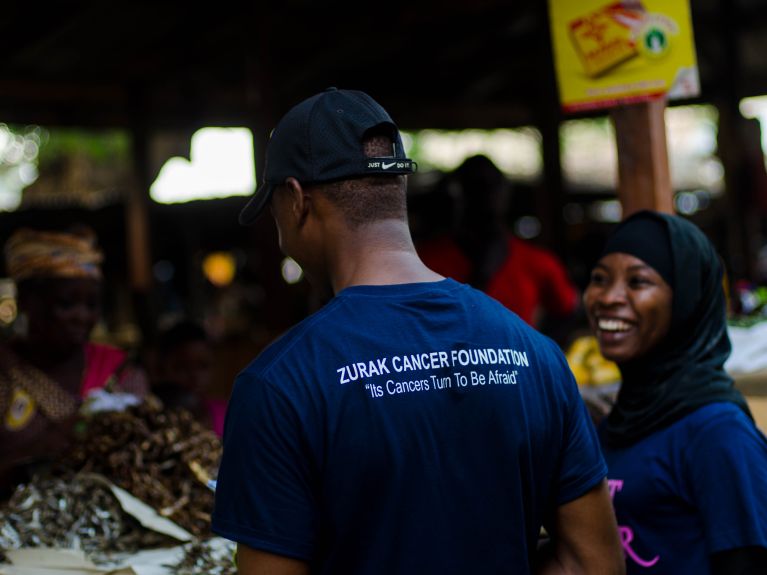
"It's Cancer's Turn To Be Afraid" is a cancer prevention module developed by Zurak Cancer Foundation.
Project name: It's Cancer's Turn To Be Afraid
Project location: Accra, Ghana
Website: http://zurakcancerfoundation.blogspot.com/
Facebook: https://www.facebook.com/zurakcancerfoundation
Instagram: https://www.instagram.com/zurakcancerfoundation/

Dieses YouTube-Video kann in einem neuen Tab abgespielt werden
YouTube öffnenInhalte Dritter
Wir verwenden YouTube, um Inhalte einzubetten, die möglicherweise Daten über deine Aktivitäten erfassen. Bitte überprüfe die Details und akzeptiere den Dienst, um diesen Inhalt anzuzeigen.
Einverständniserklärung öffnenProject description:
"It's Cancer's Turn To Be Afraid" is a cancer prevention module developed by Zurak Cancer Foundation to curb the prevalence rate of the disease in Ghana and the African continent. Cancer is increasingly recognized as a critical public health problem in Africa. While communicable diseases continue to burden African populations, it is becoming clear that noncommunicable diseases also require the attention of those whose goal it is to ensure the health of Africans. Increases in life expectancy, changes in diet and lifestyle, and lower burden of communicable diseases promise to increase the cancer burden in Africa over the coming years.
Zurak Cancer Foundation is a youth run non-governmental organization educating individuals about cancer, creating awareness, supporting cancer patients and advocating for cancer in Ghana. In Africa, the most prevalent types of cancer are related to infectious agents such as the hepatitis virus and human papillomavirus (HPV). It is part of our dream to create a sustainable solution to the rising problem affecting the continent. Over the past few years under the "It's Cancer's Turn To Be Afraid" Campaign, Zurak Cancer Foundation provides free community based screenings for hepatitis virus (liver cancer) and the human papillomavirus (cervical cancer) including breast cancer and prostate cancer.
As part of our endeavors, we have developed partnerships with organizations to scale up and also provide viable solution to the problems affecting our country. In Ghana, there has been a high prevalent rate of cervical cancer over the years and we decided to role out a program women in these various communities. We studied the life of an average market woman in these communities and our findings revealed that, women in these communities pay little attention to their health as the only time they report for healthcare is during pregnancy. We developed an initiative dubbed "Market Invasion" (a cervical cancer awareness project to reach out to market women). In Africa, the best place to find women is the market. With support from SOS International, Merck Entrepreneurial Development Space and Impact Hub Accra, we roled out a program to reach out 3,000 market women directly and which we believe we have been able to reach out another 1,500 women indirectly adding up to 4,500 women for the first phase of the project. We roled out a similar initiative at Madina reaching out to about 5,000 market women and we believe our impact were close to 9,000-10,000 women. We developed an after delivery survey to assess the progress of our initiative and we had almost 2,000 women screening for cervical cancer. The number fo screenings wasn't encouraging and from our assessment we realized most of the women could not leave their shops to go to the hospital for screening. So, we brought free screening service at various markets where we developed an army tent in a form of a mini clinic and we had lots of the market women screening for cervical cancer and other medical conditions. Moreover, we realized that most of the women didn't understand our endeavors so we decided to provide the education in local dialect in order to provide a better understanding of the disease due to the high illiteracy rate in the country. We are so excited about the impact and also the solutions we have been able to provide for our challenges since they were innovative and very effective.
Due to the partnership my organization has with Merck, we have been able to partner with University of Michigan to develop an initiative dubbed "Visualize Ghana". Visualize Ghana is going to be an initiative to use an education tool called Visualize to educate Ghanaina medical professionals such as nurses and midwives on how to perform visual inspection with acetic acid (VIA). VIA is a type of cervical cancer screening where an acetic acid is smeared on the surface of the cervix and changes on the cervix would reveal the presence of human papillomavirus which is the causative virus of cervical cancer. In Ghana, the most widely recognized type of cervical cancer screening is the Pap Smear Test which is expensive and very uncomfortable. Our studies shows that, most women are discouraged to take up the screening because of the following conditions (expensive and discomfort). The cost of Pap Smear Test is $35 whiles VIA is $0.50. You would realize that, there's a huge difference with respect to the cost of the various types of screenings. We developed this initiative to donate the Visualize tool to health training institutions to train upcoming medical professionals on VIA and also encourage VIA as the best alternative screening option for the African continent because of the cost. Moreover, VIA provides instant results as compared to the Pap Smear test and also after VIA, a cryotherapy could be performed for victims in order to freeze the cells for a longer period of time. We are looking forward to use the device to develop the interest of medical professionals as the best screening options since it's effective and it reduce cost. We believe this would encourage women to screen regularly for the disease when it comes to visual inspection with acetic acid (VIA).
Goal and purpose of the project:
1. Health systems will be strengthened to ensure sustained delivery of effective and comprehensive, people-centered cancer control programs across the life-course.
2. Tobacco consumption, overweight and obesity, unhealthy diet, alcohol intake, and levels of physical inactivity, as well as exposure to other known risk factors will be covered by education and awareness programs.
3. The cancer causing infections human papillomavirus (HPV) and hepatitis B virus (HBV) will be covered by vaccination programs.
4. Stigma associated with cancer will be reduced and damaging myths and misconceptions about the disease with be dispelled.
5. Population-based screening and early detection programs will be implemented, and levels of public and professional awareness about important cancer warning signs and symptoms will have improved.
6. Access to accurate cancer diagnosis, quality multi-modal treatment, rehabilitation, supportive and palliative care services, including the availability of affordable essential medicines and technologies, will have improved.
7. Effective pain control and distress management services will be available.
Motivation of the applicant / applicant team:
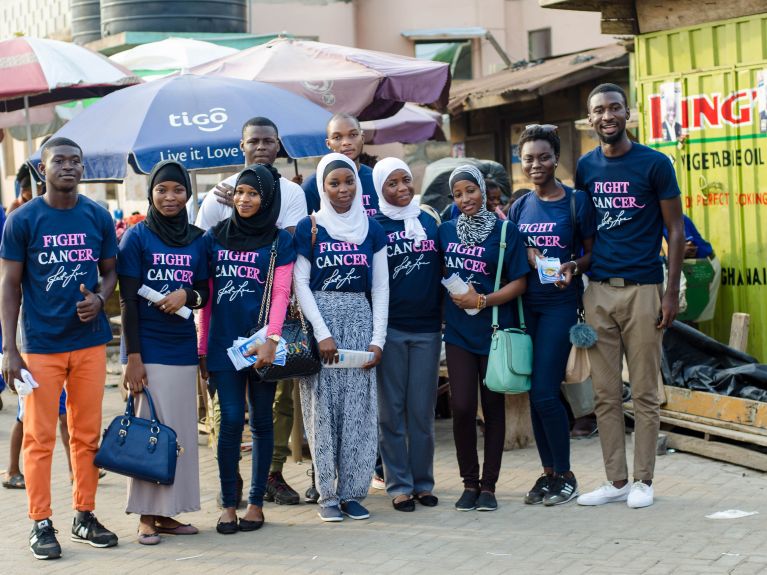
The future of healthcare plays a very delicate role in the development of Africa. The prospects of the continent rely heavily on the well being of its inhabitant. My vision for the future of healthcare in Africa is to raise awareness about cancer among communities, health professionals and policy makers by partnering with community leaders, health institutions and policy makers to develop a module to educate individuals about cancer. I believe this would provide the opportunity to individuals to know much about the disease just like HIV/AIDS, malaria and tuberculosis and it would encourage them to be aware and regularly screen for the various types of the disease and also promote an enabling environment for healthy living in our communities and urge governments to invest in healthy systems that support healthy lives. My organization recently partnered with SOS International and Impact Hub Accra to provide cervical cancer education to market women in local dialect. This initiative is targeted at creating an awareness about the disease and also encouraging the market women to screen early for the disease. Moreover, we are looking forward to integrate early detection and screening into health systems and invest in a skilled workforce to deliver early detection and we are doing this by partnering with health institutions in various communities to provide periodical screenings for the various types of cancers and most especially cancers related to the human papillomavirus and the hepatitis virus such as cervical cancer and liver cancer. An essential feature of my vision is to empower individuals with the right to health. In Africa, there several cases of misdiagnosis by health professionals and it is very necessary to educate individuals on their right to health to stand up for health injustice. We hope to foster communities and health systems that support the highest quality of life, empower individuals to maximize their quality of life and advocate for governments to enable access to palliative care. Finally, we would improve access to essential cancer medicines and technologies and we have started this by recently partnering with the Sweden Ghana Medical Center to strengthen health systems that deliver cancer prevention and care services. Sweden Ghana Medical Center in the best private oncology clinic in the West African sub region and we hope our partnership would provide access to low cost quality health care in order to reduce the financial toll of cancer on individuals and families.
Use of prize money:
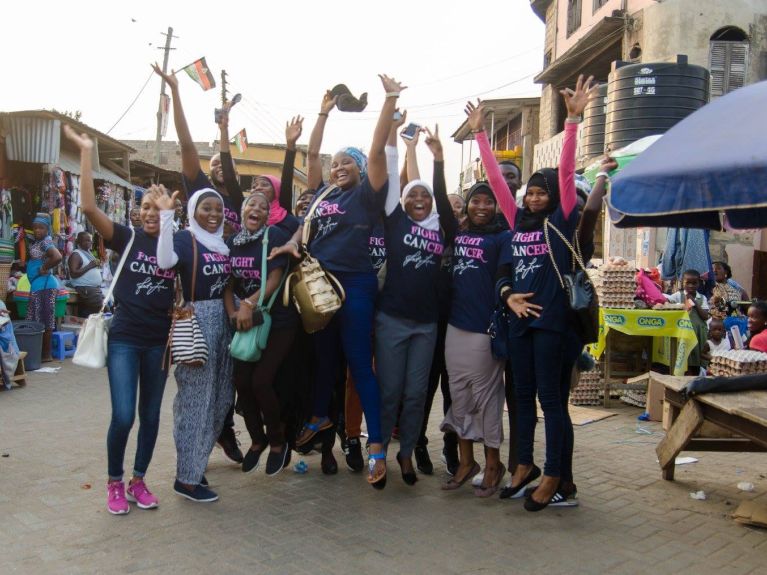
The prize money would be disseminate into three (3) phases of the project which is dubbed "ESS" Education (4,000 Euros), Screening (4,000 Euros) & Support (7,000 Euros).
Education: Most of the cancers detected in Ghana are likely to be in stage three (3) or stage four (4). This is solely due to lack of education and lack of awareness about the magnitude of the current and future cancer burden among policy makers, the general public, and international private or public health agencies. The prize money would be used to implement an education module to educate the public, professionals and policy makers on the prevalence rate of the disease and the need to foster healthy lifestyles to promote early detection. Early detection plays a very key role in cancer prevention and we are looking forward to use the prize money to implement our early detection policy to save lives.
Screening: We have been providing screenings for cancers related to infectious agents such as the hepatitis virus and the human papillomavirus. In Ghana, the most prevalent types of cancers are breast cancer and prostate cancer. Our endeavors covers the core prevalent types of cancers in the country and they are; breast cancer, cervical cancer, liver cancer and prostate cancer. We have been able to make significant gains in this particular endeavors through the "Community Based Screening" Initiative under the "It's Cancer's Turn To Be Afraid" Campaign. The prize money for this category would be used to purchase rapid screening kits to screening for the various types of cancer and also provide vaccination for cancers related to the infectious agents. There has been little or no information regarding the awareness programs of these infectious agents and they are transmitted just like HIV. This particular endeavor enable us to also advocate to the government to develop policies and strategies to come up with a solution to tackle the prevalent rate of the infectious agents.
Support: The prize money for this category would go into the "Visualize Project". One hundred (100) units of the Visualize device would be purchased and donated to medical institutions across the country and every student would be required to pay 25 cents to undertake the Visualize Training to enable the project generate funding internally to sustain the project and others arms of the campaign for a longer period.