“Music is a language without words that goes straight to the heart”
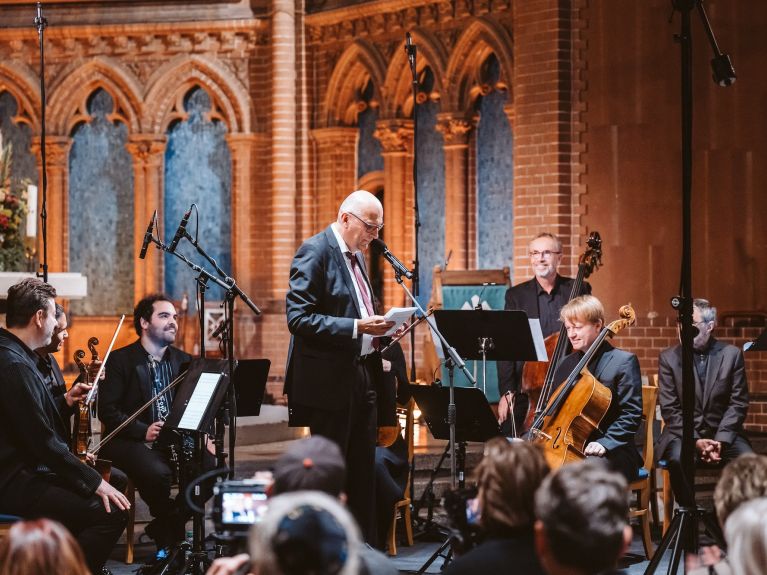
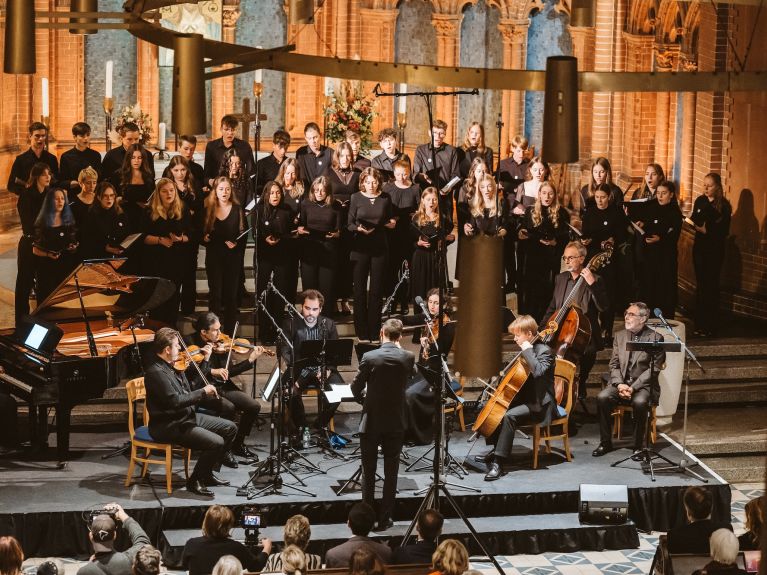
The Melodies of Life are pieces of music that were composed, played or sung by Jews between 1933 and 1945, and that are now enjoyed by a new audience.
 Interview: Anja Leuschner
 The pieces are melodies that gave people strength in hard times, brought joy to dark days, but that also bear witness to death and persecution: Jewish songs and melodies that were composed, played or sung between 1933 and 1945. More than 80 years later, the Melodies of Life (Lebensmelodien) project is bringing these pieces of music to the stages of concert halls, schools, synagogues, churches and mosques. The project was initiated by the Jewish musician Nur Ben Shalom and Michael Raddatz, the superintendent of the protestant church district Tempelhof-Schöneberg, who worked together to organise a Good Friday service back in 2019, when the holiday happened to coincide with the anniversary of the start of the Warsaw Ghetto Uprising. It all began with an extraordinary testimony.
Mr Ben Shalom, Mr Raddatz, can you please tell us about this testimony?
Nur Ben Shalom: There is this letter that my great-aunt Salomea Ochs Luft wrote from the Tarnopol Ghetto in what is now part of Ukraine, not long before she was murdered by the National Socialists. In her letter, she describes her life at the time and how, as a musician, she was gradually stripped of her dignity. The letter ends with the words “Nehmet einst Rache” (“Take revenge one day”), and the word Rache (revenge) is written in really big letters.
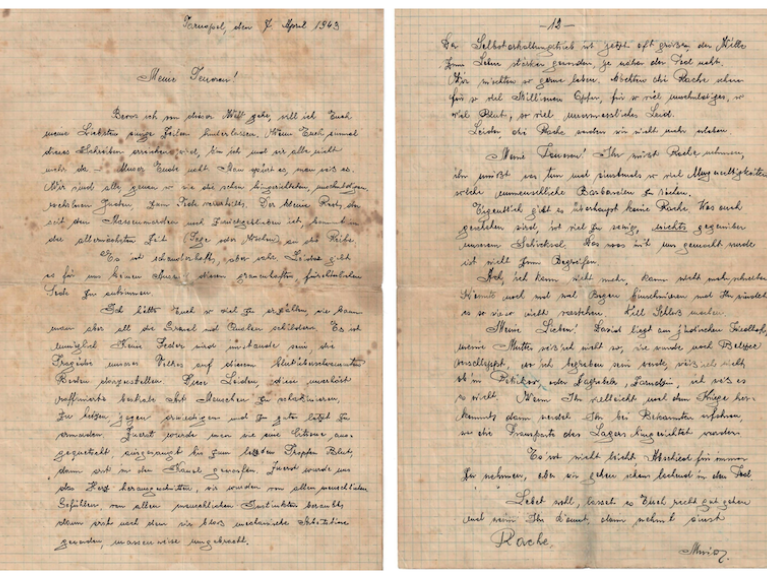
Michael Raddatz: It was obvious to me that this letter should be at the heart of the service. After all, the texts in the Bible that relate to Good Friday are also about an innocent human being that is degraded, humiliated and eventually murdered. So we organised a church service about revenge. We broke a taboo by doing so, and did this with around a million people listening to the live broadcast on Deutschlandfunk. We put together the Melodies of Life as an act of revenge but not quite in the way that Salomea envisioned at the time. The melodies tell the stories of the people who used to sing them or who composed them, and who are remembered through them. In all of this there is still some of the spirit of the dedicated player and teacher Salomea.
Nur Ben Shalom: Some of the pieces were performed by friends of those who were killed, and in some cases there is still documentation. We bring these tunes to the stage and we remember the people who wrote them and their stories. This is our response to Salomea’s call for revenge, but we are transforming this revenge at the same time. We are using their music to bring back those people’s voices. The pieces are not always easy to listen to, many of them are tragic, but music also gave people hope in those days. Now there’s a Jewish musician and a Christian minister who are helping to preserve this part of Jewish culture and to make it accessible of people across all denominations and backgrounds.
Mr Ben Shalom, your grandfather was the only one in your family to survive the Holocaust. You had been committed to honouring your aunt’s request for many years. Mr Raddatz, what made you want to continue this project beyond the Good Friday service?
Michael Raddatz: We discovered a new approach to remembrance culture. It is an emotional approach that uses music and the story of a human being. This will be particularly important when there are no more Holocaust survivors left. This discovery has changed a lot in my life and has opened up new perspectives for me. I am currently in Canada for a period of study, and the First Nations here are speaking of a cultural genocide they have suffered because of the so-called residential schools. Children were no longer allowed to speak their native language, a different and unfamiliar culture was forced on them, and they were taken away from their families. Here, too, I can see how people are playing their ancestors’ music again and how they are bringing their culture back to life. It is a form of revenge but one that leads to a culture of reconciliation. The Melodies of Life are also linked to a strong message of reconciliation and peace. Some people here are telling me about how they are looking at Germany’s culture of remembrance and how they have faith that words will be matched with action. That is a very touching aspect of the Melodies of Life.
Is music a good medium for remembrance culture?
Nur Ben Shalom: Music is a language without words that goes straight to the heart. Everybody can understand it. It is a form of magic and as an artist I can use it to touch those who hear it. In addition to the concerts, we are very committed to our education projects. We visit schools and explore the pieces together with the students. Sometimes they arrange the pieces themselves and play them on stage. Sometimes they create texts or images. What is always the case is that music brings people together.
Dieses YouTube-Video kann in einem neuen Tab abgespielt werden
YouTube öffnenThird party content
We use YouTube to embed content that may collect data about your activity. Please review the details and accept the service to see this content.
Open consent formWhat is the role of religion in your project?
Nur Ben Shalom: When you talk about the project’s origins, it started in a church. And the church continues to provide substantial support for the project to this day. However, it really is the result of two people working together. We are from different religious denominations, and the same is true of the people who attend our concerts and take part in our education projects. We want to come together as human beings – regardless of whether we are Jews, Christians, Muslims, atheists or from other denominations – and to build bridges.