Protecting elephants and farmers’ crops
Crops are destroyed by wildlife, causing families to lose their livelihoods. In Mozambique, researchers from Germany are exploring ways to better protect both humans and animals.
 Miriam Hoffmeyer
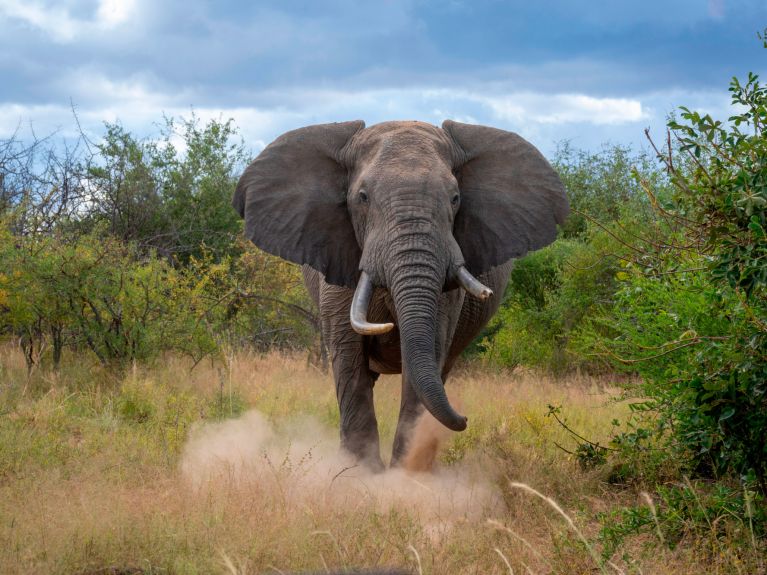
The elephants’ footprints have left deep craters in the field. Broken stalks of corn lie scattered across the sandy earth; nothing but trampled remains of the ripe cobs can still be seen. In a matter of hours, elephants have destroyed a family’s annual crop. In the outer reaches of the national parks in southern Africa, this is something that keeps happening, especially during the dry season: wildlife comes close to human settlements in search of food and water, elephants trample fields and predators kill livestock. Sometimes humans also end up getting injured.
In the long term, successful conservation is only possible if it takes into account the needs and livelihoods of the local inhabitants.
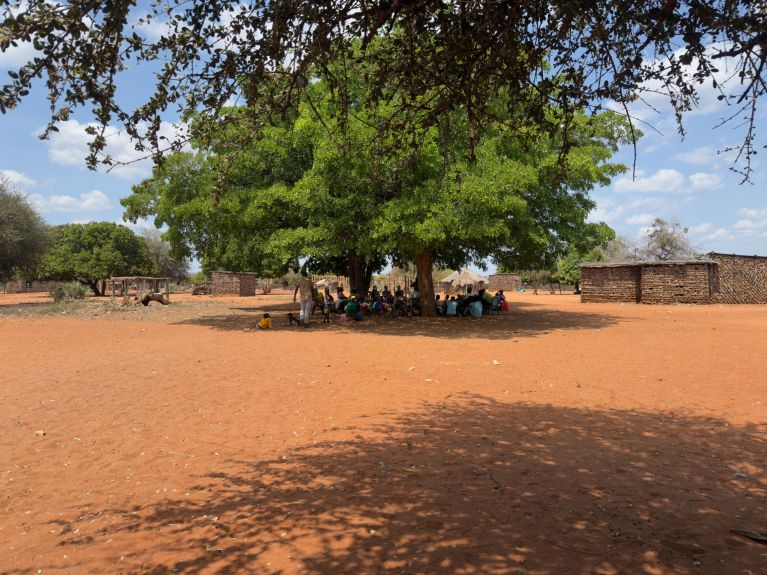
How can wildlife be protected without putting people’s livelihoods at risk? Since April 2026, this question has been addressed by PEACE – Participatory Engagement for Adaptation and Conservation Efforts, an international research project that also involves Marburg University. It is focusing on a region in southwestern Mozambique that is home to both humans and wildlife and where the goal is to reconcile biodiversity protection with the interests of the local population.
A project involving research and a village community
Economist Björn Vollan and conservation ecologist Nina Farwig from Marburg University are running the project. Universities and research institutions from the following countries, as well as a non-governmental organisation, are taking part:
- Netherlands
- Austria
- Sweden
- South Africa
- The South African NGO “Peace Parks Foundation”
“In the long term, successful conservation is only possible if it takes into account the needs and livelihoods of the local inhabitants,” says Björn Vollan. “So we want to explore how scientific findings, local experience and involving the local population can help develop fairer and viable solutions.”
A corridor for wildlife, a home for humans
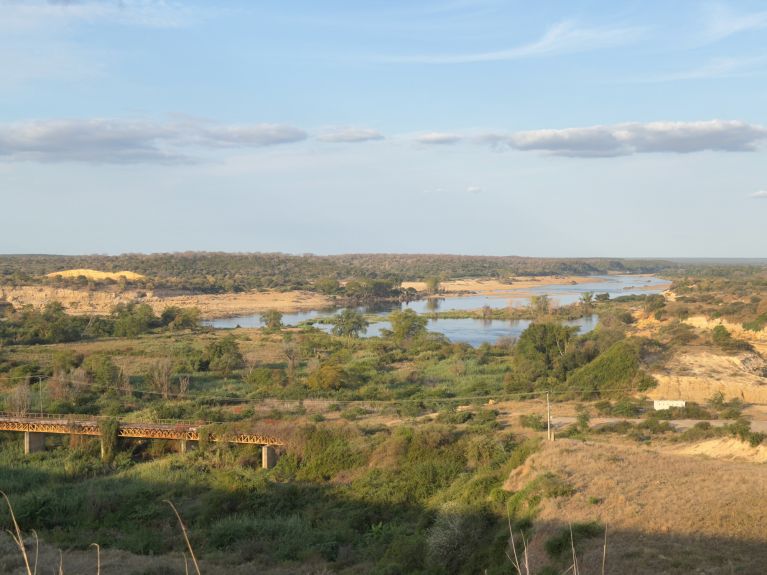
Lions, elephants, hippos, crocodiles and buffalo live in the area between the Limpopo and Banhine national parks in Mozambique. However, the region is also home to around 2,200 people, most of whom depend on small-scale agriculture for their livelihoods. An important wildlife corridor - the Great Limpopo Transfrontier Park - runs through the area. A cross-border conservation area established in 2002, it connects several national parks in South Africa, Mozambique and Zimbabwe. Such migratory routes play an important role in species conservation. “Even more than 30 years after the civil war, wildlife populations still haven’t recovered in Mozambique,” says Nina Farwig. She explains that rhinos, big cats and wild dogs are also under pressure in southern Africa, making it all the more important to preserve and interconnect their habitats.
Monitoring with camera traps and artificial intelligence
“What’s special about PEACE is the transdisciplinary cooperation,” says Farwig. Modern wildlife monitoring is a core part of the three-year project that is being provided with 1.8 million euros in funding from the European Biodiversity Partnership Biodiversa+.
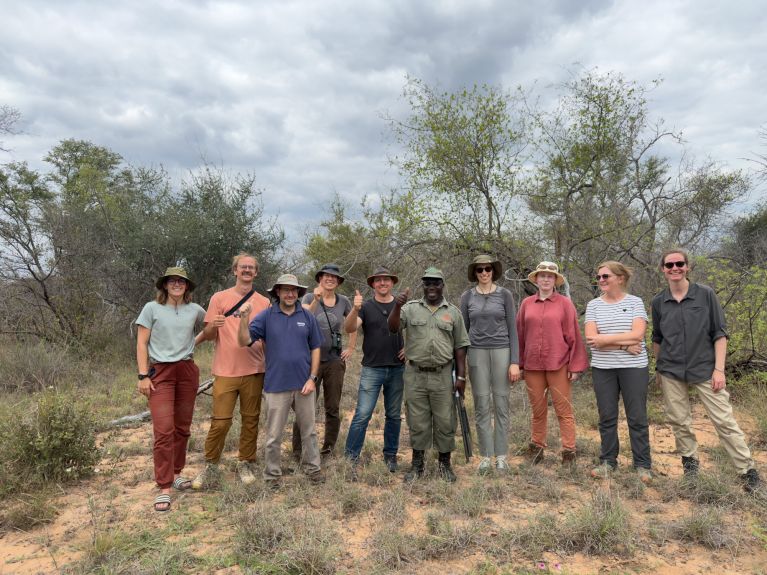
Farwig, Vollan and researchers from the other participating university went to Mozambique for ten days in September 2026 to get to know the project area and hold talks with government agencies, NGOs and local communities. From the beginning of 2027, camera traps and acoustic recorders are to be used to determine which species in which numbers are to be found permanently or temporarily in the core part of the wildlife corridor. This ecological data, which will be continuously analysed with the aid of artificial intelligence, will also inform discussions at the planned citizens’ forums.
Helping the local population with electric fences
Land-use planning for the wildlife corridor between Limpopo and Banhine is already at an advanced stage. There are no plans to build continuous fences. Vollan explains that electric fences around collectively farmed fields are one example of how the local population might be helped. “However, given the limited financial resources, the question is where such protective measures are most urgently needed and how their maintenance can be organised.” One possible solution would be to give the communities a share of the revenues generated by the national parks, though such revenues have been minimal in Mozambique to date. Currently, the researchers are working on a stakeholder analysis aimed at better understanding the interests of all actors and the decision-making structures. One frequent problem of participatory processes is that the authorities do not put the recommendations made by citizens’ forums into practice, says Vollan. “That’s why we clarify in advance which scope there actually is for decision-making and where the local population can exert any real influence.”


