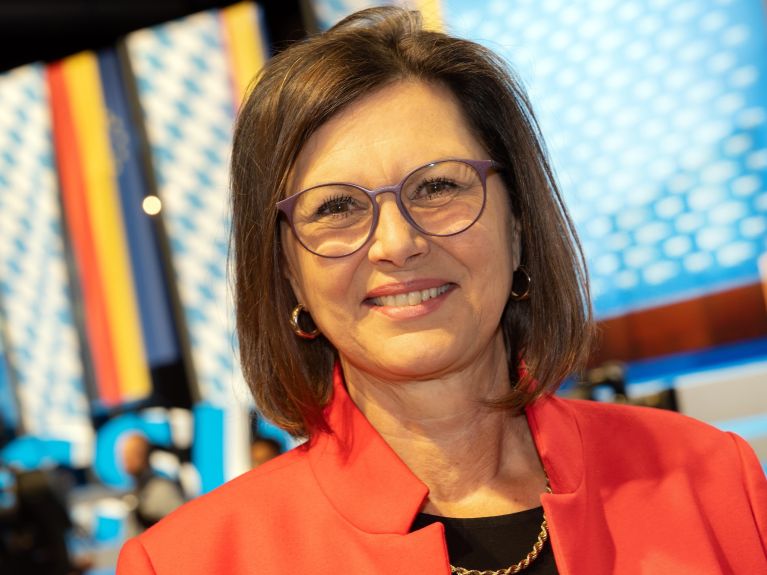
Who is Ilse Aigner, likely to be the next Federal President of Germany?
The election of the President of the Bavarian Landtag to Germany’s highest office in late January 2027 is considered a foregone conclusion. Who is Ilse Aigner, and what does she plan to do?
 Wolf Zinn
Ilse Aigner is on the verge of reaching the pinnacle of her career – but she never actually planned it this way. On 30 January 2027 Aigner, who is currently the President of the Bavarian Landtag, is expected to be voted in as Germany’s first female Federal President. At the same time, the 61-year-old would also be the first head of state to emerge from the Bavarian CSU party. Her election is considered a foregone conclusion, as the governing coalition of the Union and the SPD hold a majority in the Bundesversammlung (see Info Box). They also have the backing of the Greens.
As a politician, Ilse Aigner never came across as someone who wanted to make to the top at any price. She’s got a reputation for being approachable, pragmatic and unpretentious. Aigner says she cares more about acting as a mediator than fighting for power. “I simply don’t have that sense of power,” she once said. That’s a noteworthy attitude in the CSU party, which has seen some bitter political rivalries played out from time to time – such as in the contest to succeed the former Minister President of Bavaria Horst Seehofer. Aigner was considered the most promising candidate for the office, but stepped aside for Markus Söder.
Dieses YouTube-Video kann in einem neuen Tab abgespielt werden
YouTube öffnenThird party content
We use YouTube to embed content that may collect data about your activity. Please review the details and accept the service to see this content.
Open consent formFrom the workbench to the corridors of power
Aigner’s career has been an unconventional one. The youngest of four sisters, she grew up in Feldkirchen-Westerham in Upper Bavaria. Her parents run an electrical business. After completing her secondary education, she trained as a radio and TV technician, going on to become a state-recognised electrical technician and working in helicopter development. Aigner hasn’t followed a traditional academic pathway: her roots are in the skilled crafts and trades. She sees her life story as an example of the potential for social mobility in Germany.
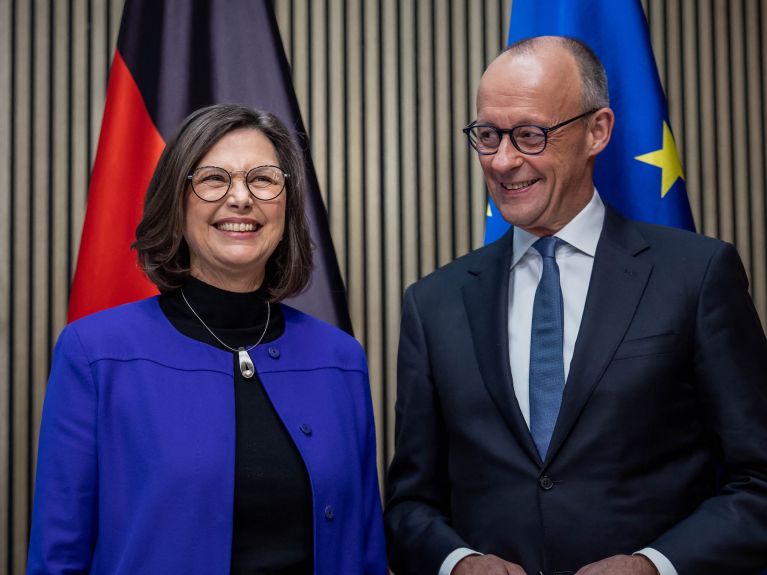
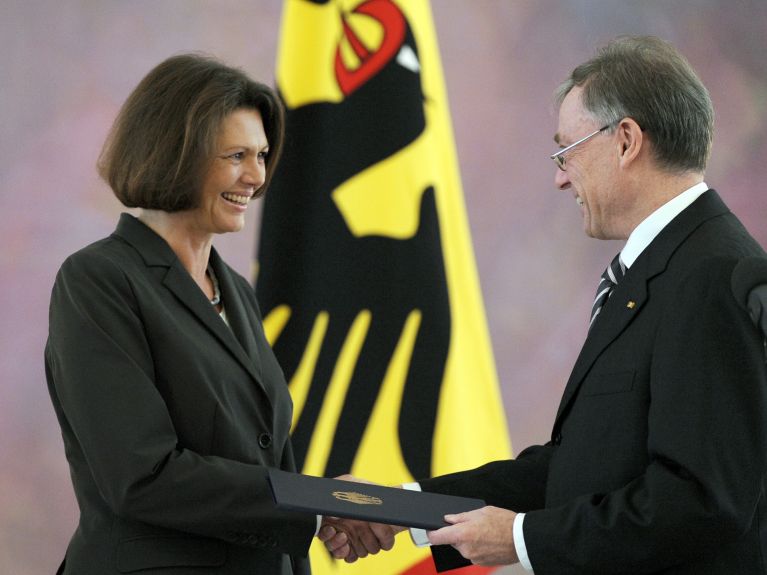
Politics has never been at the forefront for Aigner. She joined the CSU in 1985 and became a local councillor in 1994. In 1998, she was elected to the Bundestag. Under Federal Chancellor Angela Merkel she rose to become Federal Minister for Consumer Protection, Food and Agriculture in 2008. In 2013, Seehofer recalled her to Munich, where she became the Bavarian Minister for Economic Affairs and Deputy Minister President. She has led the Bavarian Landtag since 2018, and has held the reins of the powerful Upper Bavarian regional association of the CSU since 2011.
Power, but no power plays
As President of the Bavarian Landtag, Aigner has won respect across party lines. She can listen, mediate and build bridges – but at the same time her red lines are clear, such as towards the AfD, elements of which belong to the political far-right. Her tolerance runs out when fundamental democratic values come under attack.
Aigner’s ability to take so many things in her stride could be due to two life-changing experiences. As a young woman, she suffered from serious pain until doctors discovered a tumour in her spinal cord. She could have been paralysed, but the surgery was successful. Years later, she suffered from thyroid cancer, but once again, everything turned out well. These two diseases have changed the way she looks at life. Health, family and friendships: that’s what really matters, she says.
Aigner doesn’t say much about her private life. She has no partner, but she certainly does not live alone, sharing a home with members of several generations of her family in the town where she grew up. She has stayed true to her roots in Upper Bavaria, despite decades of living in Berlin and Munich. The people who know her there describe a woman who never puts herself above others.
Aigner is committed to strengthening cohesion in Germany, while the same time taking a decisive stance against extremist and populist forces. Whether or not she maintains her ability to connect with people when she takes on the country’s highest office remains to be seen. Nevertheless, her promise remains the same: “I don’t want to stand above the people. I am one of them,” she said.
(with the dpa)
The Federal President is the highest office in the German state. Unlike the Federal Chancellor, the head of state is not the head of the government. Above all, the Federal President’s role is a representative one, working across party lines. They represent Germany at home and abroad, sign laws, appoint the Federal Chancellor and ministers, and can take important decisions during political crises. Under certain circumstances, the Federal President can even dissolve the Bundestag.
The Federal President is not directly elected by the people, but by the Bundesversammlung (Federal Convention). The Bundesversammlung consists of the 630 members of the Bundestag along with representatives of the federal states appointed by the state parliaments. It can also include leading figures from public life.
Votes are cast in secrecy. For the first two rounds of voting only an absolute majority is required from the 1,260 members – in other words, at least 631 votes. The third round of voting requires only a majority of all votes cast. The Federal President is appointed to a five-year term of office and can be re-elected once more after that. The next Bundesversammlung will convene on 30 January 2027.


