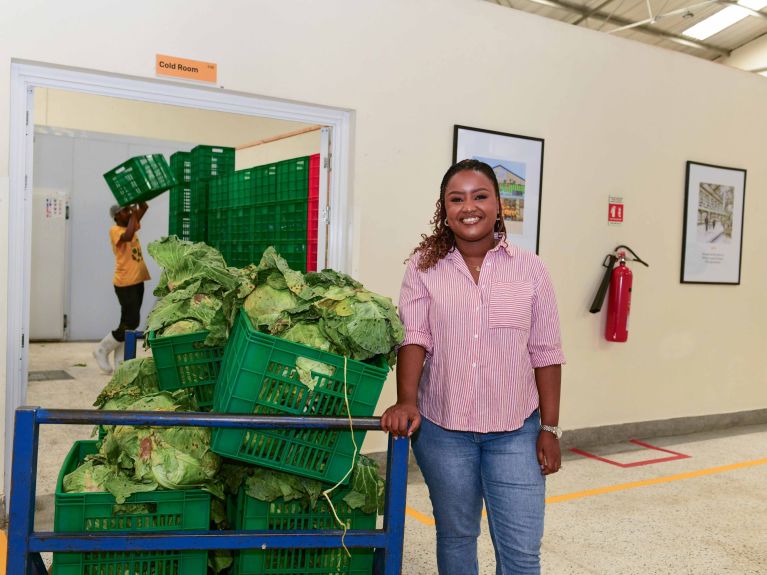
Award-winning idea dishes up welcome boost to the Kenyan economy
Wawira Njiru has turned school meals into economic infrastructure with her Food4Education programme. She is to be awarded the German Africa Prize 2026 for her achievements.
 Clara Krug
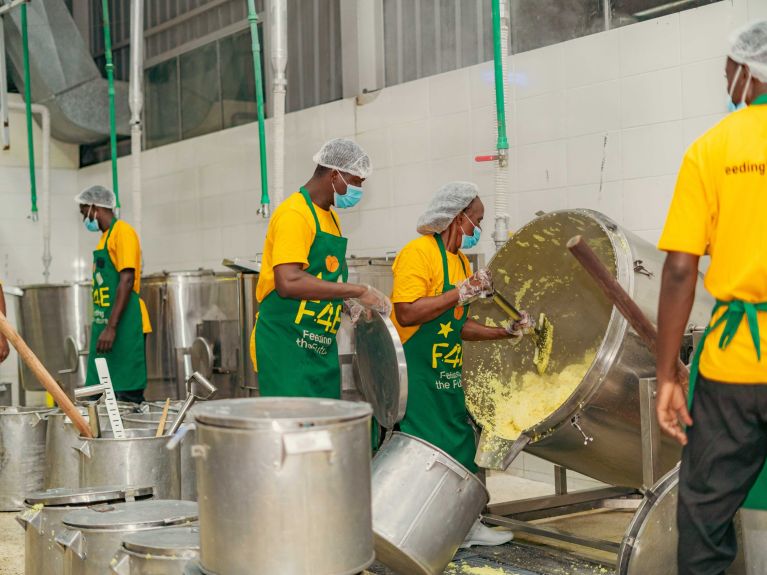
 It all began with 25 school meals that Wawira Njiru would prepare for children in Kenya. The nutritionist and social entrepreneur then used this as a springboard to develop a nationwide system that now serves up meals to more than 660,000 children at over 1,900 schools throughout Kenya. Called Food4Education, her social enterprise prepares the school meals in various kitchens around the country, including a solar- and steam-powered kitchen in Nairobi. For Njiru, however, success isn’t just a question of how many plates of food are dished up. Her model provides smallholder farmers with access to reliable buyers for their produce and gives women and young people the chance to enter into formal employment. She is now to be awarded the German Africa Prize 2026 for her idea.
For too long, school feeding was treated as charity. We have proven it is economic infrastructure.
School meals as an economic factor
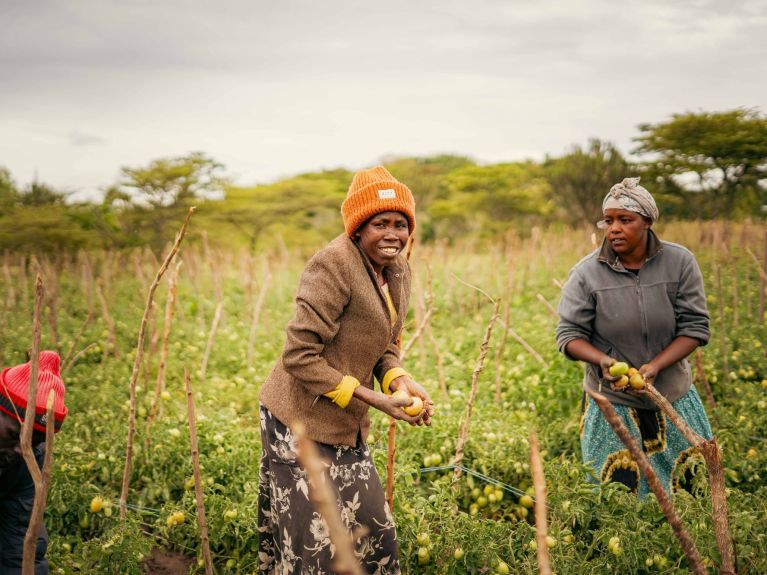
Since it was founded, Food4Education has served up more than 200 million meals. It now plans to embark on the next step: its goal is to provide school meals to one million children each day by 2027. For 35-year-old Wawira Njiru, it’s not just about charity. She thinks in terms of cycles: families pay contributions and the state provides additional funding, with private donations then plugging the gaps. Around 80 percent of the food used in the meals is supplied by local smallholder farmers. They get access to reliable buyers for their produce, while the children get a nourishing meal.
“For too long, school feeding was treated as charity. We have proven it is economic infrastructure,” says Njiru. Her model combines food security with economic participation - an approach that the German Africa Prize jury saw as being an African response to a global challenge.
Digital planning to reduce waste
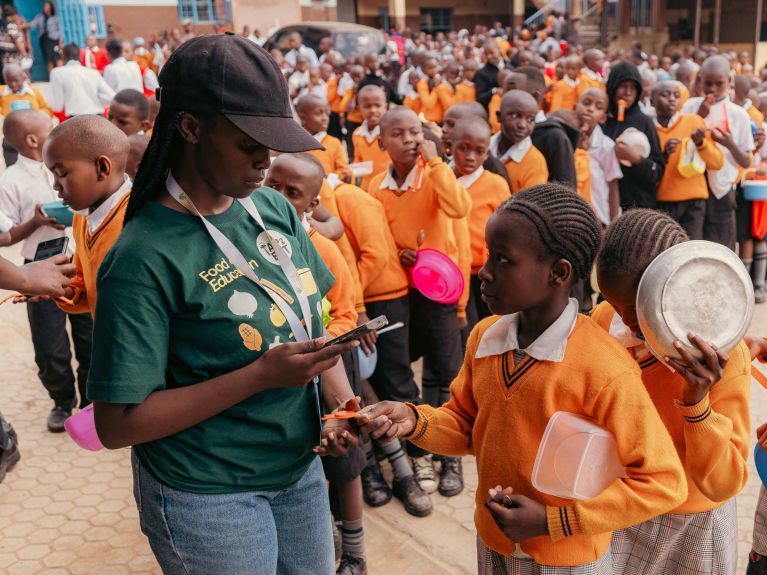
Digital planning is also an integral element of the scheme. Families use an online platform to pay their contribution to the school meals, making a contactless payment with a wristband or card. The platform also helps to precisely control the procurement, preparation and distribution processes. This enables Food4Education to provide a meal for around 30 cents, while keeping food waste at below two percent.
The organisation now has more than 6,000 employees, most of them women and young people. For many of them, this is their first formal employment - working as kitchen managers, food safety scientists, logistics and supply chain specialists or software engineers.
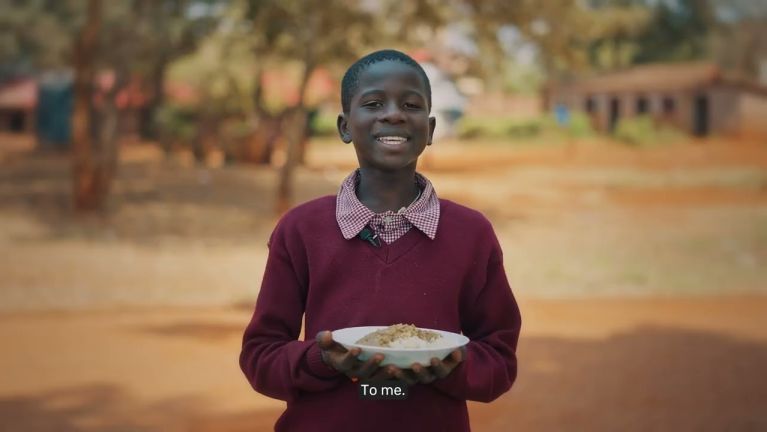
Dieses YouTube-Video kann in einem neuen Tab abgespielt werden
YouTube öffnenThird party content
We use YouTube to embed content that may collect data about your activity. Please review the details and accept the service to see this content.
Open consent form“African governments are no longer asking us how many children we can feed,” says Njiru. “They are asking how many jobs we can create, how many farmers we can connect to markets and how much of their own budget is reinvested in local communities.”
With this mindset, Food4Education has set its sights beyond Kenya. The organisation is helping the government in Zambia to strengthen a nationwide and state-run school feeding programme. It is passing on its experience, technologies and expertise - while sticking with its tried-and-tested approach of designing solutions around local realities.
Claus Stäcker, president of the jury of the German Africa Prize and director of Programmes for Africa at Deutsche Welle, sees this as Njiru’s great achievement: “With Food4Education, she has created a system that reaches children, involves families and strengthens local economic cycles.”
On 4 November 2026, Germany’s Federal Minister for Economic Cooperation and Development Reem Alabali Radovan will present Wawira Njiru with the prize in Berlin. This will pay tribute to an idea that began in a kitchen - but is now having a much wider impact.


