Why headscarves have such a polarising effect
For some it symbolises oppression, while for others it is an expression of their faith. We explore the most important questions and answers in the headscarf debate in Germany.
Büsra Sayed describes herself as being all about the “uncomfortable topics”: a video posted by the content creator (known by her online pseudonym Busra Caramella) has provoked some controversial reactions on deutschland.de’s social media channels. The subject of the reel is freedom. Sayed, a former Miss Germany finalist, is also a businesswoman who sells fashionable hijabs. A practising Muslim, she engages with the headscarf on a number of levels and always wears one when she appears in public. In her social media sketch, she is seen encountering a woman in the park who is dressed in summery clothes - in actual fact she plays the woman herself (in disguise). It’s a role play that her 169,000 Instagram followers will already be familiar with. In the form of a dialogue, the viewer then gets to hear (or read) the thoughts and assumptions each of the women has about the other.
The 29-second video has clearly had a very polarising effect. While some users have praised the reel, saying it helps promote understanding and openness, others have criticised this viewpoint. They point to countries like Iran and Afghanistan, and indeed to Muslim communities in Europe, in which women are not free to choose which clothes to wear. As a result of such experiences, many people primarily associate the headscarf not with a religious symbol but with coercion and oppression.
The headscarf is far more than just an item of clothing. It raises questions about freedom of religion, self-determination, cultural identity, equality and women’s rights.
Why do people’s opinions of the headscarf differ so much?
The headscarf signifies different things to different people. For some it’s all about the importance of their faith and their freedom to express this. Others see it as symbolising an obsolete view of gender roles or as an expression of social coercion.
Opinions can also vary significantly among women’s rights activists. Iranian journalist and activist Masih Alinejad criticises the headscarf, calling it a symbol of state control over women. Other feminists, including Muslim authors such as Kübra Gümüşay, stress that equality also means being free to decide on one’s clothing and degree of religious visibility oneself.
What role do the experiences of women in strict Islamic countries or Muslim communities in Europe play in this debate?
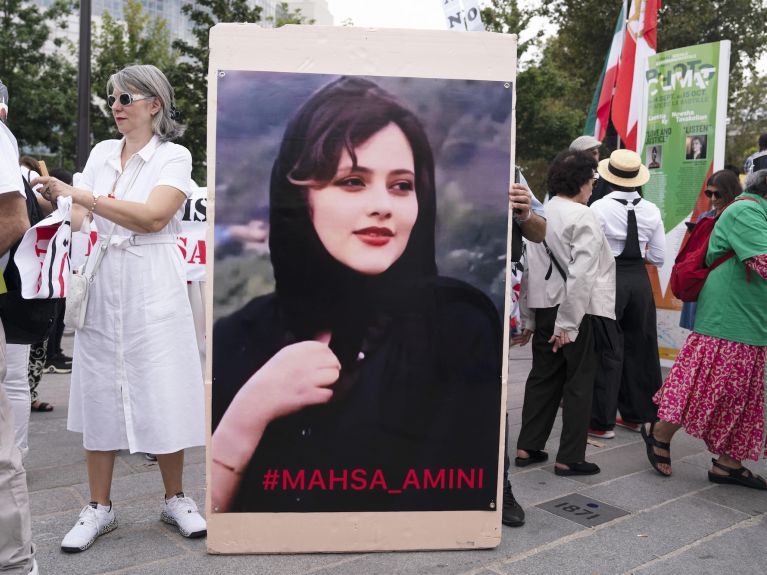
Some people point to strict Muslim communities in Europe - including in Germany - in which women’s rights are ignored. Others recall the atrocities committed against women in countries like Iran, where women and in many cases even young girls are not free to choose what to wear. The protests in Iran following the death of the Kurdish woman Jina Mahsa Amini in 2022 have particularly shaped the international debate. Amini had been arrested by Iran’s morality police for allegedly wearing her headscarf improperly and subsequently died while in custody.
The incident sparked serious protests against the Iranian regime, which were brutally quashed, and reignited the debate about headscarves with a new urgency. Many people therefore associate the headscarf with the struggle for freedom and with women’s rights - in their view, compulsory headscarf wearing is therefore incompatible with European values.
What role does the headscarf play in German daily life?
Germany is home to around 5.5 million Muslims (six to seven percent of the population. The freedom of religion that is enshrined in the country’s Basic Law protects people’s right to openly practise their faith. For many Muslim women, the headscarf is an expression of their faith, their identity or their membership of a community. Others take a conscious decision not to wear one, however. Yet others are not free to make their own choice in the way that the Basic Law seeks to guarantee. And this is where the criticism arises.
Why are headscarves discussed time and again in schools and government agencies?
In Germany, there have been discussions for years about whether and in which areas state employees should be allowed to wear religious symbols. At the heart of the debate is the question of how freedom of religion can be reconciled with the ideological neutrality of state institutions. The debate attracted particular attention when female teachers in several of Germany’s states were banned from wearing headscarves.
Can a reel even do justice to such a controversial subject?
A short post on social media cannot take all aspects of the headscarf debate into account. Which is why Busra Caramella’s reel takes a rather different approach: by spotlighting personal prejudices and assumptions, it encourages people to think about the issue and share their ideas and thoughts.
It is clear from the discussion in the comments that the debate goes well beyond personal experiences. It raises questions about identity, religious freedom, self-determination, equality and women’s rights and will presumably continue to be the subject of controversial debate in the future. The fact that this is possible is also a reflection of the freedom enjoyed in Germany.


