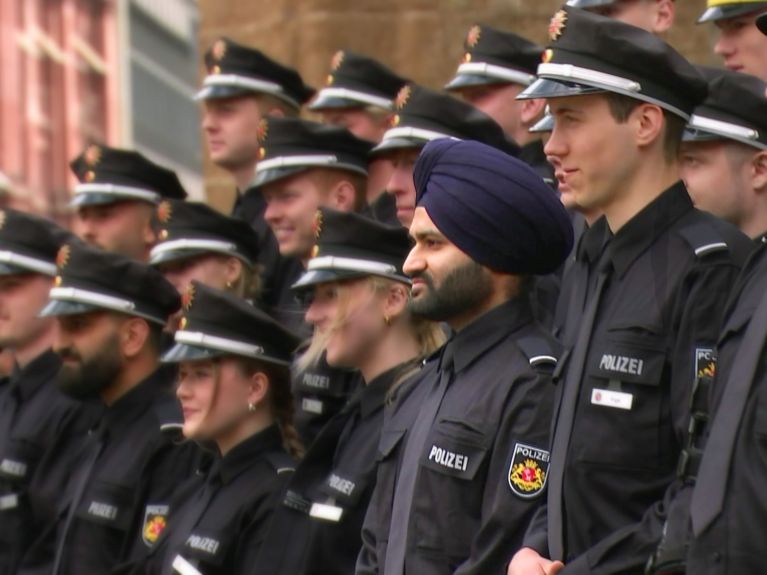
A police officer wearing a turban - allowed?
Jaspinder Singh wants to wear his turban while on duty - and has met with opposition. What is more important: religious freedom or the state’s equidistance to all faiths?
What is the issue at stake?
Jaspinder Singh is doing a training programme with the Bremen policeforce. This alternates a bachelor’s degree course with periods of practical instruction. Once he completes his training successfully, he will be a police inspector. “This has always been my dream job,” Singh told Radio Bremen’s “buten un binnen” programme when he was sworn in in May 2025. Singh is a Sikh and wants to be allowed to wear the traditional dastar - a turban - at work. However, the Bremen police force informed him that he would not be permitted to do so when working outside the office in situations involving contact with the general public
This has always been my dream job.
What reasons did the Bremen police force give to justify its decision?
It argued that police, as representatives of the state, needed to take a neutral ideological stance. At the same time, it stressed that it attached great importance to freedom of religion. When working at the office, Singh would be allowed to wear the dastar.
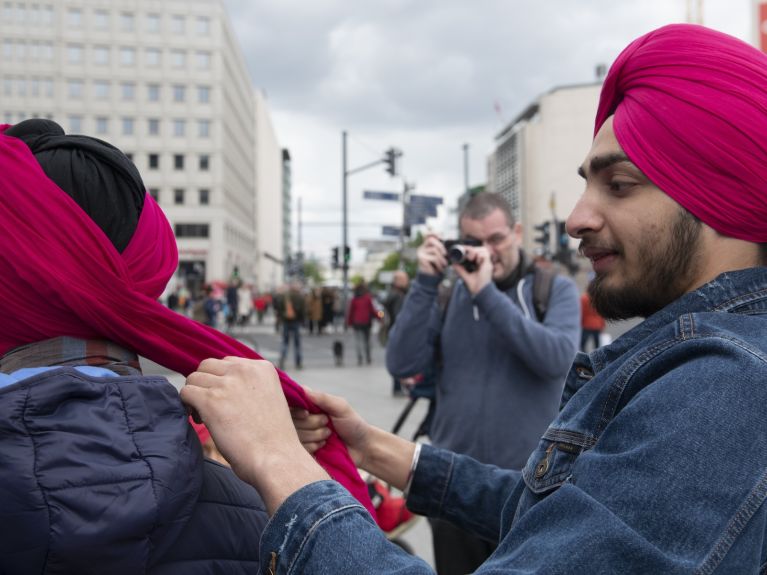
Was that enough for him?
No. He says that the dastar represents values such as sovereignty, dignity and the duty to stand up for justice. For him, removing the turban means violating a central religious obligation and an essential part of his identity. Believing that this would restrict his freedom of religion and his freedom to pursue the occupation of his choice, he took the matter to an administrative court.
What was the court’s verdict?
It ruled in Singh’s favour. Its verdict was that there was currently no legal basis for the ban in Bremen. Until such time as the state of Bremen creates such a basis, Singh is therefore allowed to wear his turban.
What about other religious head coverings in the police force - for example the headscarf?
The federal state in which the police force in question is based is responsible for such matters. The rules vary from state to state. In some, it is not permissible as a matter of principle for police officers to wear a headscarf, while in others there is scope for individual solutions on a case-by-case basis. In case of doubt, a court will decide.
According to the Sikh Verband Deutschland (Sikh Association Germany), around 30,000 adherents of this religion live in Germany - most in major cities such as Frankfurt am Main, Cologne or Hamburg. A number of gurdwaras - places where Sikhs gather to worship - are also to be found in these cities.


