“An attack on our society”
Berlin has been shaken by what is believed to have been an Islamist terrorist attack. The key questions and answers about the attack, the investigation and the political response.
 Ina Brzoska
 Christopher Street Day (CSD) in Berlin ended with what is believed to have been a terrorist attack. Following the closing rally, a van ploughed into a crowd. One woman was killed and 29 people were injured. According to investigators, the suspected attacker then went on to assault several other people with a bladed weapon. The attack has caused shock across Germany. Chancellor Friedrich Merz described it as “an attack on our society”. The key questions and answers on the current situation.
What is known about the investigation so far?
Investigators currently believe the attack was an act of Islamist terrorism. The suspected attacker, a 21-year-old German from Berlin, was already known to the security authorities and had a previous conviction for preparing a serious act of violence endangering the state. He initially fled the scene before being tracked down by police in Berlin-Spandau on Sunday evening. He was shot dead by a special police unit (SEK) after allegedly advancing on officers with a bladed weapon. The investigation is ongoing. Investigators are also examining whether he had accomplices or supporters.
How are people in Germany responding?
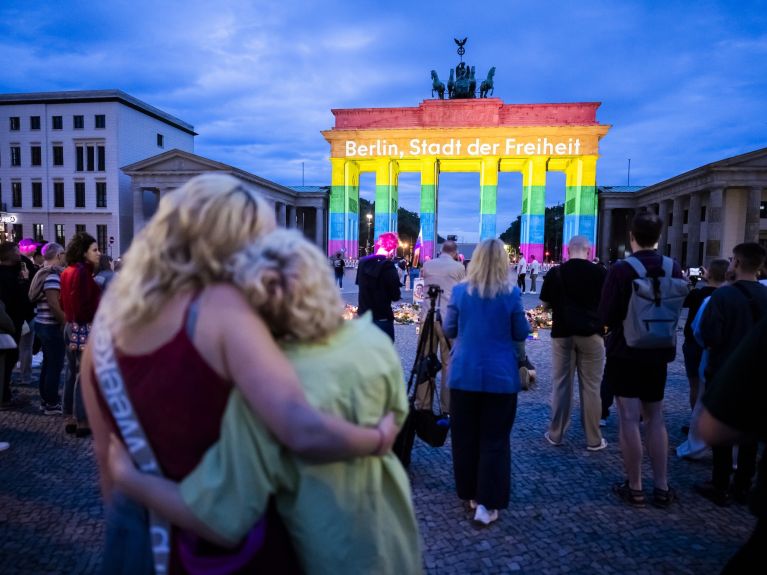
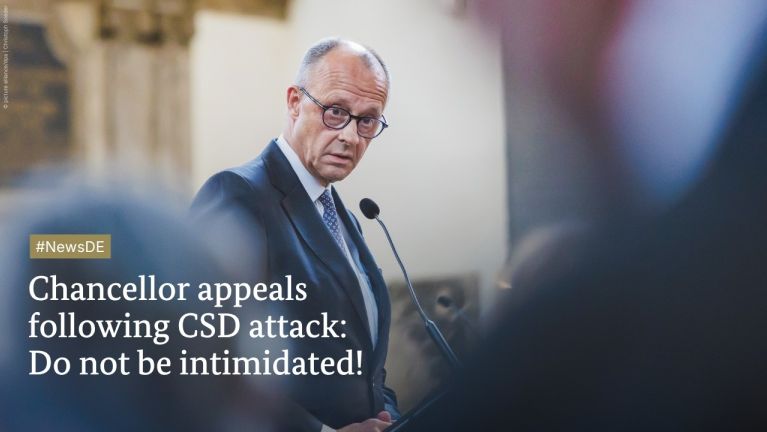
The attack has caused shock across Germany and beyond. Chancellor Friedrich Merz said the perpetrators wanted to divide society and take away its openness and freedom, adding: “We are greater in number, we are stronger, and we stand together as one in our country.” President Frank-Walter Steinmeier and other members of the Federal Government also condemned the attack. On Sunday evening, thousands of people gathered in front of Brandenburg Gate to pay tribute to the victims and express their solidarity with the queer community.
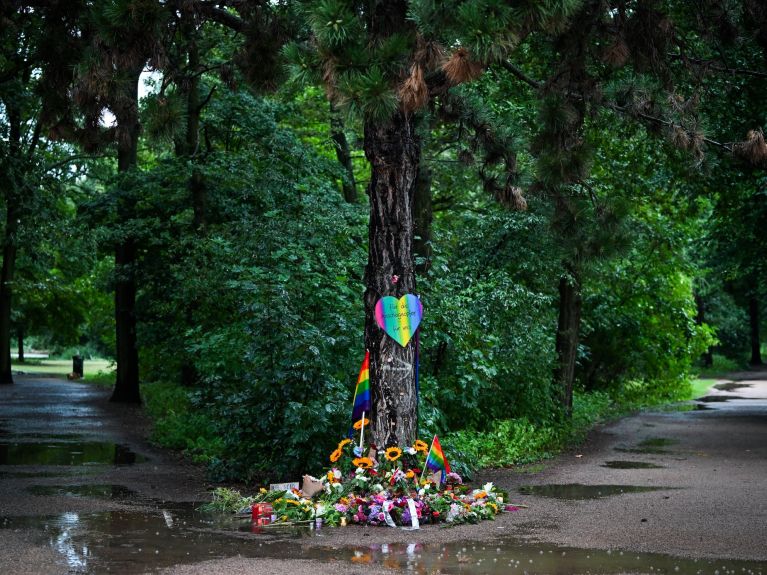
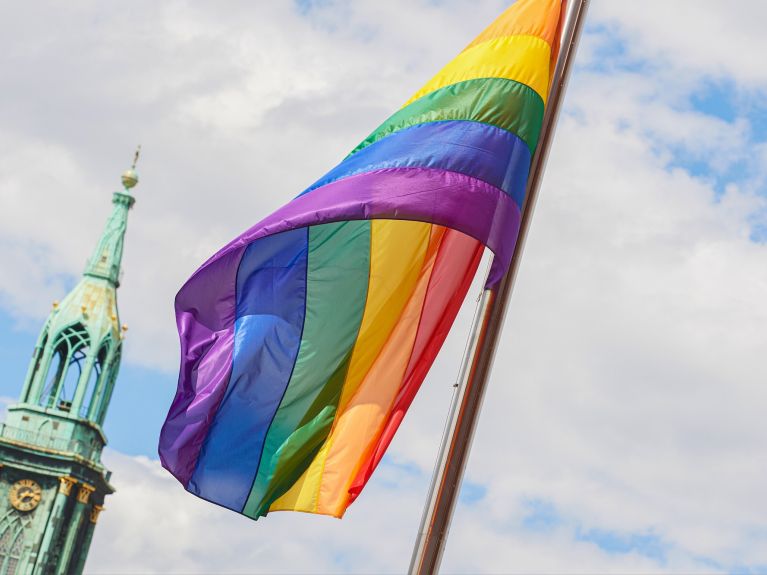
An ecumenical memorial service was held at St Mary’s Church in Berlin, attended by representatives of politics, the churches and Muslim communities. Numerous town halls, churches, cultural institutions and associations flew rainbow flags or called for minutes of silence and commemorative events. Many people also laid flowers and candles at the scene of the attack. The CSD organisers stressed that they would not be intimidated and would continue their commitment to diversity and equality.
Why the attack on Berlin’s Christopher Street Day matters
Christopher Street Day (CSD) is a demonstration in support of the rights of lesbian, gay, bisexual, trans, intersex and queer people (LGBTQ+). Berlin’s CSD is one of the largest events of its kind in Europe and stands as a symbol of diversity, equality and protection against discrimination. An attack on CSD is therefore directed not only at those attending the event but also at these values.
What consequences are now being discussed?
The attack has become a major focus for both the security authorities and politicians. Chancellor Friedrich Merz has announced that there will be consequences. Discussions are focusing on tougher action against Islamist extremism, stricter security measures for major public events and the question of why the attacker was apparently still able to carry out the attack despite being known to the authorities.
Dieses YouTube-Video kann in einem neuen Tab abgespielt werden
YouTube öffnenThird party content
We use YouTube to embed content that may collect data about your activity. Please review the details and accept the service to see this content.
Open consent form