Rethinking food systems
Young researchers are using traditional knowledge about plants in Fiji or climate data from India to improve food systems and make them fairer.
In the lowland forests of the Korobasabasaga mountain range on the Fiji island of Viti Levu grow yams - known locally as uvi - and an edible fern called ota. With ever more frequent crop failures and natural disasters, these traditional wild plants are among Fiji’s most important basic foodstuffs. As far as Asaeli Naika is concerned, they are the solution to a very real problem: in the indigenous community of the iTaukei, traditional knowledge about edible wild plants is rapidly being lost. At the same time, diseases such as diabetes are on the rise. This development could be reversed if people could be persuaded to embrace fresh, locally produced foods once again.
Naika is a lecturer in food science at Fiji National University and himself belongs to the iTaukei people. He has worked in projects run by the United Nations (UN) and as a nutritionist and food security officer at the Fiji National Food and Nutrition Centre. He is currently conducting research in five indigenous communities to record traditional knowledge about edible wild plants and compile the first ever comprehensive directory of them.
Support from Germany
He is being funded by the UN Food Systems Youth Leadership Programme (YLP), an initiative run by the UN Food Systems Coordination Hub with the support of Germany’s Federal Ministry for Economic Cooperation and Development (BMZ). Naika was part of the first cohort when the programme was launched in 2024: 60 participants from 44 countries who will be funded until the end of 2026. The programme brings together emerging leaders from low- and middle-income countries. It teaches them the skills they will need to transform the food systems in their countries. Furthermore, the idea is for local knowledge to inform political decision-making and practice.

The BMZ is seeking a second funding phase. “We believe increased youth participation in policy dialogue can translate into meaningful impact on food systems governance,” said Andreas Schaumayer, head of Food Security and Fisheries at the BMZ, during a programme meeting in Rome in May 2026. On a political level, the programme ties in with the follow-up to the UN Food Systems Summit in which Germany is also actively involved. The BMZ is keen to create lasting structures that go far beyond short-term food aid.
Traditional foods in Fiji’s school kitchens
Nutritionist Naika has experienced the shift in Fiji’s food culture at first hand. “Whereas I would still eat cooked taro leaves as a child, young people nowadays prefer breakfast crackers or instant noodles,” says the 37-year-old. “When I ask people why they don’t eat cooked plantain for breakfast any more, I often hear things like: ‘Because people will then think I’m poor.’”
Naika is well aware that changing people’s eating habits is difficult and takes time. Nonetheless, he is determined to bring about change. He talks to ministries and has submitted a funding application to enable him to continue his research. “Thanks to the YLP, I was able to join the global discourse and forge contacts worldwide.” Naika’s great wish is for traditional ecological knowledge to be legally recognised and for traditional foods to become a fixture on school curricula and menus throughout Fiji.
Digital tools for the early detection of natural threats
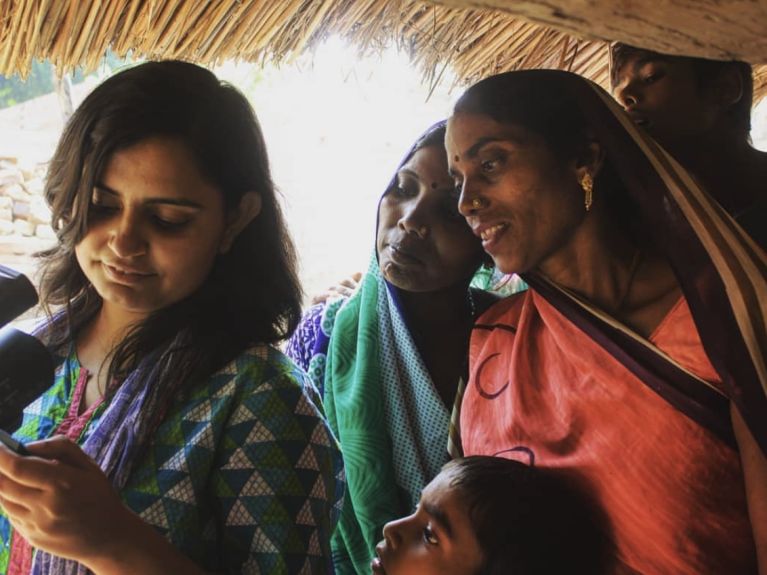
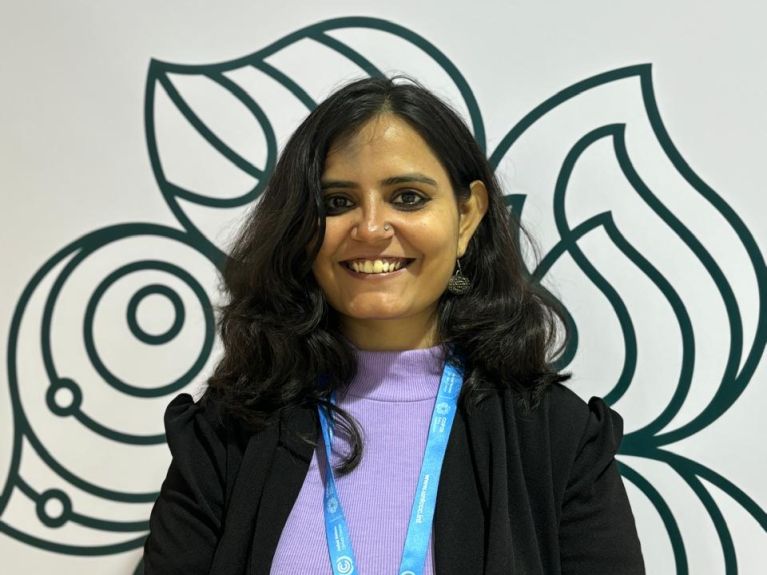
Indian researcher and climate activist Alokita Jha, who will soon be graduating with an Executive Master of Public Administration from the Hertie School in Berlin, is also a member of the first YLP cohort. “I work at the interface between data, climate, agriculture and health to improve the lives of marginalised communities in rural regions,” says the 32-year-old.
In her research, she is exploring how climate change is exacerbating malnutrition. To this end, she combines socioeconomic, food- and climate-related data. “On the basis of extensive data sets, I develop digital tools for the early detection of natural threats that government agencies use for particularly hard-hit regions,” explains Jha. Extreme weather events such as heatwaves or hailstorms destroy the crops of smallholders. In some regions, a one-sided and carbohydrate-heavy diet predominates - while others suffer from hunger.
The innovative potential of young people
The YLP has boosted Jha’s self-confidence. “Thanks to my new leadership skills, I can now talk to and negotiate with government officials on an equal footing.” As the next step, she wants to found her own non-governmental organisation - Samya Lab. “I want to raise awareness about marginalised groups and improve their lives by combining research, politics, lobbying and digital tools in projects at the local level.” Jha’s motto is: “Never give up hope! The innovative potential of young people is the opposite of destruction in the world and my greatest motivation.”
The UN Food Systems Youth Leadership Programme (YLP) was initiated by the UN Food Systems Coordination Hub in 2021 and run for the first time in 2024. The programme is funded by Germany’s Federal Ministry for Economic Cooperation and Development. It is targeted at people aged between 18 and 35 who are working on sustainable food systems in their countries of origin in Africa, Asia, the Pacific region, Latin America or the Caribbean.


