Germany’s commitment to the UN
Germany does its duty through the UN in many different ways, from providing humanitarian aid to participating in peacekeeping missions.
Germany is not only the world’s second-largest contributor to the UN. It is also the home of many UN institutions and contributes to UN peacekeeping missions. Germany’s commitment to the United Nations is a pillar of German foreign policy. Ever since the two Germanies first joined the UN in September 1973, the Federal Republic of Germany has taken on more and more responsibility every year.
Germany in the United Nations
On 18 September 1973 West Germany and the former German Democratic Republic joined the United Nations, achieving membership which had initially been unthinkable in the aftermath of the Second World War. Today, Germany is not only one of the world’s most significant supporters of the UN, but is also committed to strengthening the organisation in the conviction that global issues can only be resolved by acting globally. The rules-based international order with the United Nations Charter founded on international law are vital to achieving this.
Germany’s support for the United Nations is also reflected in the level of its financial contributions, which for many years have made it the second-largest contributor to the UN system as a whole. Germany is also one of the largest donors of humanitarian aid, providing aid worth €1.06 billion in 2025. Germany ranks fourth for its contributions to the regular UN budget.
Trusted partner for peacekeeping missions
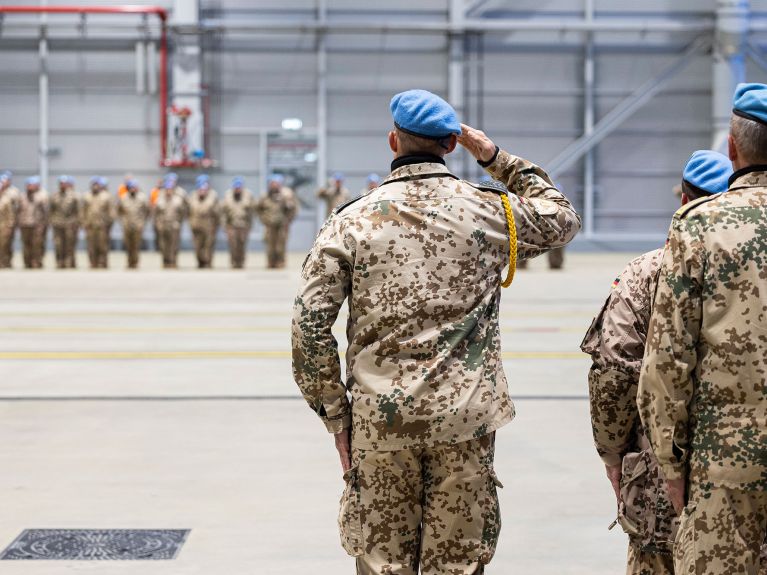
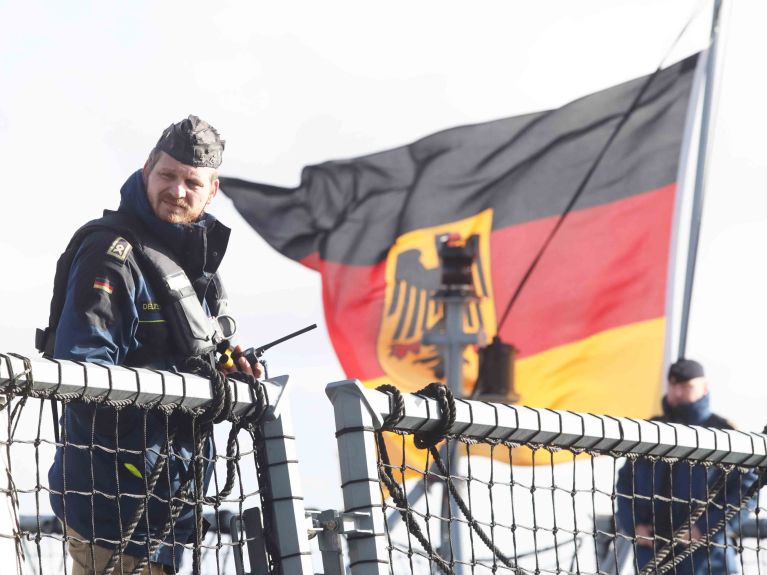
For many years Germany has contributed military, police and civilian forces to UN peacekeeping missions. Germany is the fourth-largest contributor in terms of the payments it is required to make to support UN peacekeeping missions, after the US, China and Japan. As of September 2026, around 220 members of Germany’s armed forces are currently deployed on the UN MINURSO mission to the Western Sahara, UNMISS in South Sudan and UNFIL in Lebanon. A German ship forms part of the Maritime Task Force which supports the UN UNFIL mission. Germany has also trained military personnel from over 100 countries for UN missions, such as on courses at the UN Training Centre in Hammelburg, the Leadership Academy, and on Bundeswehr mobile training teams.
Over 30 UN institutions in Germany
In addition to its contributions to many UN missions, Germany also provides a home to nearly 40 UN institutions with more than 1,000 staff. The majority are located in Bonn, which was the capital of West Germany prior to reunification. Nearly 30 organisations have their headquarters on the UN campus there. In January 2026, the United Nations Development Programme (UNDP) announced that it would be relocating some of its staff to Bonn.
German membership of the UN Security Council
One of the most important bodies in the United Nations is the Security Council, which consists of five permanent and ten non-permanent members. Germany has played its part as a non-permanent member six times, most recently from 2019 to 2020. The Federal Government is also campaigning for reforms of the Security Council, including achieving appropriate representation of African states and key contributors.
A seat on the UN Human Rights Council from 2027 to 2029
Germany has been elected once again to the UN Human Rights Council for the period 2027 to 2029. This will be Germany’s sixth term as a member of the council. Germany has been one of the council’s most important supporters ever since it was established in 2006. For example, it has dedicated itself to documenting human rights violations in countries such as Iran, Syria and Sudan. Germany also campaigns to protect those who defend human rights. During its upcoming term, it will additionally focus on reforming the Human Rights Council.


