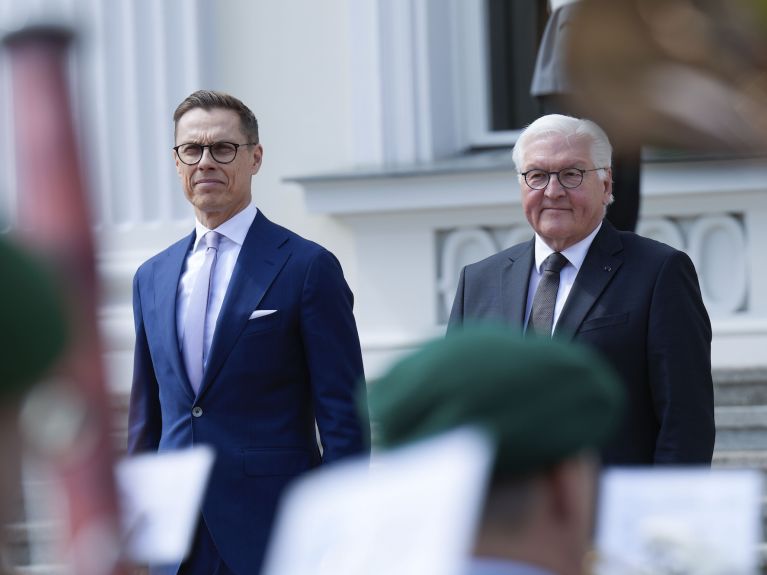
Calls for a Helsinki process for the Middle East
German President Steinmeier and his Finnish colleague Stubb see Europe’s landmark détente policy as an example.
Berlin (dpa) – German President Frank-Walter Steinmeier and Finland’s President Alexander Stubb are calling for a broad-based dialogue with all key stakeholders to break down the entrenched positions in the Middle East. In a guest article they wrote for German daily Frankfurter Allgemeine Zeitung, they propose a process of cooperative security following the example of the Helsinki process in the 1970s, which continues to be regarded as a landmark in European détente policy.
“Trust in the Middle East is at its lowest level in decades. 50 years ago, Europeans found a path out of a similarly entrenched position. We propose embarking on this path once again,” write Steinmeier and Stubb. Despite the climate of mistrust that prevailed at the time, they say that Europeans conceived of “the most ambitious cooperative security initiative of the 20th century”. “The lesson we draw is simple: you do not need trust to build a process. The process itself is what builds trust.”
The Helsinki process was an initiative aimed at bringing about détente between the East and the West during the Cold War. In it, 35 states committed themselves to fostering cooperation and respecting borders and human rights. Although the agreements were not legally binding, they strengthened trust between the states and lastingly increased the importance of human rights, security and international cooperation.


