A booming hub for innovation
Eastern Germany has undergone a remarkable economic transformation since reunification. From Dresden in the south to Rostock in the north, many regions have become bywords for research and high tech.
 Wolf Zinn
 With its research clusters, emerging technologies and foreign investment, eastern Germany as a whole has undergone a remarkable transformation since reunification in 1990. Some regions have become internationally competitive hubs for semiconductors, optics, energy engineering, biochemistry and digital business models.
Billions in investment for chips, cars and biochemistry
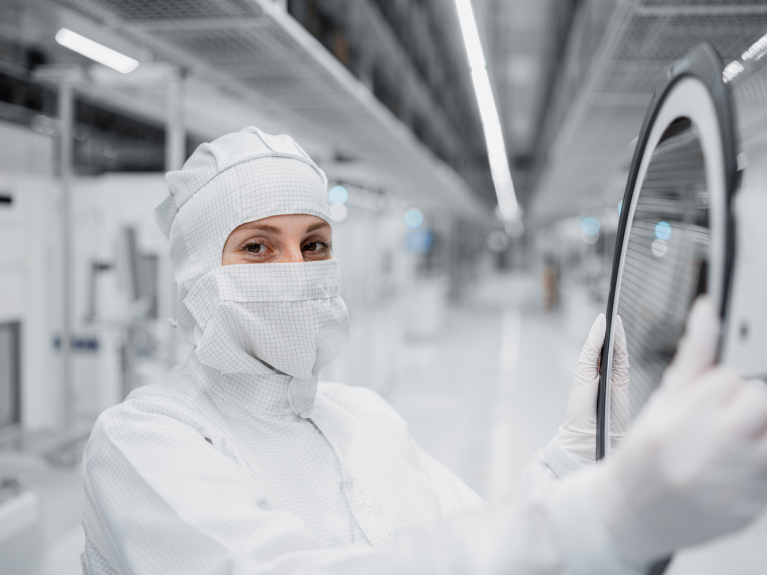
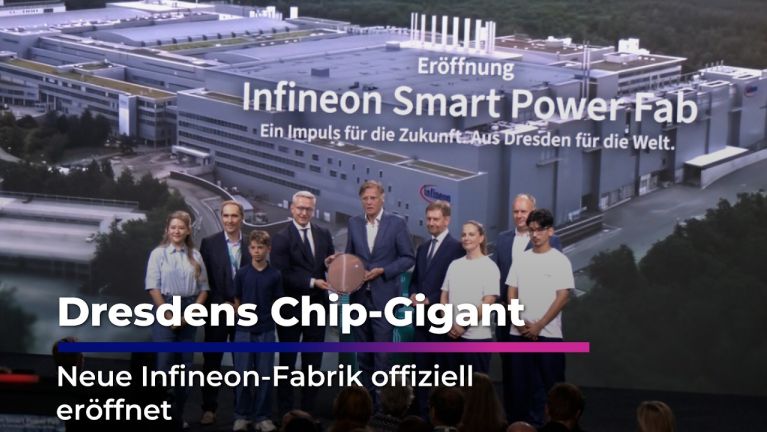
The changes are particularly noticeable in Saxony. Silicon Saxony, as the region around Dresden has come to be known, is home to over 750 microelectronics and IT firms and institutions and is considered Europe’s largest microelectronics cluster. In 2026 Infineon opened a semiconductor factory there that cost five billion euros, creating around 1,000 new jobs. In a joint venture with Bosch, Infineon and NXP, Taiwanese chip giant TSMC is also investing more than ten billion euros to build a new chip factory.
Dieses YouTube-Video kann in einem neuen Tab abgespielt werden
YouTube öffnenThird party content
We use YouTube to embed content that may collect data about your activity. Please review the details and accept the service to see this content.
Open consent formBerlin is one of Germany’s leading start-up cities: around 2.7 billion euros in venture capital was pumped into young Berlin-based firms in 2025.
Tesla’s Gigafactory in Grünheide near Berlin makes Brandenburg home to the US company’s first European production facility. As the plant grows, the carmaker is now the state’s largest private-sector employer.
Cottbus: Germany’s most dynamic city
Cottbus is another great illustration of Brandenburg’s structural shift: with just under 100,000 inhabitants, it was named Germany’s most dynamic city in the 2026 ranking compiled by the German Economic Institute (IW). Cottbus is evolving from a former lignite mining centre into a knowledge hub. The federal and state governments are investing in research and new jobs: Lausitz Science Park aims to bring science and business together, the new Medical University is increasing the region’s profile as a centre for healthcare and German rail operator Deutsche Bahn is massively expanding a major high speed train (ICE) maintenance facility.
New dynamism beyond the metropolitan centres
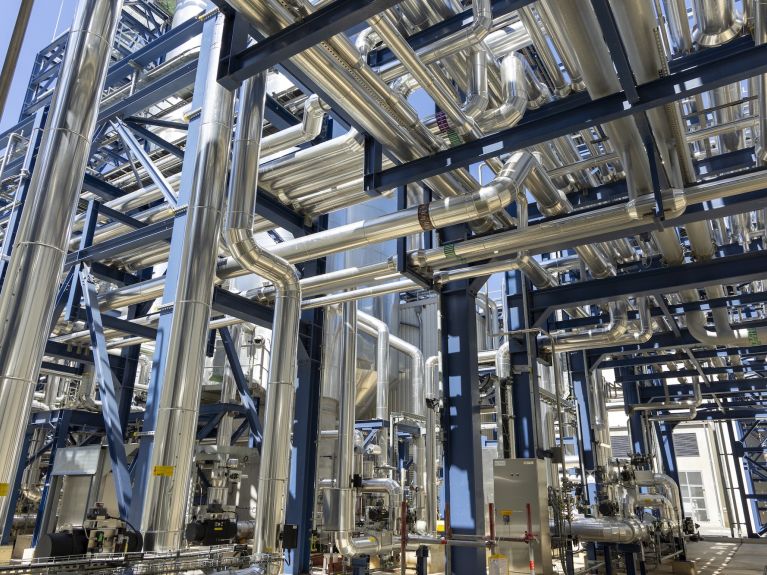
Saxony-Anhalt is focusing on modernising its industrial sites. For example, the Finnish company UPM invested around 1.3 billion euros in a new refinery in Leuna that turns wood into biochemicals; the first products are already being shipped to customers. Home to the historic Zeiss company and its pioneering research, the Thuringian city of Jena has become synonymous with world-class optics, photonics and semiconductor technology. Zeiss is further expanding its high-tech facility there.
Mecklenburg-Western Pomerania is also honing its industrial profile. Rostock-based firm Neptun Smulders, a joint venture between local shipyard Neptun Werft and Belgian offshore specialist Smulders, is building large-scale converter platforms for offshore wind farms. With an order volume totalling around 2.5 billion euros, central components are manufactured in Rostock-Warnemünde.


