Harnessing the power of the stars
Ranked third in the Innovation Index, Germany boasts more start-ups than ever before - and some are really taking off.
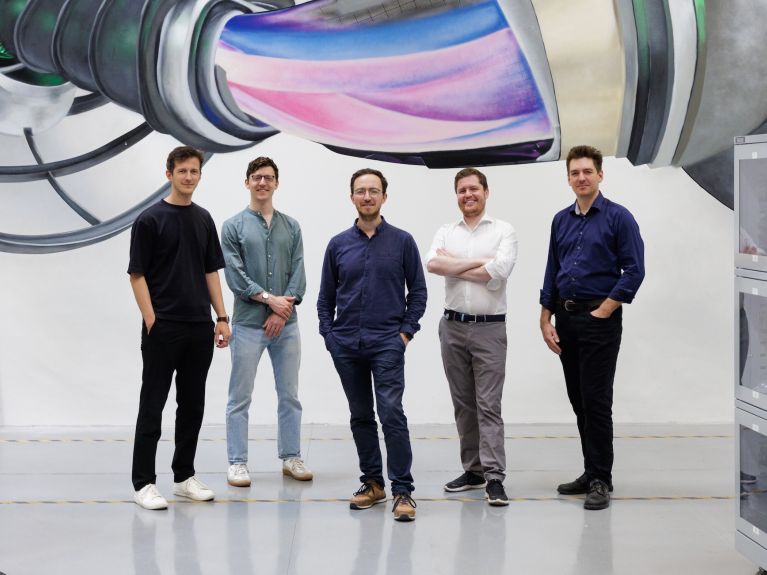
Good ideas are clearly good for the mood. The atmosphere when the German Entrepreneur Award 2026 was presented to Munich start-up Proxima Fusionwas certainly very upbeat. The company is developing novel types of fusion power plant to harness the power of the stars on Earth. The hope is that this will tap into a carbon-free and baseload-capable energy source in the next few years.
The people behind the technology
The Entrepreneur Award isn’t just about technology and business models - it’s also about the people behind them. Francesco Sciortino, Proxima Fusion’s co-founder and CEO, explained his firm’s success during the award ceremony: “Because we have brought together the right people in a good structure who are committed to the right thing.” Founders must be prepared to turn a vision into a company, even if this means taking considerable risks.
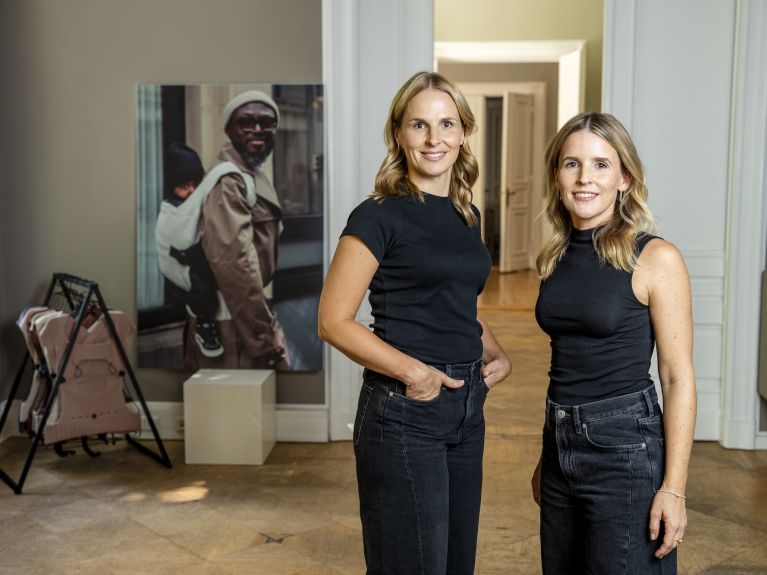
The other finalists are testimony to just how broad-ranging the German start-up scene is. Berlin-based AdaptX Systems wants to make metal processing cleaner and more efficient: rather than spraying tools with large amounts of cooling lubricant, the company cools them directly at the point of contact. Flybaby is another start-up from Berlin. Elisabeth Hillmann and her sister Gesine use 3D knitting machines to make virtually seamless baby carriers in a process that involves virtually zero waste; they are already being sold in more than a dozen shops. DeepDrive from Garching is developing highly efficient electric motors that require less magnetic material and iron, the aim being to make cheaper electric cars with a longer range. mtex antenna technology from Wiesbaden is building highly precise antennas and radio telescopes for science, space exploration and communication. Pixel Photonics in Münster meanwhile is developing detectors that can capture individual light particles – a key technology for quantum computers, secure communication and new diagnostic methods.
Spectacular developments
All of this pioneering spirit is definitely worthwhile, with many start-ups really taking off on the back of their spectacular innovations: in early September, German space company Isar Aerospace successfully launched its Spectrum rocket into orbit for the first time. In future, it could regularly transport satellites into space from Norway - which would make Europe less dependent on the USA. German start-up Ground A recently unveiled laser-based counter-drone systems. And promising firms like Parloa, Helsing and Quantum Systems have raised billions in recent funding rounds.
36 German unicorns
So far, 2026 has seen ten German start-ups achieve the exclusive “unicorn” status – describing young firms with a valuation of at least one billion dollars: osapiens, Stark, Dash0, CMBLU, Focused Energy, Neura Robotics, Finn Tech, Augustus, Moss and Entrepreneur Award-winner Proxima Fusion. As a result, Germany now has 36 unicorns. The number could doubtless be even higher, but all too often good ideas fail to be realised because investors are overly risk-averse.
Dieses YouTube-Video kann in einem neuen Tab abgespielt werden
YouTube öffnenThird party content
We use YouTube to embed content that may collect data about your activity. Please review the details and accept the service to see this content.
Open consent formGermany is one of the most innovative regions in the world
And yet the potential is certainly there - also by international standards. In the Innovation Index compiled by the World Intellectual Property Organization (WIPO), Germany scores extremely highly, ranking third in the list of the world’s 100 most innovative regions - behind only China and the US. The ranking takes international patent applications, scientific publications and investments in start-ups into account.
More start-ups than ever
The numbers also speak volumes about Germany’s innovative capacity: 3,053 start-ups were launched in the first half of 2026, 52 percent more than in the same period last year. “Germany has never before seen such entrepreneurial dynamism,” says Verena Pausder, chairwoman of the German Startup Association: “AI is significantly lowering the obstacles to starting a new firm, and more and more people are seizing this opportunity.” Indeed artificial intelligence is the most important driver of new start-ups, with around a third of them having a clear link to AI. This no longer applies only to software companies - firms in medicine or the food industry do too.
Investors with deep pockets who are ready to embrace the future don’t have to search long to find what they are looking for in Germany: they can check out the winners of the German Entrepreneur Award to see examples of innovative start-ups that are already successful but want to grow bigger.


