Resilient rice despite polluted air
How two researchers from Giessen and Bangladesh bred an ozone-resistant rice variety – potentially protecting millions of tonnes of rice.
 Christina Henning
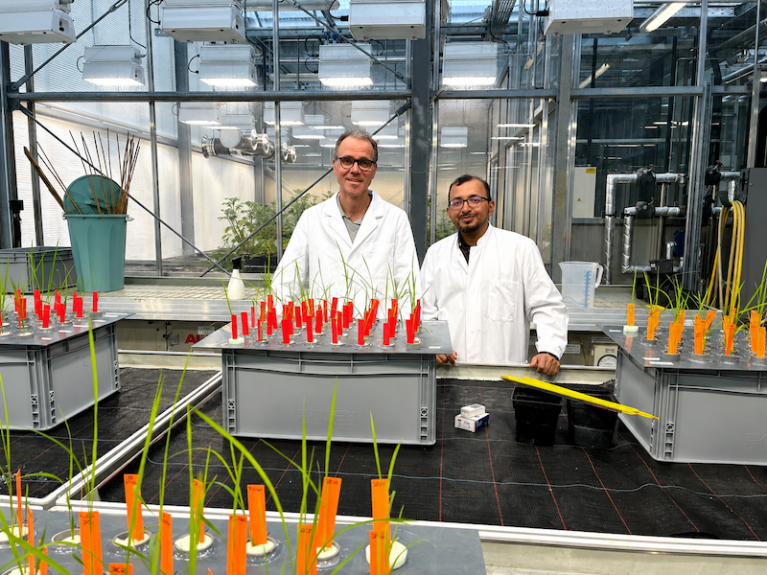
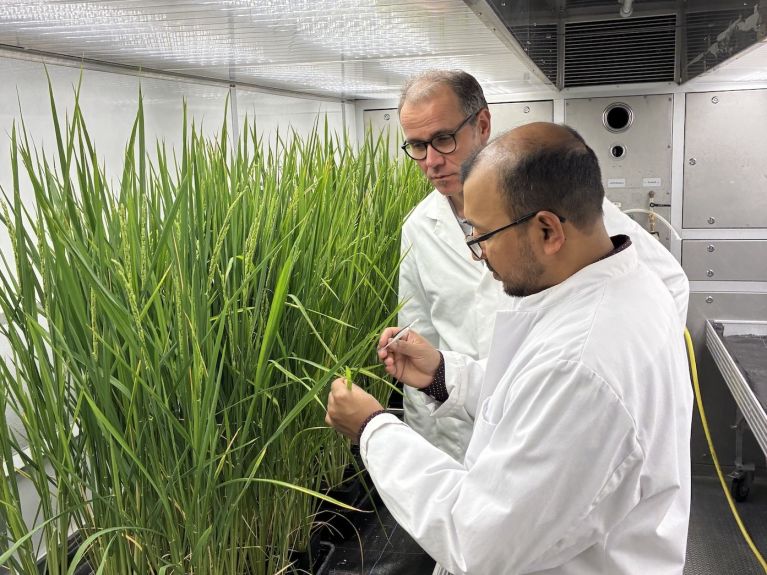
 The air in the tropical chamber at the University of Giessen is warm and humid. Among flowering rice plants, Muhammad Shahedul Alam, wearing a lab coat, bends over the delicate stalks and carefully positions a pair of tweezers. With great precision, the agricultural scientist crossbreeds rice varieties here – working on a small plant that is to withstand a major environmental problem.
Together with Michael Frei, Professor of Crop Science and Yield Physiology at Justus Liebig University Giessen, Alam has developed a new variety: rice that is resistant to ground-level ozone. After all, not all ozone is the same: at altitudes of around 30 to 50 kilometres, the ozone layer provides protection from UV radiation. At ground level, however, the gas is a problem. It forms when pollutants from traffic and industry react in sunlight – harming both human health and plants.
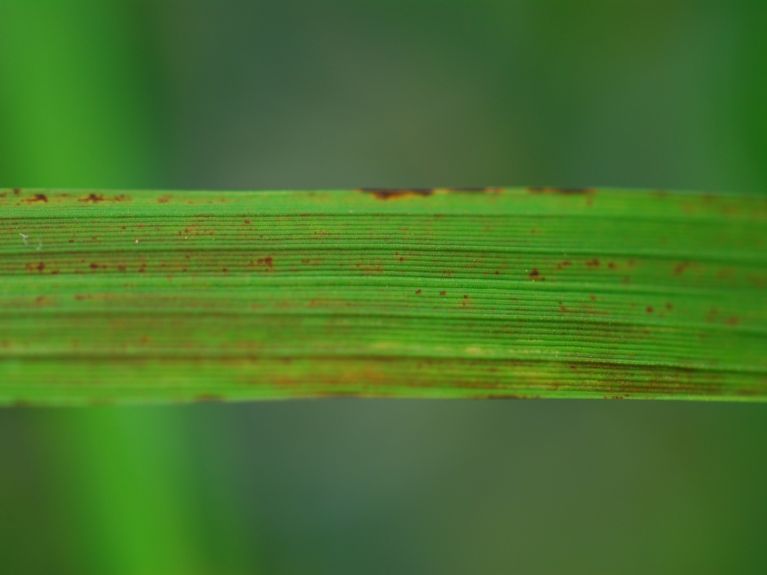
“Ozone pollution weakens the photosynthetic performance of rice, which affects yields. It also reduces the levels of micronutrients such as zinc and iron,” says Alam.
From the greenhouse in Giessen to fields in Bangladesh
Originally from Bangladesh, Alam spent several years researching ozone-resistant rice for his doctoral thesis – initially in greenhouses and laboratories in the Hessian city of Giessen. The plants are now growing not only under controlled conditions, but also in field trials in Bangladesh. Rice is one of the most important staple foods for the Asian country’s roughly 180 million inhabitants – and air pollution levels are high.
“I know the farmers, I’ve spoken to them and seen the problems in the fields. If we succeed in breeding an ozone-resistant rice variety, it will help farmers economically and contribute to the country’s food security,” says Alam.
A new rice variety emerges
Alam and Frei were able to demonstrate at the University of Giessen just how severe harvest losses caused by ozone pollution can be. “When rice plants are exposed to ozone stress in the greenhouse, this can lead to yield losses of up to 50 per cent,” says Frei. In real conditions and influenced by additional environmental factors, the researchers estimate losses of between 5 and 10 per cent. “Bangladesh produces around 40 million tonnes of rice a year. This means that around 2 million tonnes of the harvest are lost annually due to ozone stress.” For many farmers, Alam says, it is an existential question whether there is enough money for food, school or medical treatment.
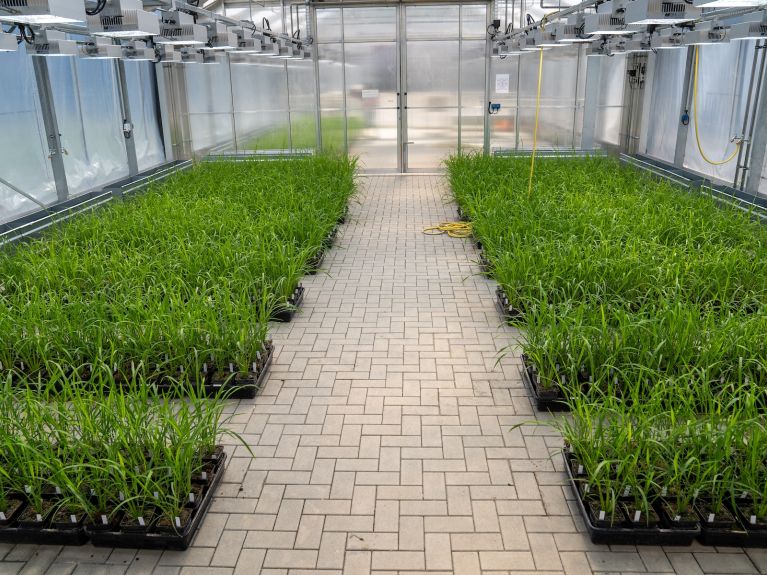
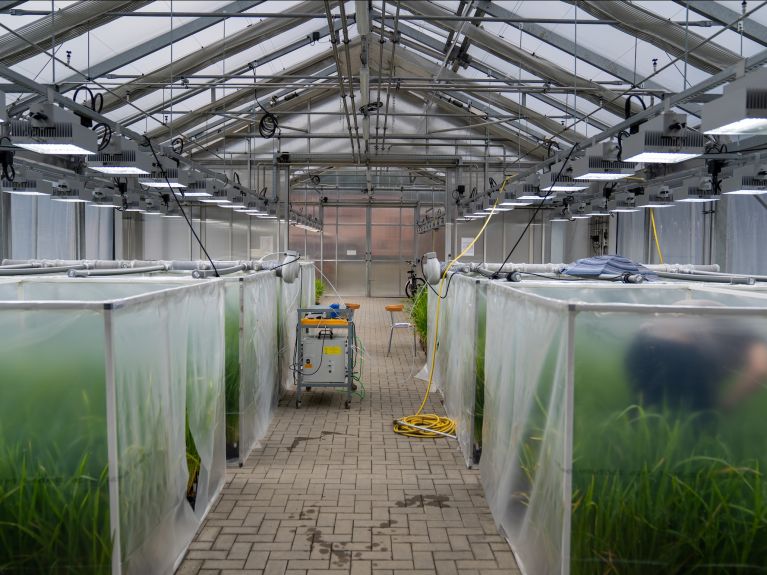
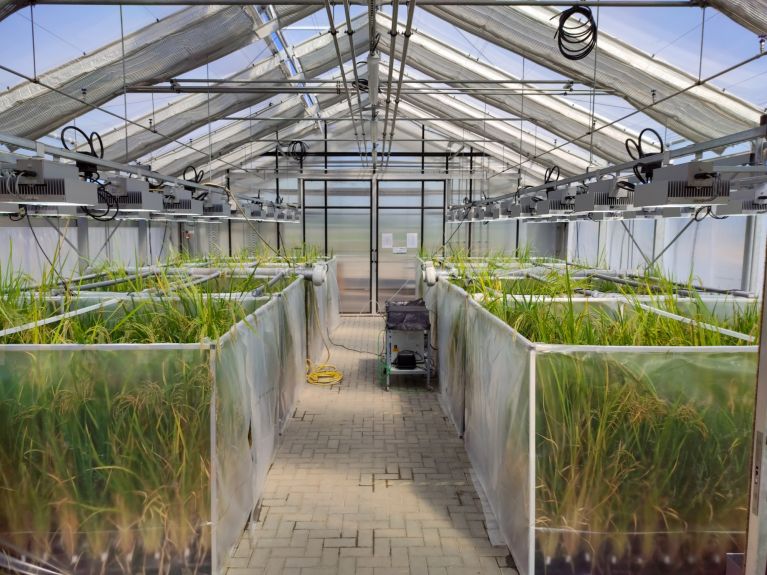
Alam and Frei researched rice varieties with different characteristics in order to breed the new variety in the laboratory. For this purpose, they crossbred a particularly ozone-resistant plant with other Bangladeshi rice varieties. According to the researchers, the result not only withstands ozone, it is also convincing in terms of taste and yield.
We have fulfilled our dream of breeding ozone-resistant rice.
The newly bred rice variety is now awaiting official approval by the Bangladeshi authorities. Alam expects the ozone-resistant variety to reach the market within the next few years. “We have fulfilled our dream of breeding ozone-resistant rice,” says Alam. He says he feels deeply grateful to Michael Frei, who played a key role in supporting him during his doctoral research and the project as a whole. In recognition of this, the rice currently also bears his name: “MFOL1491 – that stands for ‘Michael Frei ozone tolerant rice’,” says Alam.
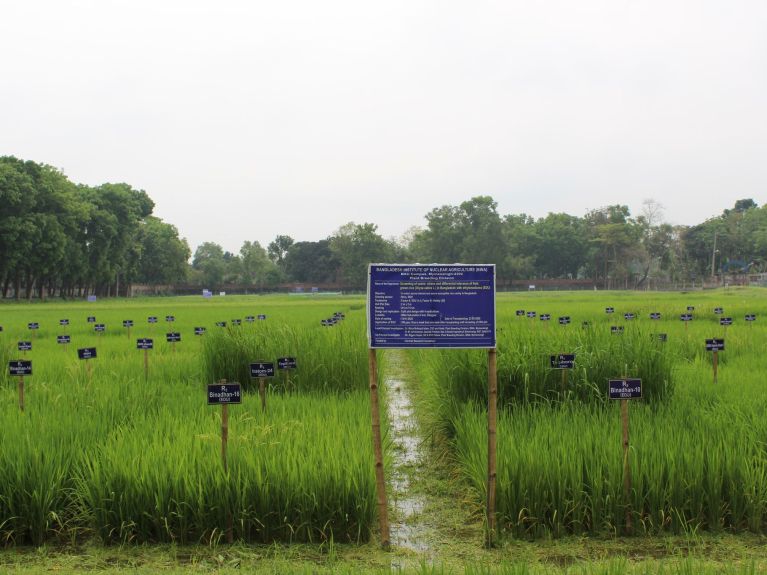
Frei says the rice variety is a response to urgent challenges. But ultimately, he says, the root causes must be addressed and ozone pollution reduced. “It’s a responsibility shared by society as a whole to reduce our consumption of fossil fuels and use renewable energy.”
Bangladesh is not the only place where air pollution poses a threat to rice plants. The research team sees potential for the ozone-resistant variety in India and China, too – particularly since the international perspective was already incorporated into its development. “We worked on this project with researchers from China, India, Thailand, Japan and other countries where ground-level ozone is a problem. And we learned a great deal from one another.”
Plants under stress in Germany, too
Muhammad Shahedul Alam is now turning his attention to other plants under stress: in southern Germany, he is researching wheat and barley. “Here, these plants are sometimes exposed to extreme temperature fluctuations between heat and cold – and that can damage them. I hope that through my work I’ll now also be able to breed varieties for farmers in Germany that help people.”


