High tech in the fields
Driverless farm machinery, artificial intelligence and smart livestock breeding are making agriculture more precise, efficient and sustainable - in Germany and worldwide.
 Wolf Zinn
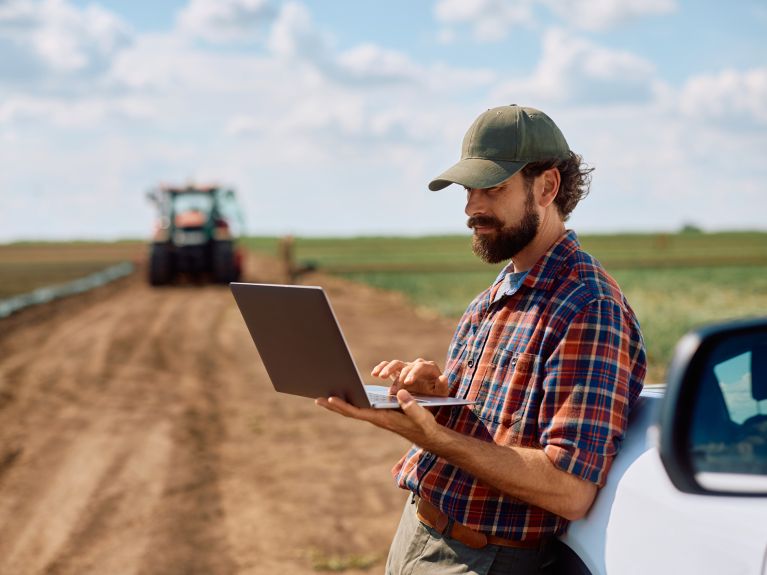
 When the sun rises in rural regions, it’s not only tractors that rumble across the fields. High tech has long been an integral part of modern farming - with many new technologies coming from Germany.
Software, robotics and drones
Sensors measure soil humidity levels and the condition of crops, cameras detect weeds and software calculates the optimum moment to sow seed or fertilise crops. Saxony-based firm Agricon Software for instance develops software for precision farming, combining field, yield and machinery data. The aim is to use resources in a more targeted manner and control processes more efficiently.
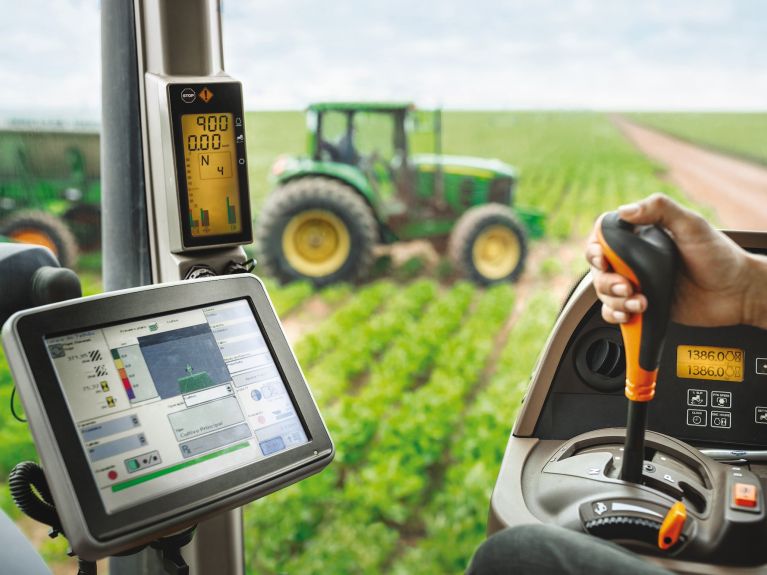
Agricultural machinery maker Claas also combines conventional machines with digitisation: interconnected tractors and harvesters record operational and field data in real time and support farmers with planning, documenting and optimising their work. Start-ups such as Nature Robots, a spin-off of the German Research Center for Artificial Intelligence, develop AI software for autonomous field robots. Farming Revolution is working on hoeing robots that combat weeds mechanically rather than using chemicals. Drones with multispectral cameras identify crop stress at an early stage.
Dieses YouTube-Video kann in einem neuen Tab abgespielt werden
YouTube öffnenThird party content
We use YouTube to embed content that may collect data about your activity. Please review the details and accept the service to see this content.
Open consent formFuture-oriented plant breeding
Much is changing in the area of plant breeding, too. The Bayer corporation is investing in modern breeding technologies including genome editing to make crops resistant to disease, drought and climate stress. The goal is to stabilise yields while at the same time reducing the use of pesticides, water and land.
Digitising livestock breeding
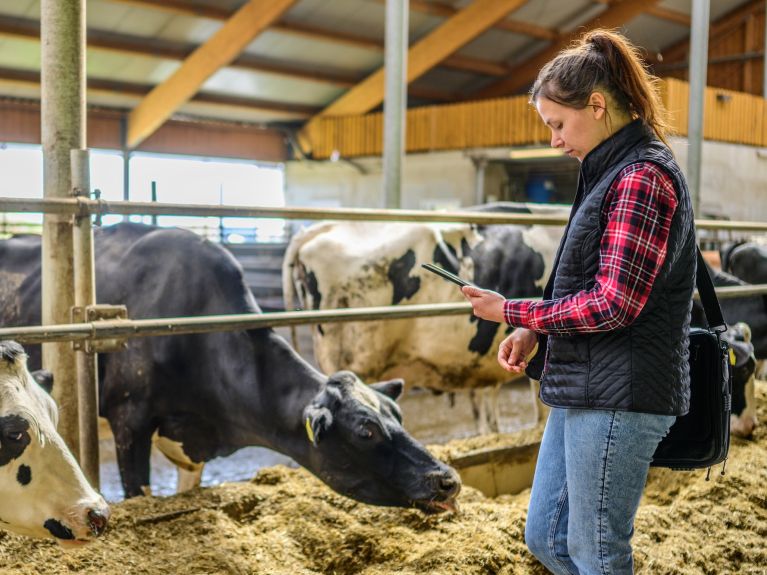
Numerous companies and research institutions are focusing on advanced and smart livestock breeding methods. For example, Düsseldorf firm GEA is developing automated milking, feeding and cattle shed air-conditioning systems designed to improve animal health, productivity and resource efficiency. Camera-based systems use image analysis for the early detection of disease or behavioural changes in animals.
Research, funding and practice
This development is supported by close cooperation between industry, research and funding organisations. Fraunhofer institutes work on key technologies for autonomous systems, sensors and data analysis. Networks such as Deep Farm Bots develop AI-based agricultural robotics within the framework of state funding programmes. Initiatives launched by Germany’s federal states, such as North Rhine-Westphalia, are also trialling targeted crop protection with digital technologies with a view to using chemical pesticides only in cases where they are actually necessary.

