Combating the water crisis with knowledge
What can be done to secure water supplies around the world? Research carried out between Aachen and Bangkok is pooled at the ABCD-Centre.
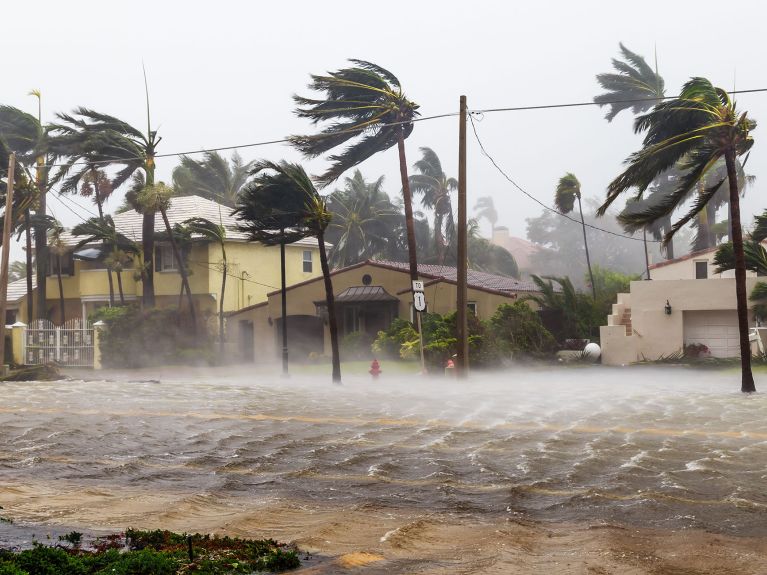
Extreme weather events such as droughts and flooding are threats to water supply around the world. The international team of researchers at the Global Water and Climate Adaptation Centre (ABCD-Centre) is working on solutions in the ares of water security, flood control and sustainable climate adaptation. Here are the key facts about the facility.
What is the ABCD-Centre?
Experts from Germany, India and Thailand are working together at the ABCD-Centre to secure future water supplies. ABCD stands for the cities involved in the cooperation: Aachen, Bangkok, Chennai and Dresden. The researchers are working on a wide range of research topics: from innovative water treatment and resilient ecosystems via nature-based adaptation strategies through to the transfer of knowledge to the political sphere. A joint master’s programme and sponsored research stays provide future water experts with training opportunities. Since 2021, the project has been sponsored by the German Academic Exchange Service (DAAD) with funding from the Federal Foreign Office.
How do the affected regions benefit from the research work?
The ABCD-Centre combines international cutting-edge research and local empirical knowledge. For example, a workshop was held in the Philippines, during which researchers worked with local decision-makers to develop flood management strategies. The result were recommendations for coastal preservation with mangrove forests and ideas for institutional reforms, such as setting up water authorities with a coordinating role. There are also training opportunities at partner universities that aim to build expertise in the affected regions.
What is the role of German higher education institutions?
The centre is coordinated by TU Dresden, RWTH Aachen, IIT Madras (India) and the Asian Institute of Technology (Thailand) with additional expert support from the UNU-FLORES (United Nations University Institute for Integrated Management of Material Fluxes and of Resources) in Dresden. The German partners contribute their specialist know-how in the areas flood modelling and urban water system analyses. The German-Indian master’s programme Water Security and Global Change is also part of the ABCD-Centre.
How is the degree course structured?
Engineering and ecology are combined with modules on governance and social participation in the curriculum. Over the course of the programme, students spend time in both Germany and India. They write their master’s thesis at one of the five partner institutions, and the degree is awarded jointly by TU Dresden, RWTH Aachen and IIT Madras.
Dieses YouTube-Video kann in einem neuen Tab abgespielt werden
YouTube öffnenThird party content
We use YouTube to embed content that may collect data about your activity. Please review the details and accept the service to see this content.
Open consent formWhat are the long-term goals of the ABCD-Centre?
The goal is to establish a global network. There are plans to get further partner universities from the Global South involved, to hold more practical workshops in the participating countries and to create more freely available online teaching materials, in order to improve access to knowledge about water security around the world.


