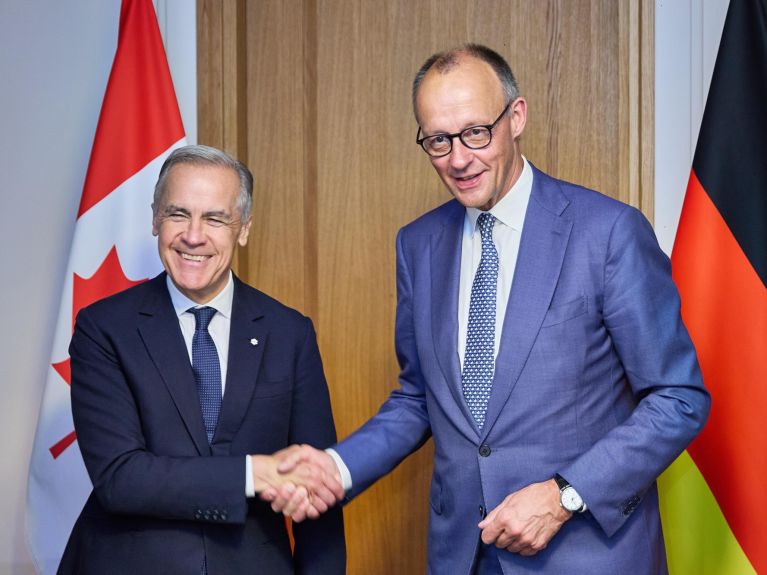
Stronger together: Germany and Canada deepen their partnership
From defence policy to artificial intelligence: Germany and Canada are setting clear priorities with their new partnership.
Close political cooperation and investment in key sectors of the economy: these are the main goals of the strategic partnership agreed between Germany and Canada in July 2026, which is to be formalised in a “partnership agreement” by the end of 2026. The initiative builds on the two countries’ long-standing ties: after Canadians of British and French descent, people of German origin make up one of the country’s largest population groups. There are also around 45,000 Canadians living in Germany. In 2026, the two countries are celebrating 75 years of diplomatic relations: The Federal Republic of Germany and Canada opened their embassies in Ottawa and Bonn respectively in 1951.
The strategic partnership has identified the following priorities for the coming years:
Defence and security policy
The two countries share fundamental democratic values and work closely together within NATO and the G7.

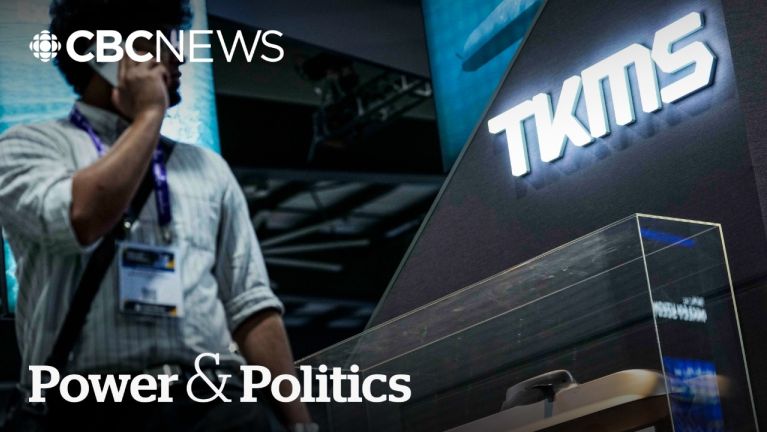
One milestone is Canada’s planned procurement of up to twelve submarines. Developed by Germany and Norway, the model will provide German company Thyssenkrupp Marine Systems (TKMS) with the largest submarine order in its history. At the same time, observers see the decision as marking a strategic shift: Germany is becoming Canada’s key security partner in Europe.
Dieses YouTube-Video kann in einem neuen Tab abgespielt werden
YouTube öffnenThird party content
We use YouTube to embed content that may collect data about your activity. Please review the details and accept the service to see this content.
Open consent formInvestment
Canada offers attractive conditions for German companies. The country is politically stable, with reliable institutions and a strong rule of law. Canada regularly ranks among the world’s top-performing countries in the World Justice Project’s Rule of Law Index. For investors, this provides a high degree of certainty for long-term planning and effective protection against arbitrary state action.
The CETA free trade agreement between the EU and Canada provides additional security for investors and trade. Since its provisional entry into force in 2017, almost all tariffs on industrial goods and numerous agricultural tariffs have been abolished.
Industrial policy and the automotive industry
Another focus of the partnership is industrial policy. In February 2026, the two countries agreed to step up cooperation in the automotive and mobility sector in order to stabilise supply chains and accelerate the transition to low-emission mobility.
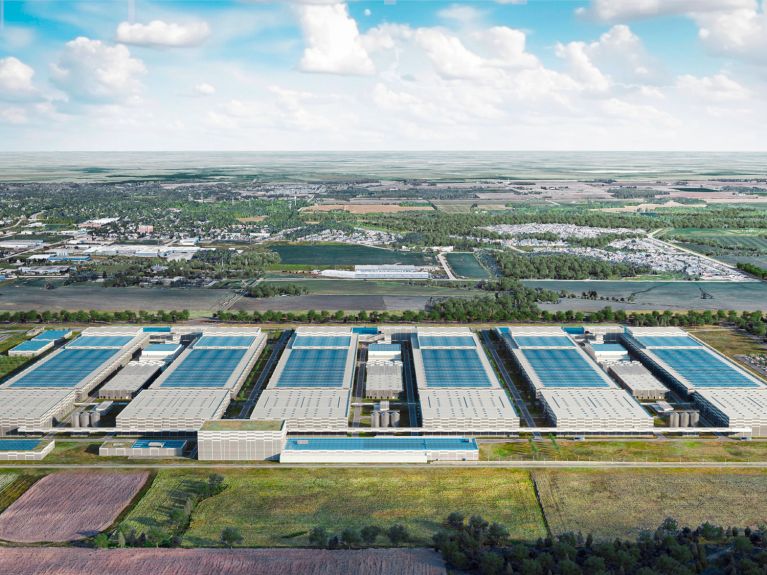
Although Canada does not have a major domestic car manufacturer, it is one of North America’s most important automotive production locations. Production there is dominated by US manufacturers and their suppliers. German manufacturers employ around 15,000 people in Canada. Mercedes-Benz operates several major sites, while BMW and Audi manage sales of their brands from the Canadian province of Ontario. Volkswagen is also currently building one of North America’s largest battery cell factories there, with production scheduled to begin in 2027.
Canada is also becoming increasingly important to German companies as a market for electric mobility. Canadian industrial policy is increasingly focusing on electric mobility and the associated value chains. German suppliers, software companies and charging infrastructure providers could also benefit from this.
Raw materials and energy
Canada has a key role to play as a supplier of critical raw materials. The country has significant deposits of lithium, nickel, cobalt, graphite and copper – and also plans to process rare earths in the future. These raw materials are essential for batteries, electric motors, wind turbines and numerous high-tech applications. The aim of a German-Canadian raw materials partnership concluded in 2025 is to finance projects and promote the circular economy.
This is complemented by an energy partnership and a hydrogen alliance. Together, Germany and Canada aim to accelerate the development of an international hydrogen economy.
Digitalisation and AI
The two countries are also moving closer together on digitalisation and artificial intelligence. In December 2025, Germany and Canada established the German-Canadian Digital Alliance in Montréal. A few weeks later, they signed a joint declaration of intent on cooperation in AI.
The two countries aim to strengthen their digital sovereignty and become less dependent on major US technology companies. Plans include joint investment in digital infrastructure and AI computing capacity, increased dialogue between researchers and industry experts, and closer coordination on regulation, security and the responsible use of AI.
In September 2026, Germany will be the guest country at Canada’s largest AI conference, “All In”, in Montréal, where it will showcase its AI expertise.


