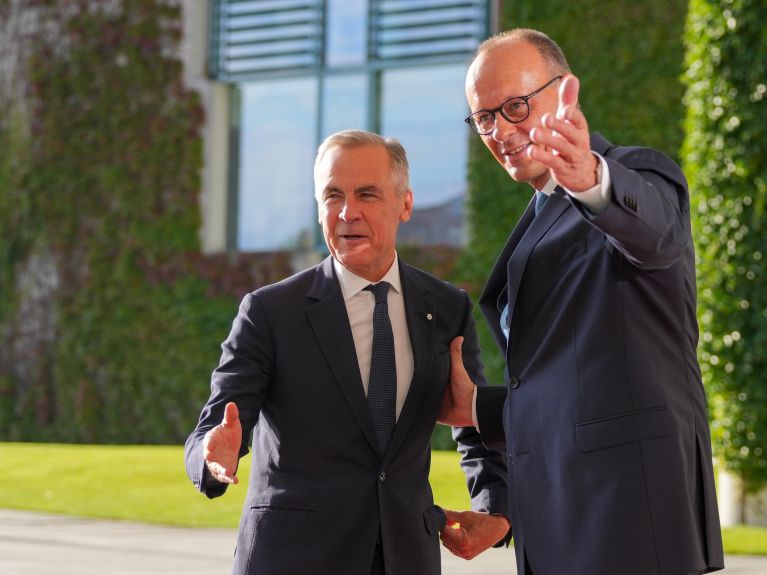
Germany and Canada: 75 years of partnership that keeps gaining relevance
Germany and Canada took up their diplomatic relations in 1951. The friendship-based connection has recently been gaining strategic importance.
 Wolf Zinn
 75 years of German-Canadian relations: this may sound primarily like an occasion for looking back, celebrating and exchanging some warm words. Canada thinks of 10 July 1951 as the starting date of formal relations, as this was the day its mission in Bonn was granted the status of an embassy. This was followed by Germany opening its embassy in Ottawa on 8 November 1951. These post-war relations have grown into decades of cooperation as partners. The festivities to mark this special anniversary are taking place throughout 2026 under the heading “75 Years: A Growing Partnership”. This motto seems rather fitting, as current developments are in fact more interesting than the anniversary itself: the two countries that are far apart from a geographical point of view have been moving ever closer together from a political, strategic and economic perspective, owing to the tense global situation.
The state of the world is bringing Germany and Canada closer together
Russia’s illegal war of aggression against Ukraine, the return of harsh power politics, new debates about deterrence, resilience and defence capability, and growing concerns regarding strategic dependencies have added a new dimension to the friendship-based relations between Berlin and Ottawa. Germany and Canada are close NATO and G7 partners. Both countries believe in multilateralism and are faced with the same question: How can we defend open societies in a world that is once more characterised by an offensive use of power?
This common ground became particularly obvious at the World Economic Forum in Davos in January 2026. The Canadian Prime Minister Mark Carney struck a nerve with his widely acclaimed speech he gave on this occasion. He said that democracies could no longer just rely on the strength of their values, but had to consider the value of their strength, too. Carney summarised a view that is by now shared by many liberal western states: values such as freedom, democracy and rules-based order do not guarantee security when they are combined with a lack of economic strength, technological sovereignty and military capability.
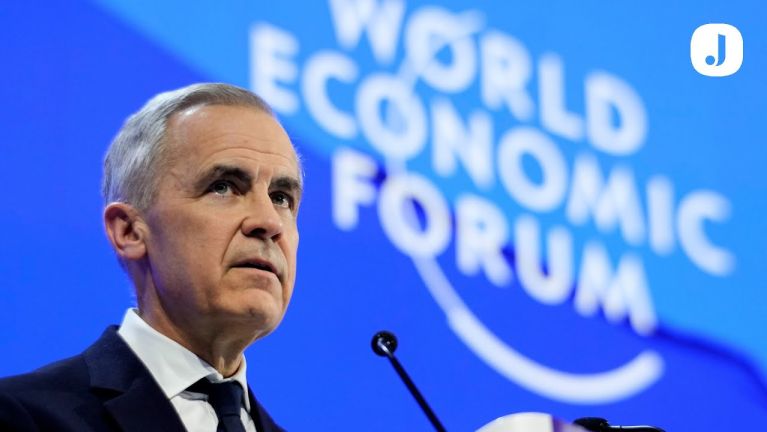
Dieses YouTube-Video kann in einem neuen Tab abgespielt werden
YouTube öffnenThird party content
We use YouTube to embed content that may collect data about your activity. Please review the details and accept the service to see this content.
Open consent formMerz and Carney are intensifying the strategic partnership
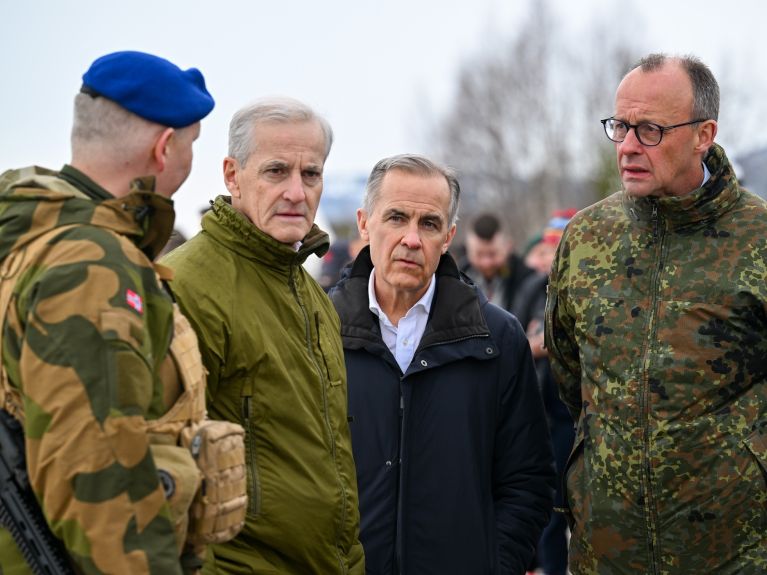
Federal Chancellor Friedrich Merz picked up the point made by Mark Carney in Davos, saying that in view of the “tectonic shifts” that had occurred, Germany had to define its interests more clearly, to strengthen its defence capability, to remain economically competitive, and to cooperate more closely with reliable partners, such as Canada. By stressing his agreement with Carney’s point of view, Merz was not merely being polite but he sent out a key foreign policy signal. Germany and Canada’s cooperation in the area of security policy in particular, has become more visible and substantial in recent years and months. The two countries are working together to support Ukraine, they are both leaders of multinational NATO groups on the eastern flank, and they want to further develop their military partnership, for example, in the areas of training, maritime security and defence. Germany and Canada have been increasingly coordinating their strategic projects related to defence, industry, energy, critical raw materials and technologies for the future. One example of this is the bilateral hydrogen alliance: Canada is to become a key supplier catering for Germany’s clean energy demands. On the sidelines of the Munich Security Conference in February 2026, the two countries signed their Sovereign Technology Alliance declaration for closer cooperation in the area of digital technology.
Close personal connections
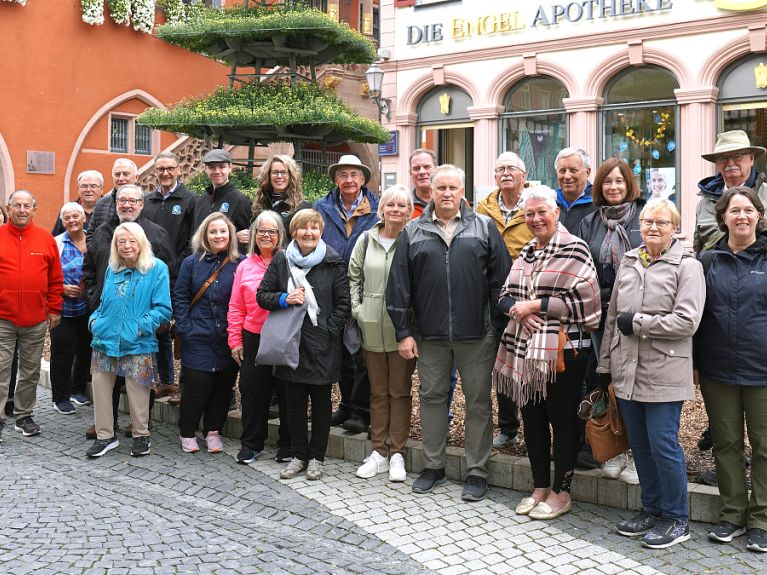
These newly established close relations are based on strong foundations that go far beyond diplomacy. Canada is home to almost three million people with German roots, including around 440,000 people who speak German, which remains one of the country’s most strongly represented immigrant languages to this day. There are also around 45,000 Canadians living in Germany. This means that there are strong biographical, cultural and family connections between the two countries, too. The German-Canadian Society that was founded back in 1951, maintains a close network and handles a wide range of exchange programmes. With over 1,500 joint research projects realised to date, academic cooperation constitutes another mainstay. In addition, there are around a dozen city partnerships. The first of these was established between Lahr in Baden-Württemberg and Belleville in the south east of Canada in 1972. This connection emerged from the deployment of troops, as one of the most important bases of the Canadian army in Germany was located in Lahr. A total of over 100,000 members of the Canadian military were stationed in Germany between 1951 and 1994.
New economic momentum
In addition to a wide range of personal connections, the two countries are also linked through lively economic exchange. Goods and services worth close to 40 billion Canadian dollars were traded between Germany and Canada in 2024, making Germany Canada’s biggest and most important trade partner in the European Union (EU). The free trade agreement CETA between Canada and the EU has been adding further economic momentum. It appears in a new light by now: as a key component for ensuring economic resilience through reliable partnership.
The free trade agreement CETA (Comprehensive Economic and Trade Agreement) between the EU and Canada entered into force provisionally in September 2017. Bilateral trading of goods and services has since gone up by 72 percent. Goods alone worth close to 76 billion euros were traded in 2024. Machinery, vehicles, chemical products, energy products and ores are the most important goods traded. 17 of the 27 EU states have by now completed their ratification process. In Germany this was the case in early 2023. Most aspects of the agreement (a reduction in tariffs in particular) are already being applied provisionally. However, some countries, such as France, still have some concerns, for example, regarding potential competition for their local agriculture.


