Why Canada has chosen German-Norwegian submarines
Up to twelve submarines, a historic contract for TKMS and a signal to NATO: we answer the most important questions about the cooperation with Canada.
 Anja Leuschner
 It’s the biggest submarine order in the history of Thyssenkrupp Marine Systems (TKMS): Canada wants to buy up to twelve of the 212CD-type submarines jointly developed by Germany and Norway. The decision was taken shortly before the NATO summit following a months-long battle between rival bids by TKMS and South Korean supplier Hanwha Ocean. Here are the key questions and answers about this topic.
How significant is this major order for Germany and NATO?
The decision is seen as a significant success for the European defence industry and for cooperation within NATO. Germany and Norway jointly developed the type-212CD submarine; in future, it will also be deployed by Canada. Germany’s Defence Minister Boris Pistorius spoke of an important step in expanding the alliance’s fleet of conventional submarines. Federal Chancellor Friedrich Merz described the memorandum of understanding as a “strong signal of transatlantic and European cooperation in the defence industry”. Previously, Pistorius had promoted Germany’s bid on a number of occasions in Canada.
Why is the contract so important for TKMS?
TKMS is one of the world’s leading manufacturers of non-nuclear-powered submarines. The submarines that have now been ordered are to be produced entirely in Germany - at the company’s main shipyard in Kiel and in Wismar in the state of Mecklenburg-Western Pomerania. This is expected to create up to 1,500 jobs. By its own account, the company currently employs 9,100 people.
What is special about the 212CD-type submarine?
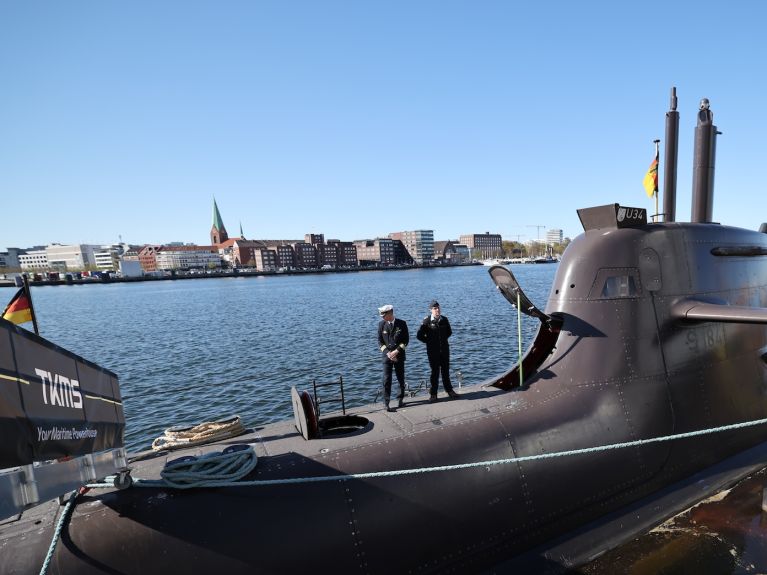
The 212CD was jointly developed by Germany and Norway and is described by the company as a milestone in non-nuclear submarine technology. Its propulsion system combines diesel engines with hydrogen technology, enabling long dives without the need to surface. According to TKMS, the submarines are specially designed for deployment under ice and in the Arctic.
How much money does the deal involve?
No details of the exact value of the order have been provided. The German Press Agency estimates that the submarines, including service and maintenance, will cost around 20 billion euros. Canadian Prime Minister Mark Carney described the order as the “largest defence procurement in Canadian history”.
What happens now?
Now that the decision has been taken, the contract has to be negotiated. Citing Carney, the dpa expects these negotiations to take six to 18 months. TKMS has offered to already deliver the first four submarines by 2034. This is to be made possible by reallocating boats from German and Norwegian orders. Defence Minister Pistorius said: “Now it’s a question of finalising the contracts and getting the submarines into the water as quickly as possible.”


