„Now. Not sometime in the future“
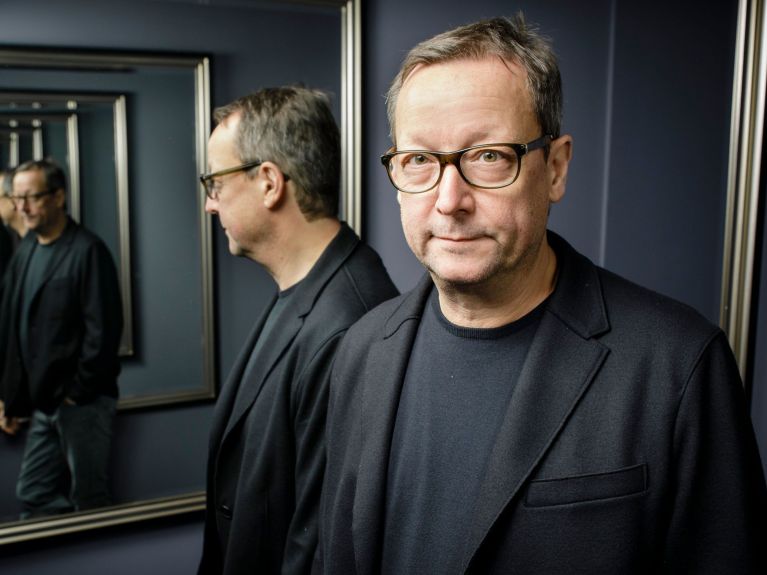
Matthias Brandt is campaigning against right-wing radicalism. The actor is the son of Willy Brandt, the former chancellor and Nobel peace laureate.
 Wolf Zinn
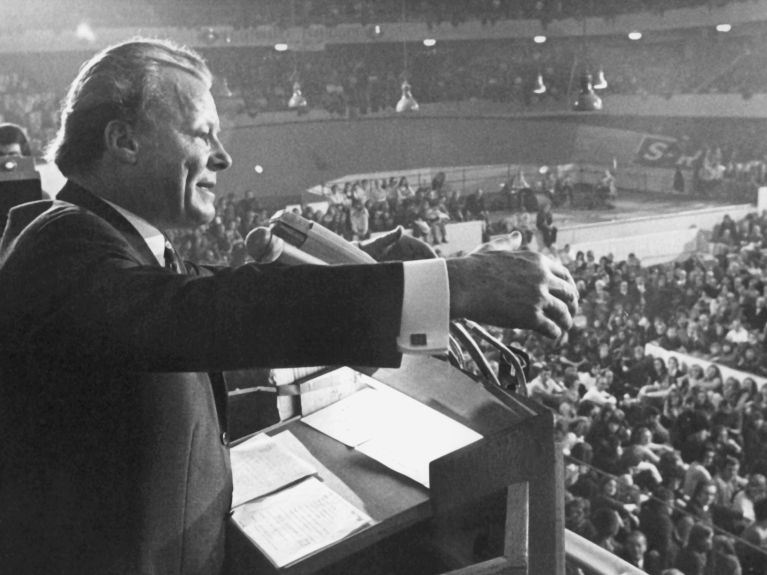
 Matthias Brandt has been one of Germany’s most renowned actors for decades. Besides his career in the arts, his family background is also noteworthy: he was born in Berlin in 1961 to Willy Brandt, the social democratic resistance fighter, emigrant and later Germany’s federal chancellor, and Rut Brandt, a Norwegian from the workers’ movement who worked for the government in exile. To this day, Willy Brandt symbolises the rebirth of democracy in Germany post-1945, the reconciliation with Eastern Europe and the experience that freedom and the rule of law have to be politically fought for and continuously defended.
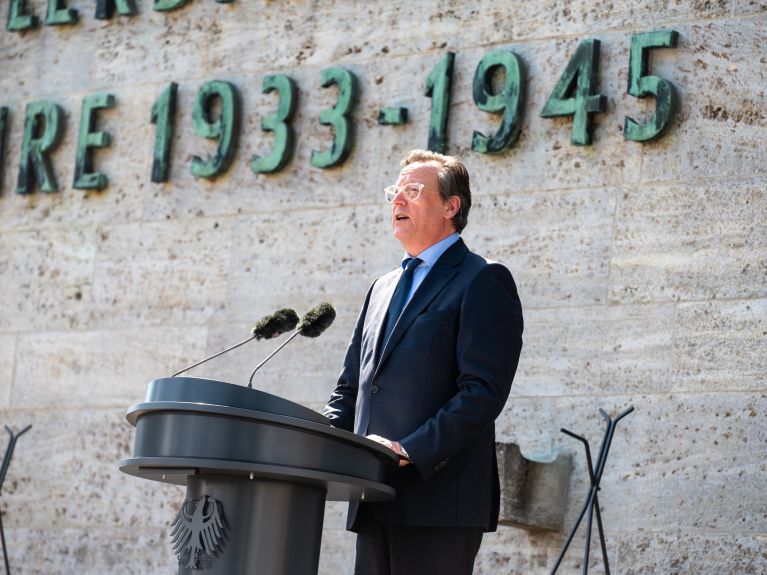
On 20 July 2025, the 81st anniversary of the attempted assassination of Adolf Hitler on 20 July 1944 and thus a key day of commemoration of the resistance to National Socialism, Matthias Brandt gave a highly acclaimed speech in Berlin-Plötzensee - the site where the Nazi justice system murdered opponents of the regime. “How can and how should one speak at all in a place like this?” he asked, “A place where everything demands silence.” Silence, however, as Brandt continued, was not an answer – “not as far as yesterday is concerned, nor as far as today or tomorrow are concerned”.
Learning from the past
This is precisely why Brandt has turned his attention to the current right-wing extremist movements: “We are today experiencing once again - as can also be seen from election results - how the poison of hatred, racism and exclusion is seeping in and bringing about coarser and less respectful social interactions, not least of a verbal nature, through violence and deliberate toying with images of Nazi propaganda.”
We are today experiencing once again how the poison of hatred, racism and exclusion is seeping in
This perception explains why Brandt is actively engaged in combating the party AfD, which Germany’s Federal Office for the Protection of the Constitution has classified as “confirmed right-wing extremist” in parts. He told German magazine “Der Spiegel” that one needed to call out the “simplicity and stupidity” of right-wing extremism, following the example of his parents who he described as “remarkably unafraid”.
In German weekly “Die Zeit” he wrote that one could not stop the AfD by condemning their voters in general but by contradicting it - “publicly. Persistently. Without fear of its loudness.” Right-wing populists, writes Brandt, defend “their fantasy of Germany against the reality of this country” - against a country “composed of many stories, origins and lifestyles.” He urges “every individual to feel more responsible than before for preserving our free and democratic way of life. Not sometime in the future. But now.”
Matthias Brandt’s new book “Nein sagen” (Saying No) is based on his Plötzensee speech and asks what the courage of the resistance movement on 20 July 1944 and his parents’ experience still mean today. He quotes the following statement that his mother made: “One doesn’t have to be loud to be steadfast. It’s enough if one knows who one is - and on which side one stands.”


