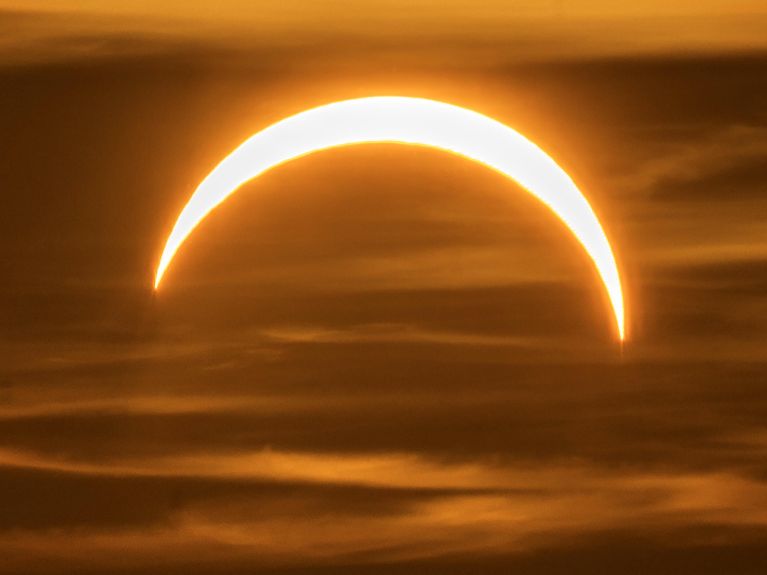
People in Germany and Spain enjoyed solar eclipse
A partial solar eclipse was witnessed by millions of Germans, while the Sun was blocked out by the Moon completely in Spain.
Berlin (dpa, d.de) – People across many parts of Germany gathered to watch a partial solar eclipse on Wednesday night. Depending on the region, the Sun was obscured by the Moon by between around 85 and 90 percent. Clear skies in many places allowed for good views of the rare natural spectacle.
The same event was even more impressive in mainland Spain, where the first total eclipse in over a century could be seen. The Sun was blocked out completely by the Moon across a some 300 kilometres wide path stretching from Galicia all the way to the Balearic Islands. Hundreds of thousands of people had travelled to the regions, and hotels in many places had been fully booked for months.
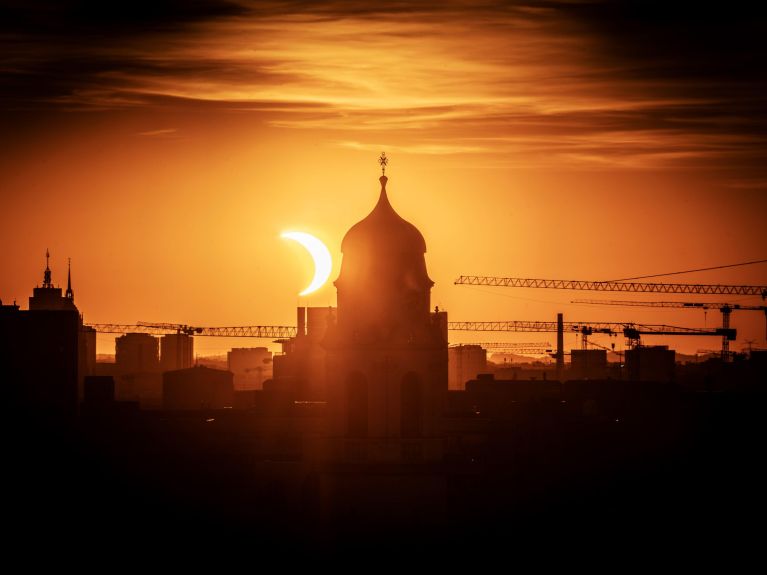
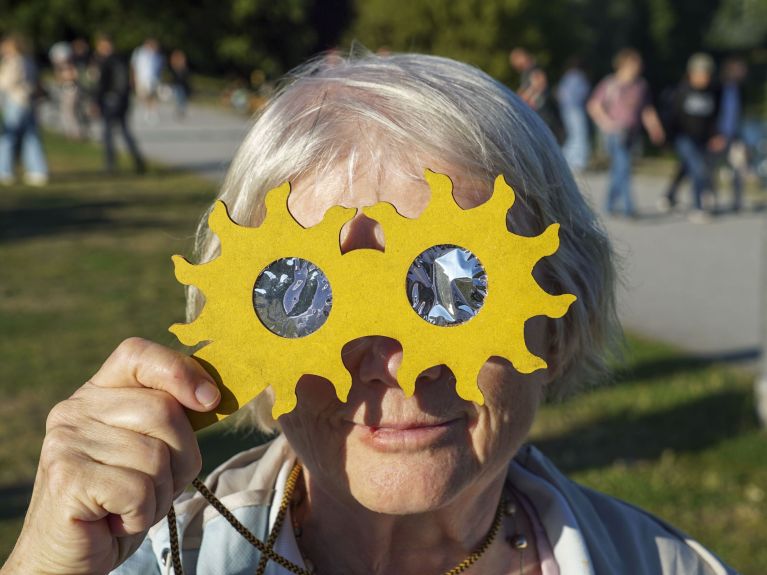
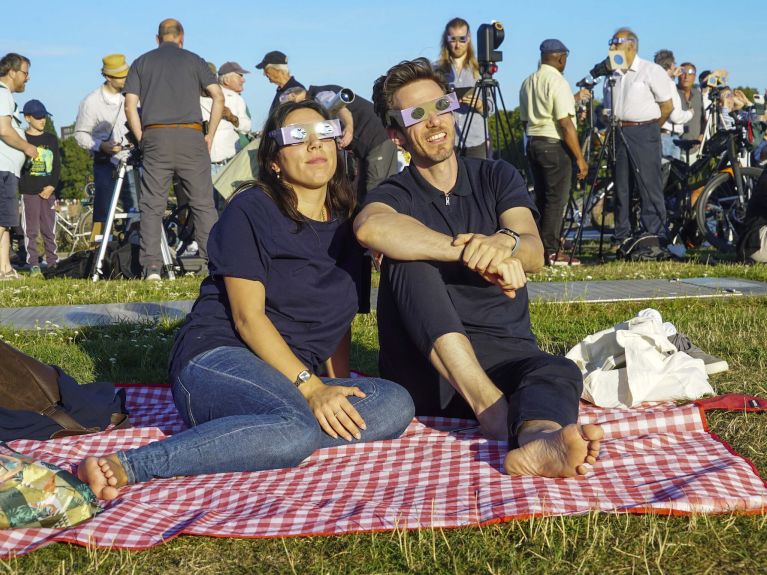
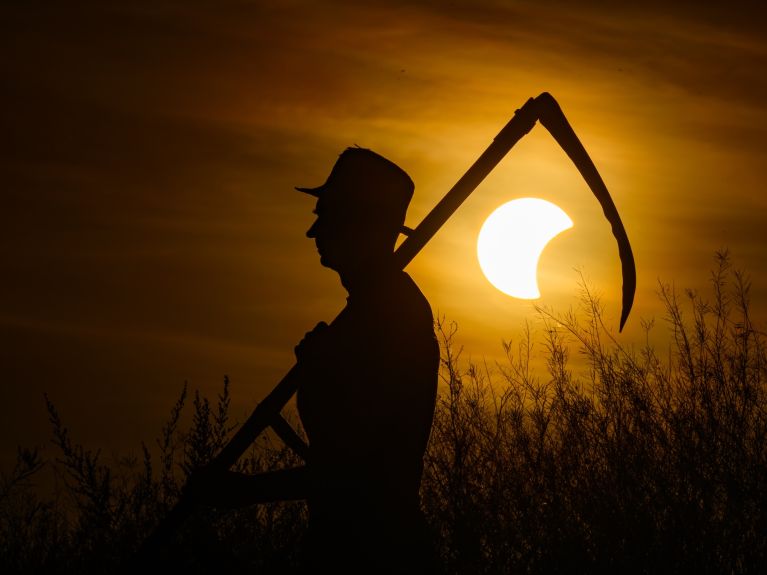
Thousands of people gathered at public observation spots also in Germany. The Olympic Park in Munich was rather crowded, and the Feldberg in Hesse also attracted hundreds of people wishing to see the eclipse. Traffic jams occurred around the planetarium in Berlin’s Prenzlauer Berg neighbourhood. The police reported that some 3,000 people gathered here to watch the solar eclipse.
The Federal Office for Radiation Protection had issued a warning against looking directly at the Sun without suitable solar viewing glasses, since solar radiation can cause damage to the eyes even when large parts of the Sun are obscured.
People in Germany will not have to wait long to see the next special astronomical event: there will be a partial lunar eclipse on 28 August 2026. The next partial solar eclipse can be seen on 2 August 2027.
Dieses YouTube-Video kann in einem neuen Tab abgespielt werden
YouTube öffnenThird party content
We use YouTube to embed content that may collect data about your activity. Please review the details and accept the service to see this content.
Open consent form

