Spring Alive, Europe, Central Asia, Africa
Spring Alive is an educational project to create an awareness and passion for biodiversity conservation amongst young people in Eurasia and Africa.
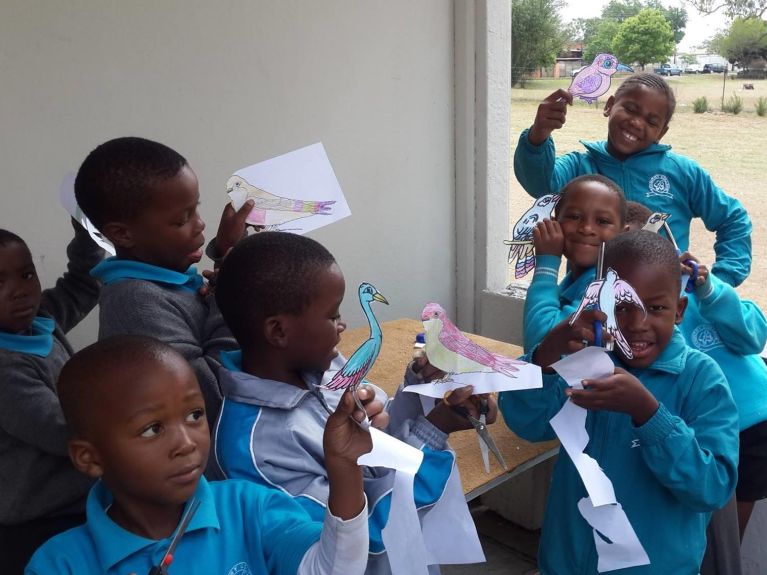
Project name: Spring Alive
Project location: Europe, Central Asia, Africa
Website: http://www.springalive.net/
Facebook: https://www.facebook.com/springaliveforbirds/
Dieses YouTube-Video kann in einem neuen Tab abgespielt werden
YouTube öffnenThird party content
We use YouTube to embed content that may collect data about your activity. Please review the details and accept the service to see this content.
Open consent formProject description:
Spring Alive is an educational project which began in 2006 in Europe coordinated by Polish Society for the Protection of Birds (OTOP). It has grown over time with more countries and continents involved, with Asia and Africa added. People from 55 countries are now engaged in Spring Alive, participants are encouraged to observe, learn about and record the arrival of migratory bird species. The project helps children, their families, friends and teachers to understand, engage and take action for birds and the environment, and to understand the need for the international conservation of migratory species. It encourages the broader community to get more involved with nature with a consideration of the local community’s livelihoods and well-being and connects people across continents and countries. Children get connected with nature. The project relies on cooperation with teachers and voluntary youth educators and reaches over 5 million people each year.
OTOP plans to connect more children along the Africa-Eurasian Flyway, with nature and with each other. Improving people’s lives by encouraging direct action and a growing constituency of people who care for their environment. OTOP wishes to scale up the project, by undertaking more initiatives for children (twinning programme, new website and resources, more educational and conservation events) and to empower youth and enhance the environmental skills of teachers working at grassroots level (workshops, trainings, exchanging of best practices, youth camps, study tours, innovative materials).
Goal and purpose of the project:
To create an awareness and passion for biodiversity conservation amongst young people in Eurasia and Africa by:
- Focusing on migrating birds and demonstrating how interdependent we all are even if geographically separated;
- Outdoor learning - is given a high priority ensuring the impact of education is huge, learning via doing and also reconnecting children with the outdoors and nature;
- Empowering teachers and young educators by providing resources that builds their capacity to implement nature education.
Motivation of the applicant / applicant team:
Project connects children in different countries, with nature and with each other. They link learning in school to real-life experiences, build sensitivity to negative changes of environment and readiness for lifestyle changes. The project encourages young people to be involved in hands-on activities for nature. By implementing such practices, the impact on future societies and their decisions supports a holistic understanding of world. It also enables educators to share their expertise and best practices.
Use of prize money:
Given the project depends very much on the coordinators who run it in their countries, it is key to empower them and provide with knowledge to support the project’s advancement. When participants are scattered across many countries, it is crucial to stay in regular contact to keep people motivated. Thus we would like to spend the prize money on the workshop for coordinators. This will be a space for exchanging the best practices and an opportunity for a training on the project related issues.