
“The hand must become intelligent”
Germany’s strengths in robotics lie in outstanding engineering, precision manufacturing, and research, says Bettina Schön-Behanzin of Agile Robots.
 Interview: Klaus Lüber
 Ms Schön-Behanzin, what do you need to build efficient, high-performance robots?
Three things: hardware, artificial intelligence and data. You need individualised robot arms to perform specific tasks, you need mobile platforms and you need humanoids - robots in human form. Then there’s the software - the robot’s “brain” that tells the machine how for example to grasp a fragile object. This is achieved using AI models. And finally, you need huge amounts of reliable data to train the models. A buzzword in this context is physical AI.
What is physical AI?
It’s artificial intelligence in a physical body. Physical AI enables machines to be aware of and understand their surroundings and act autonomously. It bridges the gap between the digital world and robotics. Only limited data is available relating to physical interactions - in contrast to language models that are trained on enormous amounts of text. That’s why the data that is required for physical AI is generated specifically by conducting simulations, drawing on real-world robotic data and using videos in which humans demonstrate specific actions. This is how a robot learns to grasp objects, use tools and safely perform complex tasks.
How well is Germany doing in this field?
Very well. Our strength lies in combining first-rate training inengineering, precision manufacturing and software development. Germany boasts outstanding universities, decades of experience in mechanical engineering and the automotive industry, and excellent research - such as that carried out at the German Aerospace Center (DLR). Hardly any other country has a comparable basis.
How is this specifically reflected in robot development?
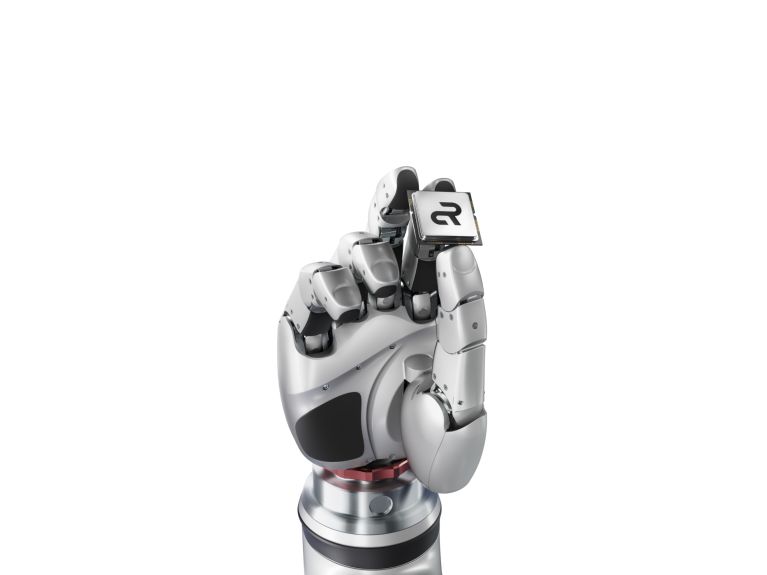
One good example is the hand in a humanoid robot. It’s by far the most complex component. To achieve the necessary level of fine motor skills, a whole series of joints and sensors is needed. This allows the robot to sense whether it is grasping a hard or soft object. Developing such fine motor skills is an extraordinary feat of engineering. And Germany is one of the world’s leaders in this field. Then the whole process also has to be controlled - the hand needs to become intelligent. Germany has years of top-class research experience under its belt in this area, too.
Agile Robots is a German Aerospace Center spin-off whose founder and CEO came to the DLR in Germany as a doctoral student from China. This also speaks volumes about Germany’s strengths, doesn’t it?
Indeed, and it wasn’t just a question of the excellent research being conducted here, either. From the outset, his goal was to build up a truly international company. We produce not only in Germany but also in China and India. We recently set up an office in Silicon Valley, too.
What we can learn from China is without doubt the country’s openness to new technologies and innovation - and above all the speed at which things happen there.
Bettina Schön-Behanzin is Vice President External Affairs and Communications at Munich-based robotics firm Agile Robots. Previously, she spent 27 years living and working in China – including as the first chairwoman of the German Chamber of Commerce in Shanghai.


