The poetry of contrasts
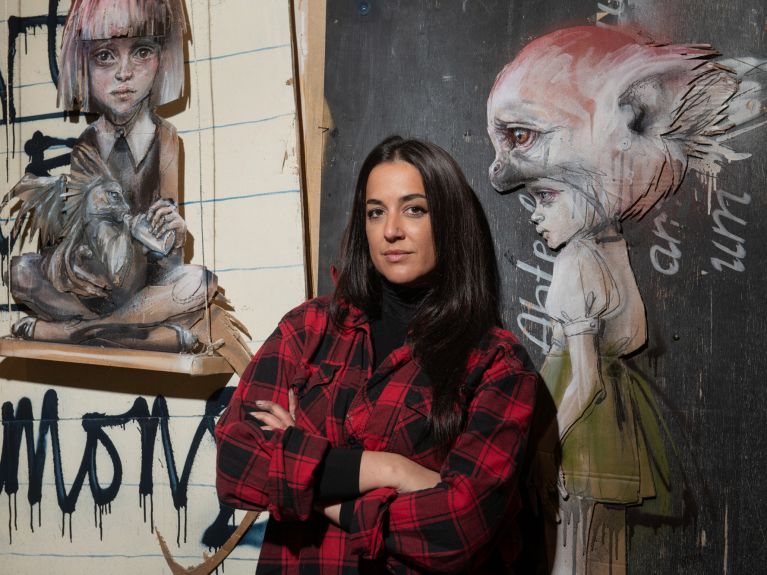
Jasmin Siddiqui, alias Hera, is one of Germany’s best-known female street artists. Her murals have a fairytale quality, yet tackle serious social issues.
 Kim Berg
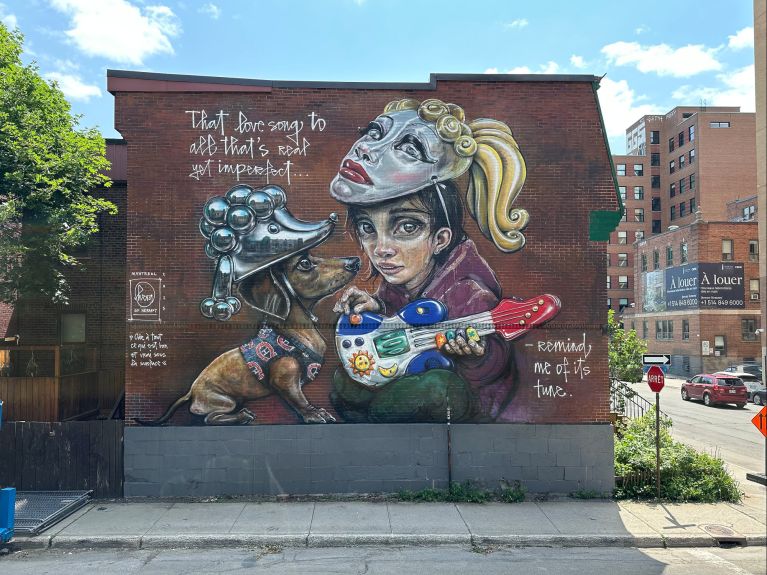
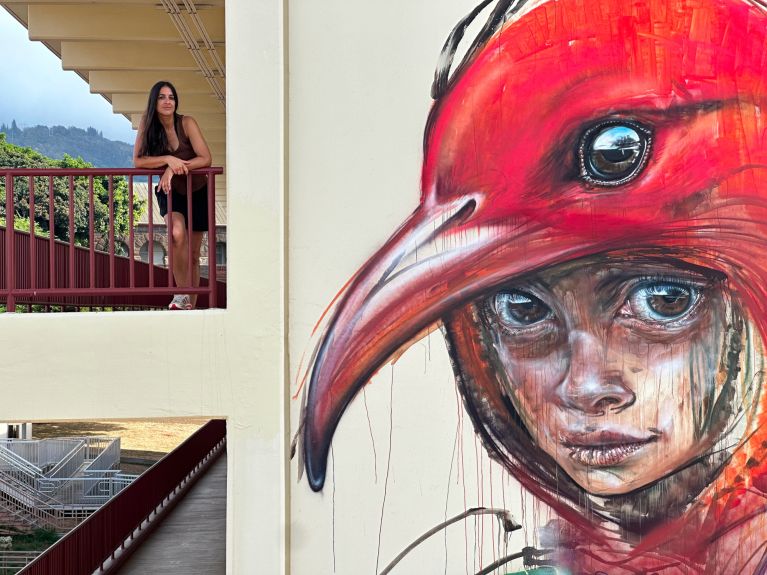
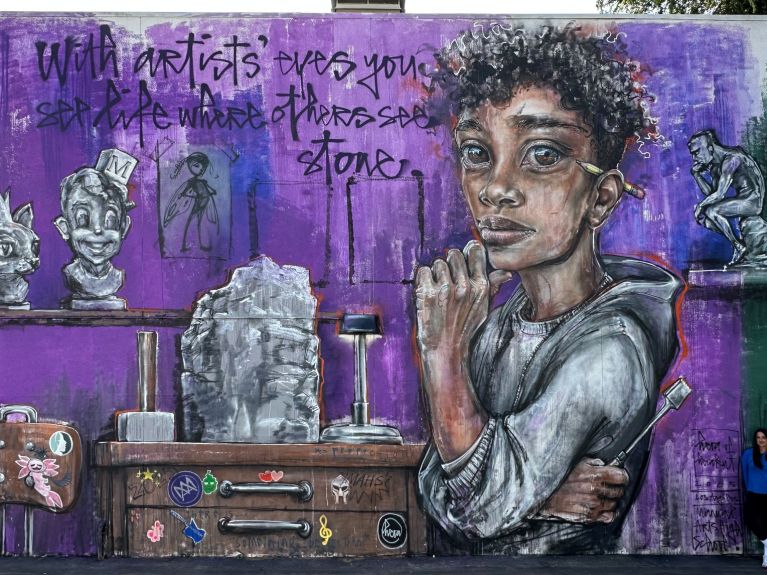
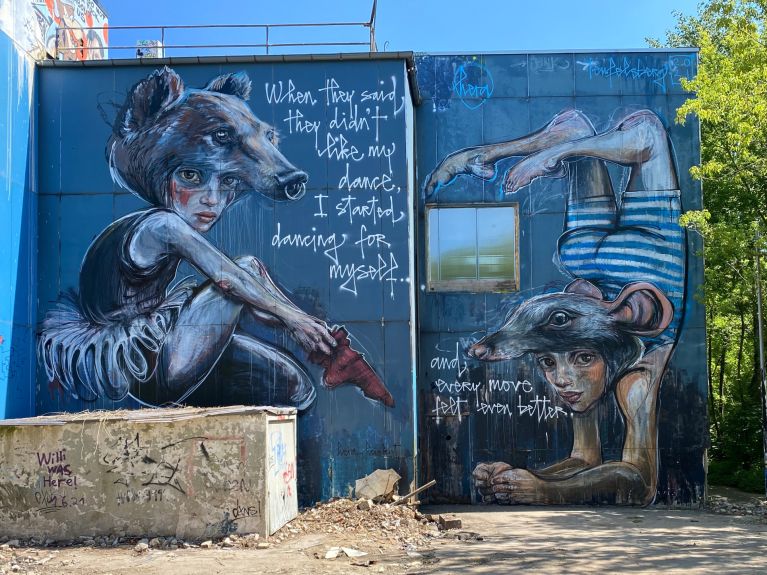
 Standing in front of a mural by Jasmin Siddiqui, alias Hera, you are unlikely to find yourself looking at an ordinary portrait. Human bodies merge with animal forms, delicate lines meet rough surfaces, and fairytale-like motifs convey thought-provoking messages. Some figures look like fleeting sketches, while others are almost photorealistic. It is precisely these contrasts that make Hera’s work so distinctive.
Born in Frankfurt am Main in 1981, the graphic designer has worked under the name Hera since 2001. Growing up with both German and Pakistani influences and Catholic and Muslim traditions gave Siddiqui an early appreciation of different perspectives.
“I was very introverted as a child,” she said in an interview with Radio Primavera. In graffiti, she found a form of expression that allowed her to bring her experiences and observations directly into the public realm. “It just seemed logical to me to use walls as a means of expression,” she told Hessischer Rundfunk. To this day, she combines traditional drawing and painting techniques with the aesthetics of graffiti. Rather than seeing herself as someone who designs large façades, she considers herself a storyteller in the public realm.
I just thought it was logical to use walls as a means of expression.
Siddiqui is drawn to what is often overlooked or pushed to the margins. In her murals, she puts the spotlight on people, places and stories that often go unnoticed in everyday life. In doing so, she gives new dignity to what might be seen as ugly or imperfect.
Murals for the world
Siddiqui achieved her international breakthrough in 2004 with the artist duo Herakut, which she founded with Falk Lehmann, alias Akut. While Hera developed narrative figures and spontaneous lines, Akut added photorealistic elements to their work. Together, they created murals on several continents, frequently combining their art with social and humanitarian projects. The duo’s work can be seen in cities such as São Paulo, Miami, Berlin, Kampala and Washington, D.C.
Siddiqui’s art has long since found its way into museums too. Her work has been exhibited at venues including the Rogaland Kunstmuseum in Stavanger, the Pera Museum in Istanbul, Urban Nation in Berlin, the Straat Museum in Amsterdam and the Moca Museum in Copenhagen.


Street art with a message
In 2025, Siddiqui created a façade more than 17 metres high on Berlin’s Teufelsberg for the “Violence against Women” helpline. The mural stands for courage, solidarity and empowerment. At the same time, it draws attention to gender-based violence and highlights the anonymous, free counselling service available.
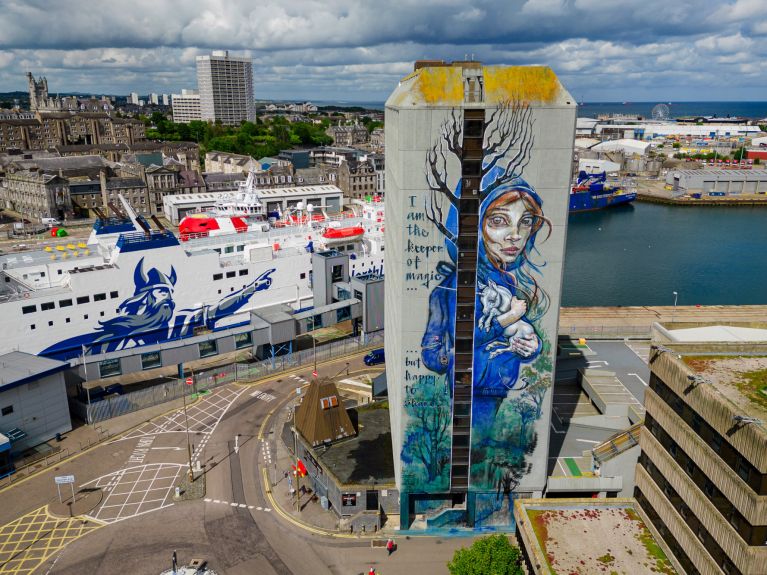
The Teufelsberg mural is one of a long series of works in which Hera transforms the façades of buildings into large-scale visual worlds.

