
How cells sense forces
What happens inside a cell when it is subjected to pressure or stretching? Sara Wickström is researching this question – and will receive the 2026 Körber Prize.
Our cells are constantly changing and responding to all kinds of stimuli. When skin is stretched, it becomes longer. As the body ages, wrinkles develop – on the forehead, around the eyes and at the corners of the mouth. The properties of tissue also change in tumours. Breast cancer, for example, can be diagnosed by feeling a hardened lump. “Cells are incredibly adaptable,” says Sara Wickström. “My question was: how does this work at the molecular level?”
This question led the Finnish physician and cell biologist to a fundamental discovery: Cells can, in a sense, feel mechanical forces such as pressure, tension or stretching. Such forces reach right into the cell nucleus, where they can influence which genes are active. For this reason, Wickström is regarded as one of the founders of a new field of research: nuclear mechanobiology. She is the Managing Director of the Max Planck Institute for Molecular Biomedicine in Münster and Research Director at the Faculty of Medicine of the University of Helsinki. In recognition of her work, she will receive this year’s Körber European Science Prize at Hamburg City Hall on 18 September 2026.
The Körber European Science Prize has been awarded annually by the Körber-Stiftung since 1985. It recognises scientists whose research has the potential to shape the future. The prize money of one million euros is intended to fund research projects in the life or natural sciences. Eight Körber Prize winners have subsequently gone on to receive the Nobel Prize.
When stretching changes genes
For Wickström, it began with simple experiments. “I stretched epidermal cell cultures in the laboratory to find out what happened.” Skin cells were particularly well suited to this: they are constantly exposed to mechanical forces and have to respond to them.
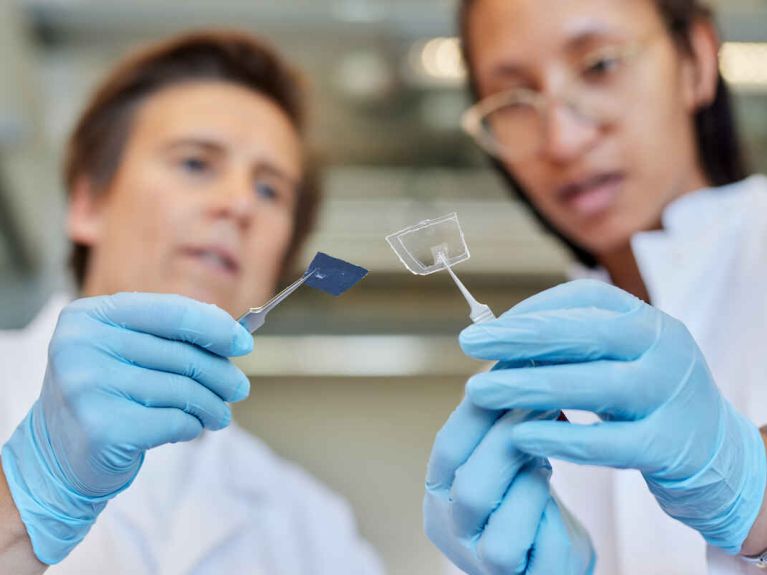
Wickström then investigated which genes were active in the stretched cells. She discovered fundamental changes. The mechanical stress appeared to affect chromatin – the way genetic material is packaged in the cell nucleus. It consists of DNA and proteins and determines which sections of DNA are accessible to the cell. Changes to chromatin can therefore switch genes on or off. “I remember the moment when I analysed the results,” she says. “That’s when I realised I’d discovered something.”
Since then, Wickström and other researchers have been working to gain a better understanding of these mechanisms. “We started with cell culture experiments,” she says. “Now we need to find out how real tissues respond.” The research shows that mechanical changes play a role in ageing and cancer, among other things. As we age, tissue often becomes stiffer and loses elasticity; tumours also alter their mechanical environment. “We have shown that mechanical forces in these scenarios do indeed influence gene expression.”

What ageing and cancer have to do with mechanics
The new field of nuclear mechanobiology brings together two of Wickström’s passions: cell biology and physics. She studied medicine at the University of Helsinki and later went on to work in hospitals, an experience that has shaped her understanding of the complexity and diversity of diseases such as cancer. “Even with the same type of tumour, each tumour differs slightly from one patient to another,” she says.
Today, her laboratory is investigating how mechanical forces contribute to this diversity. “We want to find out what causes cells to change and to what extent the progression of a disease can be explained by mechanical forces.” The researchers hope to use this knowledge to develop new diagnostic tools.
Dieses YouTube-Video kann in einem neuen Tab abgespielt werden
YouTube öffnenThird party content
We use YouTube to embed content that may collect data about your activity. Please review the details and accept the service to see this content.
Open consent formFrom fundamental knowledge to medical applications
Wickström plans to use the Körber Prize money to investigate whether cells have a kind of memory. “Cells respond to external forces through changes in gene expression and chromatin,” says the researcher. “We want to understand whether cells and tissues remember these effects – and whether this influences their future development.” The aim is to investigate whether these mechanisms could be used to prevent or treat tissue scarring.
There are many other potential therapeutic applications for this research, ranging from cancer to age-related diseases. “Even in healthy skin, cells are constantly undergoing mutations,” says Wickström, “as a result of UV radiation, for example.” Mutations can trigger cancer – but cancer does not develop in the mutated cells themselves. “So the question is: are there mechanical stimuli that also help trigger changes in the cell – and are therefore part of the disease?”
It began with cell biology research in the laboratory that led to significant discoveries around ten years ago. In 2025, Wickström and two members of her laboratory founded the startup MultivisionDx. The company aims to use AI to analyse microscopic images of tissue and develop tools for cancer diagnosis.
“This shows how important it is to support fundamental research,” says Wickström. Scientific research takes a long time, and hardly any private company would sustain such research over a period of many years. “But ultimately, it is these fundamental discoveries that can lead to medical innovations.”


