Faster than the virus
How the Bernhard Nocht Institute for Tropical Medicine is working with partners in Africa to help the world prepare better for the next pandemic.
 Clara Krug
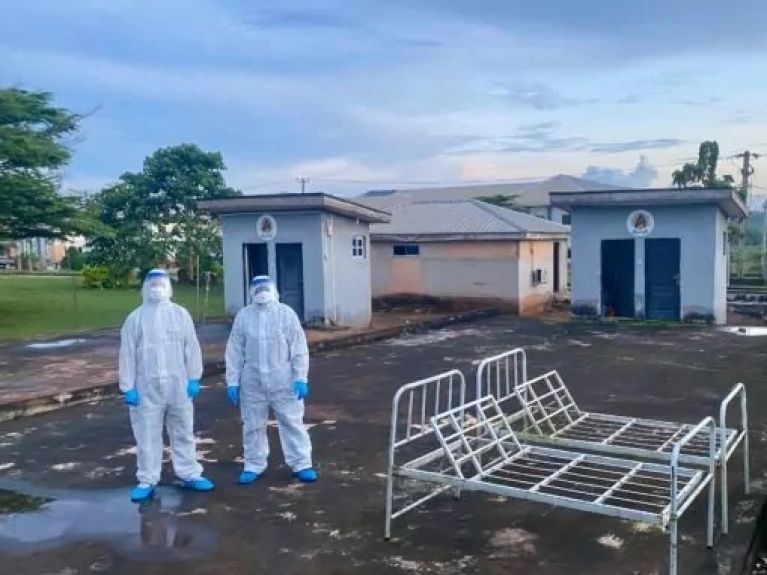
 Protective suit, visor, blue gloves and a bed frame that may soon be needed. Two members of staff stand outdoors in front of low buildings, the ground is wet and the air is clear. It is one of those situations in which health research gets very practical: closing the protective suit, adjusting the visor, checking the gloves and coordinating every step so that everything works even under pressure. Who positions the bed? Who prepares the isolation area? Which procedures come into effect when a patient suspected of having a severe viral infection such as Lassa fever is admitted? Infections that can have serious consequences – both for patients and for medical staff.
The MEVIN 2.0 project involves collaboration between teams from the Bernhard Nocht Institute for Tropical Medicine (BNITM) and the Irrua Specialist Teaching Hospital in Nigeria. The aim is to improve treatment for patients with highly dangerous viral infections while at the same time protecting medical staff. This applies to Lassa fever, Ebola and newly emerging viruses, for example. MEVIN 2.0 is one of six projects being implemented by BNITM together with international partners as part of the Global Health Protection Programme (GHPP). The German Federal Ministry of Health is funding the projects with more than nine million euros. They began in early 2026 and will run for three years.
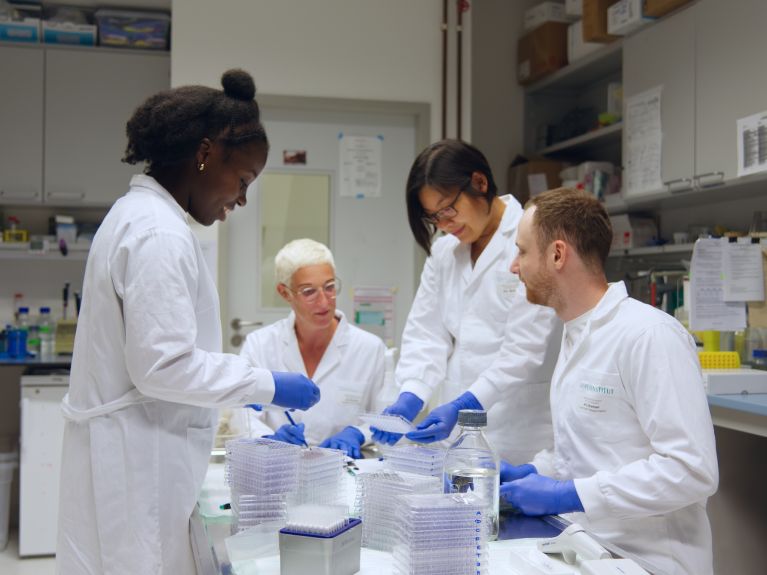
What exactly are the project partners working on, what goals do they have and what have they already achieved? The key questions and answers at a glance:
What is the Global Health Protection Programme (GHPP) – and why does it matter for global health?
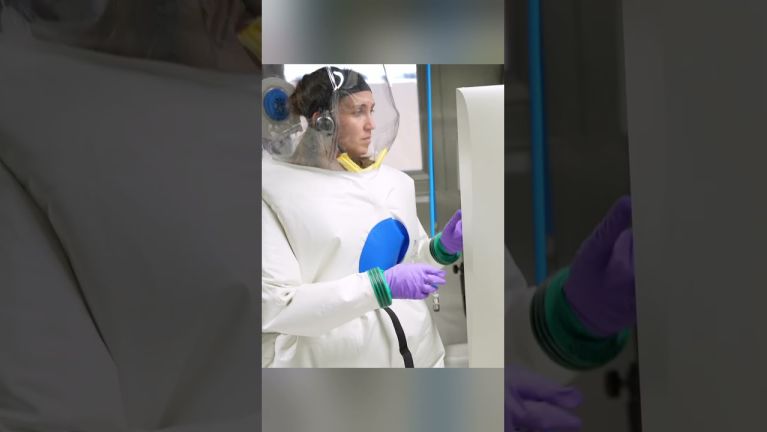
Since 2016, the GHPP has supported projects in countries frequently affected by dangerous infectious diseases. Researchers establish laboratories, train medical staff and improve the early detection of outbreaks. The aim is to contain epidemics more quickly.
Dieses YouTube-Video kann in einem neuen Tab abgespielt werden
YouTube öffnenThird party content
We use YouTube to embed content that may collect data about your activity. Please review the details and accept the service to see this content.
Open consent formWhat is AfroLabNet3 about – and what does it have to do with pandemic preparedness?
One of the funded projects is AfroLabNet3. It addresses a core problem: in many regions south of the Sahara, limited resources and infrastructure make it difficult to respond rapidly to outbreaks, especially newly emerging infectious diseases. For this reason, the project seeks to boost regional laboratory networks in high-risk regions of Benin, Guinea, Nigeria and Sierra Leone, while also keeping mobile laboratory deployment capacities up to date so that diagnostics can also be carried out in the field. In addition, AfroLabNet3 investigates how viruses are transmitted between animals and humans. This aim here is also to improve early detection and prevention.
How can pathogens be identified more quickly?
The CELESTA 2.0 project is building capacities for genomic surveillance: in laboratories, researchers sequence viruses, analysing their genetic material. This enables them to identify, trace, monitor and characterise pathogens more quickly during outbreaks – an important basis for decision-making in public health crisis management. The project focuses on Nigeria and Guinea and involves close collaboration with local partners there, including the Irrua Specialist Teaching Hospital in Nigeria, Université Gamal Abdel Nasser (UGANC) in Guinea and laboratories in Guinea. The health ministries of Nigeria and Guinea are also involved, as is a Belgian university.
Why does intensive care medicine belong in an outbreak preparedness programme – as in MEVIN 2.0?
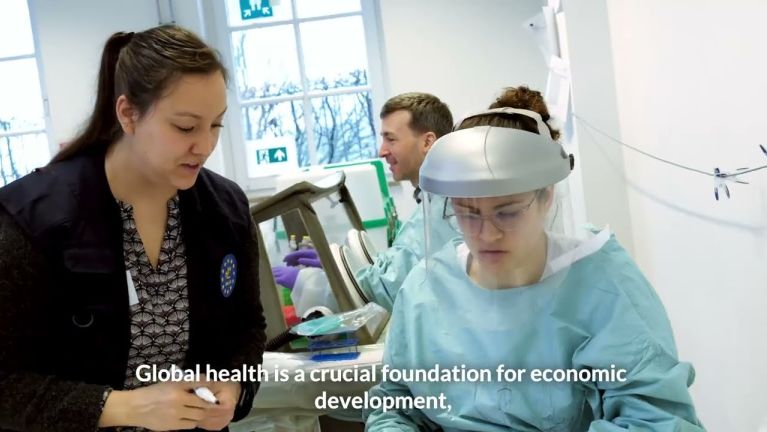
Because outbreak preparedness doesn’t end once a pathogen has been identified in the laboratory. Patients with Lassa fever and other viral infections can develop extremely severe complications and require intensive care treatment. For this reason, MEVIN 2.0 collaborates with the Irrua Specialist Teaching Hospital (ISTH) in Nigeria to focus on expanding treatment capacities and building on important steps from the previous project phase: at ISTH, for example, the project partners have established an intensive care unit for Lassa fever within the isolation ward and equipped it with modern monitoring technology, accompanied by training programmes and work on clinical guidelines. In addition, the project is building a globally deployable medical rapid response team. The aim is to bring clinical expertise quickly to outbreak regions in emergencies.
Dieses YouTube-Video kann in einem neuen Tab abgespielt werden
YouTube öffnenThird party content
We use YouTube to embed content that may collect data about your activity. Please review the details and accept the service to see this content.
Open consent formWhat other projects are there?
Three additional preparedness projects are running within the GHPP network.
- Together with partners in Ghana and Tanzania, Expand-AMR focuses on antimicrobial resistance – in other words, bacteria becoming resistant to antibiotics. The team monitors resistance patterns, analyses treatment outcomes and develops strategies for more effective healthcare.
- Researchers involved in the SMART II project are investigating in Ghana whether malaria medicines are increasingly losing their effectiveness. At the same time, they record how widespread the disease is within the population.
- In the FOR-GHP project, researchers and medical specialists train staff in dealing with disease outbreaks in sub-Saharan Africa. In order to do so, they combine online courses with workshops in Ghana, Uganda and Germany and simulate emergency scenarios through exercises.


