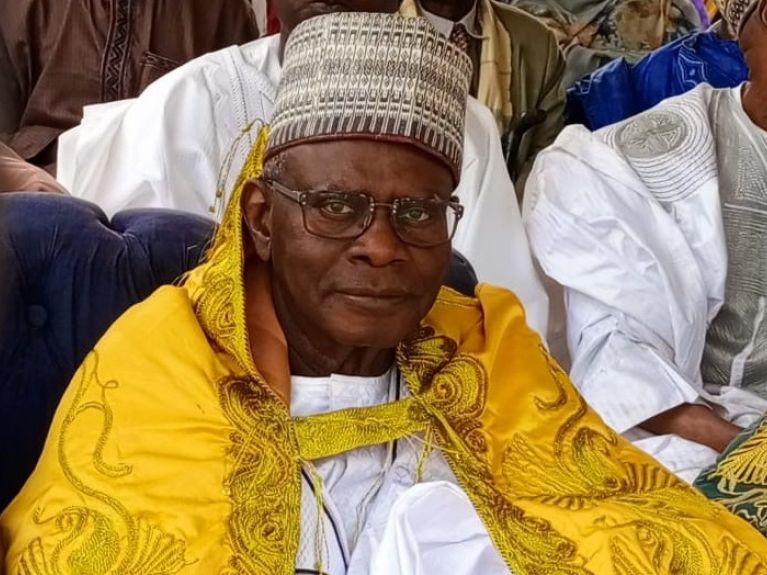
The chief physician from Northern Germany that was elected King in Niger
Issifi Djibey used to work in a German hospital as a heart surgeon. Now he is the King of the Kokorou province in Niger. In the interview he explains how this came about.
Issifi Djibey was born in Niger and came to Germany in 1970 to study medicine. The now 75-year-old became an expert for heart, vessel and thorax surgery and was eventually made chief physician in Rendsburg in Northern German. He retired in 2014. In February 2026, Issifi Djibey was elected King in his home commune Kokorou in the west of Niger. He now commutes between the two countries.
Dr. Djibey, what would be the appropriate way to address you?
I am not sure how to translate the French title Honorable, maybe “Honourable” would be fitting. So the correct form of address would be “Honourable Chief of the Canton of Kokorou”. But you are very welcome to just call me Dr. Djibey.
Okay, Dr. Djibey then. How did you find yourself in this extraordinary position? Being made King is not an everyday thing, after all.
Every province in Niger has its own king. Anyone who is part of the royal bloodline can run for election, and I am. Age also plays a role for this office, and I am among the oldest members of my family. My relatives wanted me to stand for election, and I did not want to turn this wish down. I am now the King of my home province in the west of Niger, that is about the size of the Saarland. It comprises around 80 villages and has a population of some 200,000.
What exactly are your duties?
As King I report directly to the Nigerien Ministry of the Interior, and my main duty is to ensure that customs and traditions are upheld. As the official representative of the area I act as a mediator between my province’s population and the national government. You could say that my job is effectively to make sure that the decisions made by the government are put into practice locally. I am also involved in justice-related matters: when two people do not get along, they can come to me and I will pass judgement on their case. If they do not agree with my decision, they need to turn to someone else, such as a lawyer.
What are the benefits of your role as King?
I have a closer connection to the population than a civil servant or some government representative who might be from a different part of the country, has never been to the province and therefore isn’t well informed.
Being elected King reinforces your ties to Niger as your native country. How did you originally come to Germany?
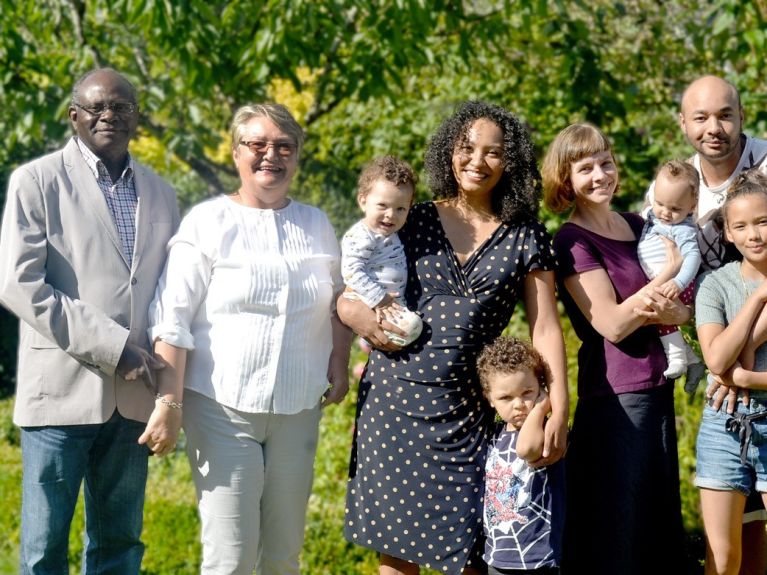
It was ultimately a coincidence. I came to Gießen in 1970 with a scholarship from the German Academic Exchange Service (DAAD) where I initially studied veterinary medicine before turning to human medicine. As a student I met my future wife who I live with in Rendsburg to this day. After I had obtained my doctorate, we moved to Niger together but we eventually returned to Germany. I am a heart surgery specialist and it is not possible to practice in this profession in Niger.
There must be great demand for qualified medical staff in Niger. How come your specialisation still wasn’t relevant there?
This type of specialist hospital does not exist in Niger even now. Heart surgery is an extremely expensive medical field that a poor country such as Niger simply cannot afford. Towards the end of my professional training I went to Niger and took a look around. There was no way I could have worked in my area of specialisation. How much do you think a heart valve or a stent costs? Even aspirin isn’t always available in Niger.
You have lived in Germany for decades. Do your experiences and the things you have learned here have an impact on your work as King?
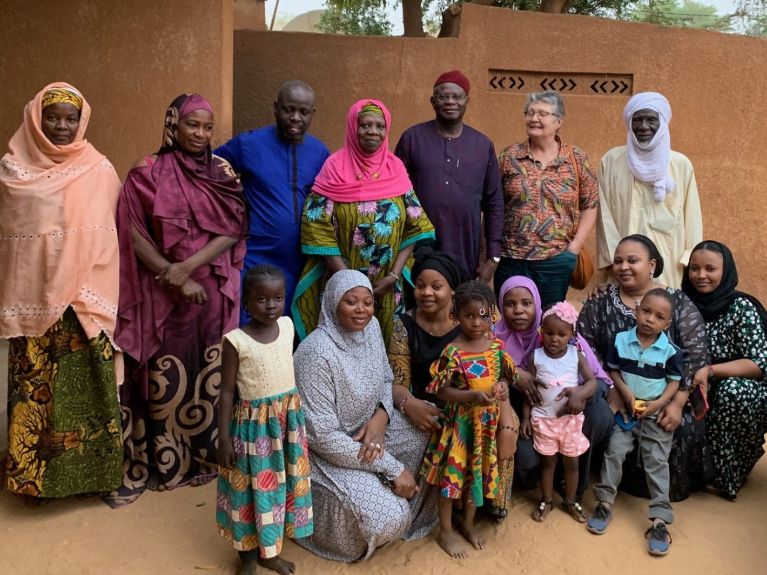
I think so, yes. I have internalised a number of German virtues that I tend to practice, such as reliability, the will to achieve something, and a respectful and friendly way of treating all human beings. Most of all, however, I am bringing optimism, rationality and perseverance to the role. This is essential, as the tasks I am faced with are extremely difficult.
First of all, I need to work towards bringing peace to the region
What are some of the specific challenges you are dealing with?
Essentially, there is currently nothing in Kokorou: no infrastructure and especially no peace. Thousands of jihadists have settled in the area, armed gangs are terrorising the population, and people are being murdered. So the first step is to cooperate with the government and the military and to build on the population’s good will to bring peace to the region. As long as there is no peace, it is impossible for any development projects to take effect. You cannot build roads, promote trade or even grow crops. This means that it is an enormous task.
Do you use your contacts in Germany to promote better conditions in Niger?
Yes, that was actually one of the reasons I decided to stand for election. I have so many acquaintances, friends and connections in Germany that I would like to use to make things a little bit brighter in Niger. I am a Rotarian and I have realised a number of projects in Niger with friends from the Rotary Club over the years, such as eye surgery programmes. We are also sending several containers of medicines and medical equipment every year. It would be very, very beneficial for the region if I could use my role as King to get the German development ministry interested in Kokorou and encourage it to help promote development in the province.


