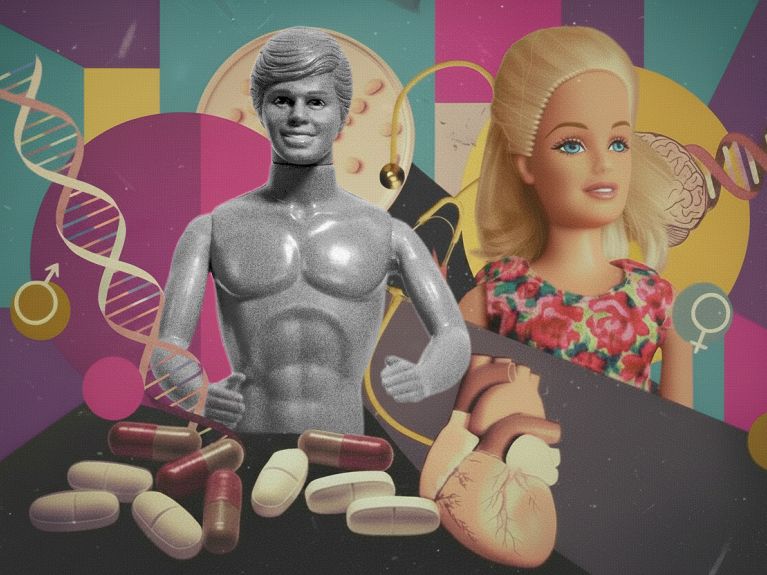
“In women, heart attacks are detected less often”
Sabine Oertelt-Prigione does research in the area of gender-sensitive medicine and explains why the “male standard” in medicine still has consequences to this day.
 Kim Berg
 Sabine Oertelt-Prigione is a specialist in internal medicine and Professor of Gender-Sensitive Medicine at Bielefeld University and Radboud University Medical Center in Nijmegen. She advocates for greater consideration of gender differences in diagnostics and therapies.

Ms Oertelt-Prigione, why can people experience illness differently depending on their gender?
Because biology and social factors interact. Biologically, hormones, genetics and anatomy all have a role to play in health, for example. This influences how the immune system or cardiovascular system responds. At the same time, social factors also impact on health. Levels of exercise or risk behaviour such as smoking and alcohol consumption still differ in some respects between genders – and factors such as work-related stress, living conditions or air quality affect the body, too. There are also structural factors such as income differences, the risk of poverty and the experience of discrimination and violence, all of which influence health and access to care.
Where is it most apparent today that medicine was long based on the “male standard”?
It is particularly evident if you look at what was long considered “worthy of research”. In many places, women were not even allowed to work in medicine until the early 20th, and it is the people sitting on decision-making bodies who influence which questions are asked. If diversity is lacking, certain issues never even make it onto the agenda. One result of this is that some illnesses and phases of life were barely researched for years – including endometriosis, symptoms associated with the menopause, and lipedema, a painful disorder of fat distribution that affects almost exclusively women.
If diagnostic criteria and “typical” symptoms are based on a standardised pattern, anyone who does not fit that pattern is at risk.
What are the specific consequences of this as far as patients are concerned?
If diagnostic criteria and “typical” symptoms are based on a standardised pattern, anyone who does not fit that pattern is at risk. The classic example is that of the heart attack: for a long time, this was associated primarily with men – with the result that women were diagnosed less often. By the same token, there are illnesses that are considered to be “female”: depression is more frequently attributed to women and is therefore underestimated and underdiagnosed in men.
How far has Germany progressed on this issue?
There are now many centres in Germany working on different aspects of gender-sensitive medicine. Thanks to current government-backed research funding, I see very positive developments, particularly in the area of women’s health. The key question will be whether the political focus remains in the long term, since short-term programmes lasting only a few years can severely limit the development of a recently established field. If support continues, Germany could even become a pioneer in this area in the future.


