Why people believe bullshit
The sense of belonging that fake news, polarisation and moral posturing foster matters more than truth to many people, says Philipp Hübl. Democratic debate suffers.
 Klaus Lüber
 People who lie know that they are lying. What’s much more dangerous are people who couldn’t care less whether what they are saying is true or not. Berlin-based philosopher Philipp Hübl has been studying this phenomenon - which US philosopher Harry Frankfurt called “bullshit” - for some years.
In his 2018 book “Bullshit-Resistenz” (Bullshit Resistance), Hübl asks why we are susceptible to such manipulations of reality and what we can do to resist them. His answer takes us all the way back to tribal behaviour. He says that humans are social creatures who tend to place a higher value on a sense of belonging than on truth. Those who believe the false representations of their group will pay a lower social price than those who contradict them.
However, this desire to belong shapes not only what we believe is true but also what we believe is right. In his 2019 book “Die aufgeregte Gesellschaft” (The Agitated Society), Hübl reveals how emotions and social bonds can form our moral compass. In this context, he makes reference to findings in the field of moral psychology: even seemingly banal preferences - such as whether people like dogs or cats better - can be related to different value orientations. Whereas some attach greater weight to freedom, welfare and fairness, others believe that authority, loyalty or purity are more important. Which values we see as particularly important depends to some extent on the degree to which we feel empathy - and how strongly we strive for a sense of belonging. According to Hübl, anyone wishing to act in a moral way must therefore explore their own motives and feelings.
We want not only to do the right thing, but also to have this acknowledged by others.
This is exactly the focus of his latest book. In “Moralspektakel” (Moral Spectacle), which was published in 2024, Hübl observes how the right attitude has become a status symbol. Social debates become a platform for demonstrating which side one is on - not only to convince others but also to present oneself in a positive light. “We want acknowledgement in the group, that’s something that is deeply rooted in us,” says Hübl. “That’s why we want not only to do the right thing but also to have this acknowledged by others.“ The desire to belong, which makes us so susceptible to “bullshit”, reappears here in a new form: as a feeling of moral superiority.
Hübl believes this is the main reason why social debates nowadays are conducted in such an ideological and destructive manner. His solution: moral modesty and an ethical universalism that applies equally to all - not only to one’s own group. After all, when debates are used primarily for posturing purposes, the result is symbolic politics rather than genuine solutions to problems – staged morals, says Hübl, do not make the world a better place, and at worst can be harmful to democracy.
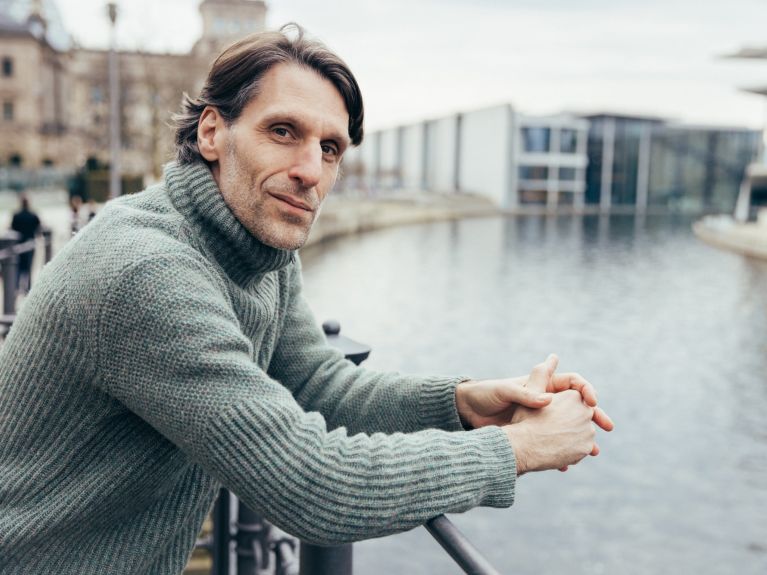
Philipp Hübl, born in Hanover, Germany, on 21 November 1975, is a philosopher, author and journalist. He teaches at Berlin University of the Arts and conducts research on morals, polarisation and the digital public sphere.
www.philipphuebl.com


