Pioneering studies in the quantum world
Karlsruhe University of Applied Sciences is launching its new bachelor’s degree programme in quantum computing with 23 students. In focus: hands-on learning using the university’s own quantum computer.
 Wolf Zinn
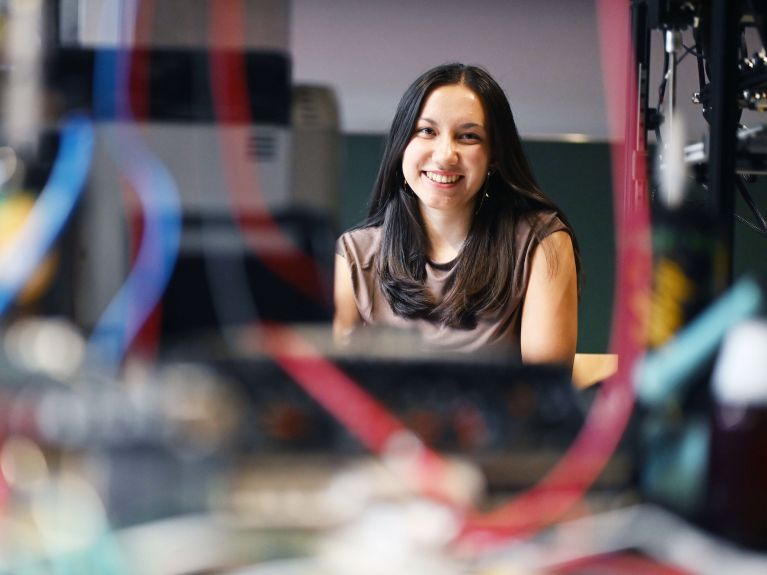
 When Jana Pohl spotted posters on the campus of Karlsruhe University of Applied Sciences (HKA) advertising the new quantum computing degree programme, she was immediately interested. “It sounds exciting and challenging,” says the 20-year-old. She was the first to enrol. The prospect of breaking new ground does not deter her: “I find it fascinating to study in a field where we can get actively involved.”
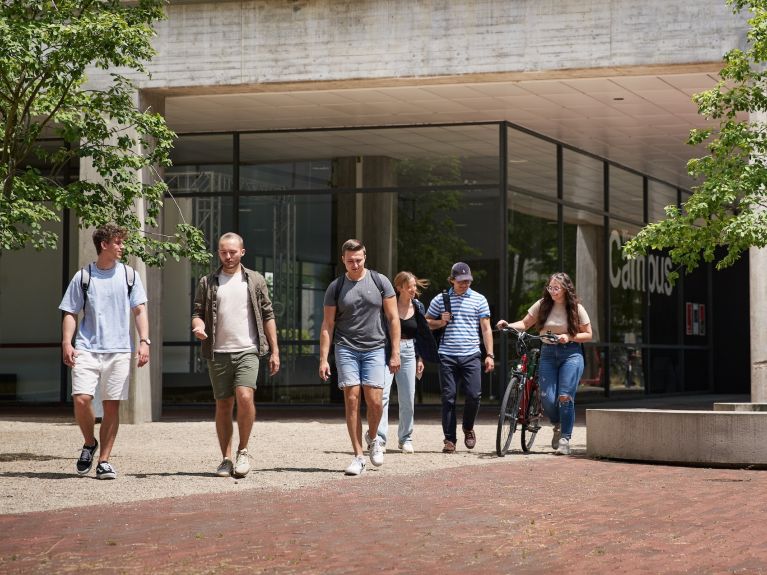
In the winter semester of 2026/2027, HKA is launching the first practice-oriented bachelor’s degree programme in quantum computing in the German-speaking world. Twenty-three students have enrolled, including two other women besides Jana Pohl. The seven-semester programme combines electrical engineering, computer science and quantum physics. Students begin with mathematics, experimental physics, digital technology and programming before moving on to subjects including quantum mechanics, quantum computer architectures, quantum algorithms and quantum sensing. A practical semester is also an integral part of the programme.

Dieses YouTube-Video kann in einem neuen Tab abgespielt werden
YouTube öffnenThird party content
We use YouTube to embed content that may collect data about your activity. Please review the details and accept the service to see this content.
Open consent formPractical experience rather than pure theory
HKA deliberately aims to distinguish its programme from more research-oriented courses. Students will not only learn how quantum technologies work, but they will also apply them in laboratories and later in industry. The university plans to provide its own quantum computer for students to use during their studies. Funding has been secured through private donations, and the machine has already been ordered. HKA also emphasises links with industry and research partners; students can even complete their bachelor’s thesis in cooperation with a company.
Skilled professionals for technological sovereignty
For Philipp Nenninger, Dean of Studies, this is about more than simply offering a new degree programme: “To safeguard Germany’s technological sovereignty, we now have to develop our own expertise in research, hardware, software, cybersecurity and industrial applications.” Quantum computers work in fundamentally different ways from conventional computers. They are considered promising for tasks that push conventional systems to their limits – for example in materials science, pharmaceuticals, artificial intelligence, logistics and complex optimisation problems. According to Professor Nenninger, this requires “skilled professionals trained to work at the interface between hardware and software who are familiar with industrial applications”.
Jana Pohl does not yet know where her career will take her. For now, she is excited at having the opportunity to explore a technology whose practical applications are only just beginning to emerge. (with dpa)


