Saving the Wadden Sea’s young seals
In the Wadden Sea National Park, a veterinary team takes care of some 100 orphaned seals every year. Once the animals are strong enough, they are set free.
 Nora Lessing
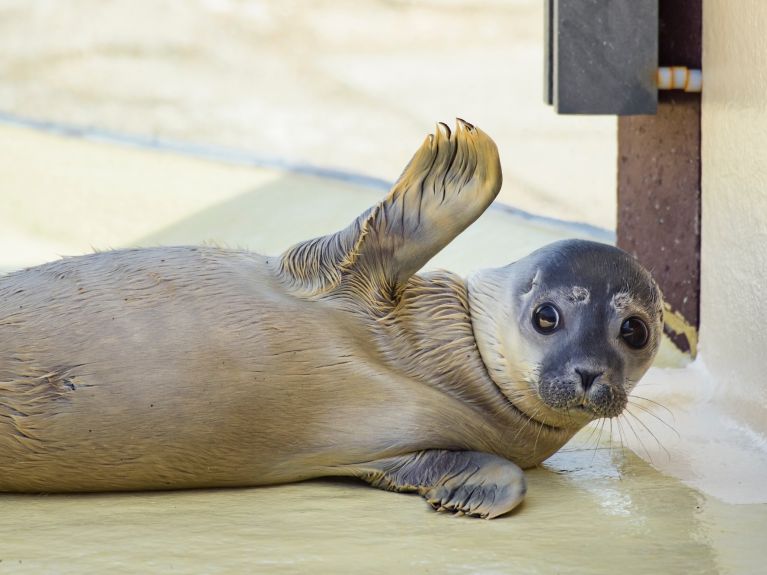
 The first thing to emerge from the water is Hedda’s nose, followed closely by two dark, inquisitive eyes. A few seconds later, the young seal pops up elsewhere. Hedda is one of more than 100 young seals that are currently being looked after at the Seal Centre Friedrichskoog at the North Sea coast. Between naps on the sandbanks, the young seals enjoy chasing each other through the water. It is hard to believe that many of them were found abandoned on the Wadden Sea beach calling for their mothers, just a few days ago.
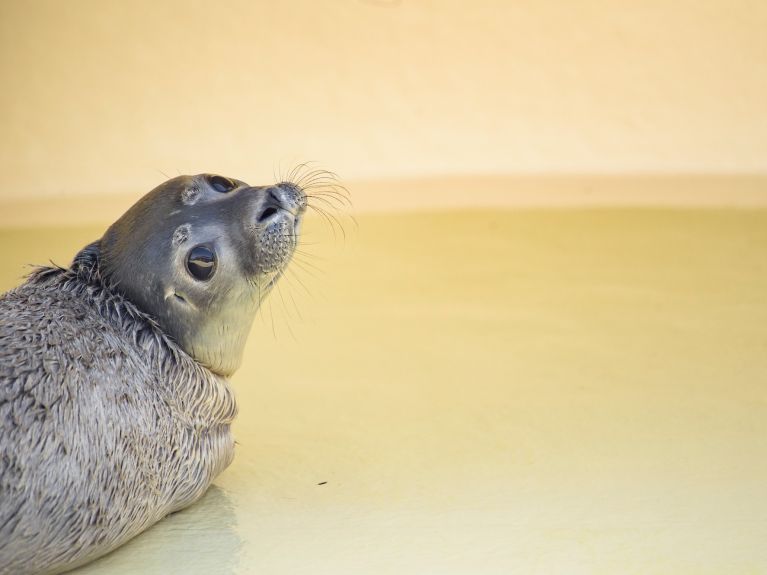
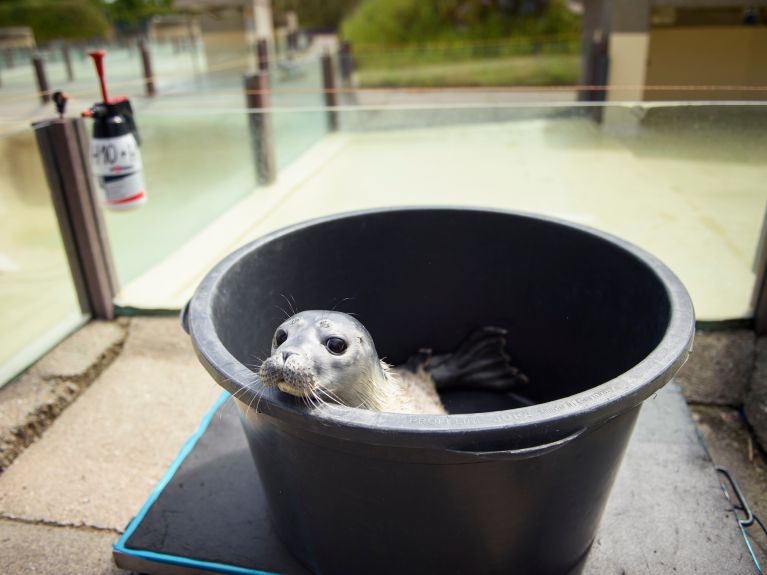
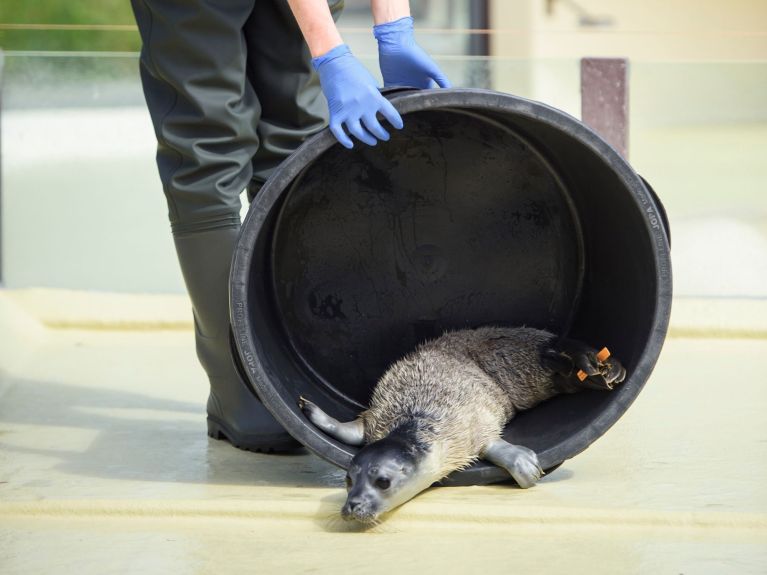
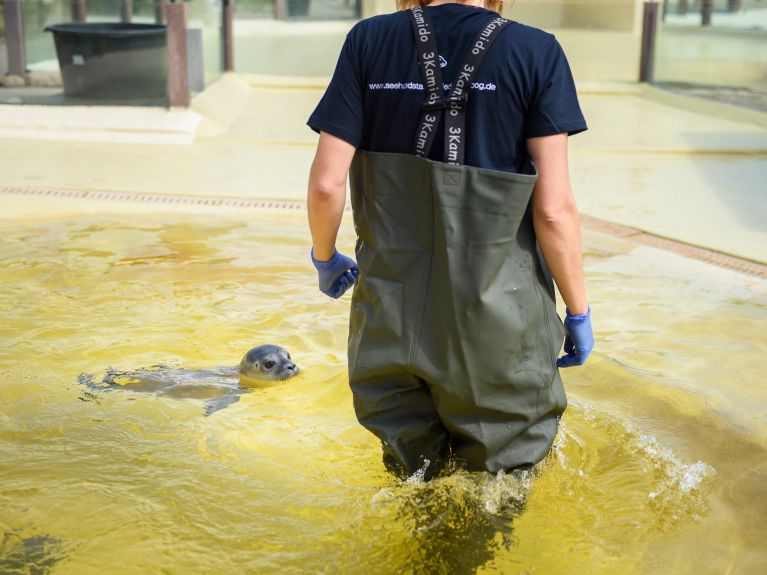
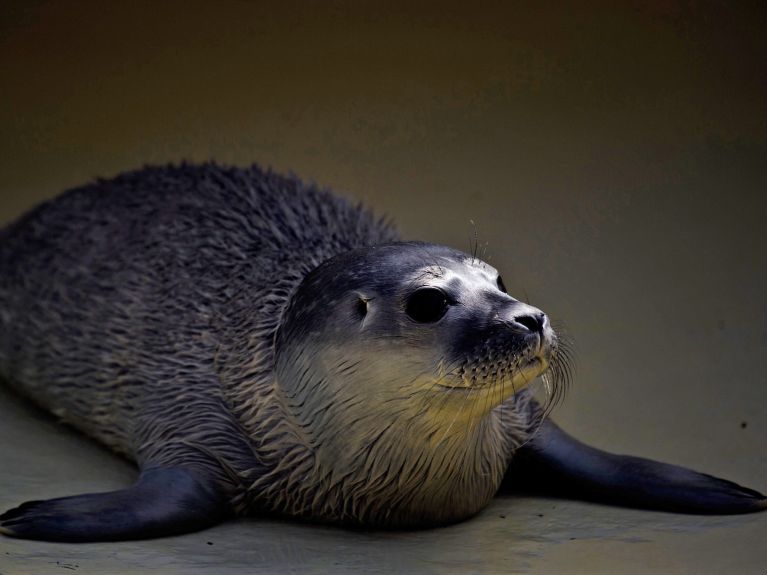
The team of the seal rescue centre in Schleswig-Holstein has been taking care of orphaned pups for 41 years. Every year, numerous baby seals are separated from their mothers during the pupping season between early May and the end of July. Experts carefully check each case, as not every seal found on the beach needs to be rescued. Those animals that cannot be returned to their mothers are taken to Friedrichskoog, where they can get stronger and learn how to hunt for fish.
International protection of the Wadden Sea
The seal centre’s work is not limited to helping individual animals. Harbour seals and grey seals are among the most characteristic species of the Wadden Sea as a UNESCO World Heritage Site. As carnivores they hold a rather high position in the food chain, and they contribute to the Wadden Sea’s ecological balance. “They really are predators. Grey seals in particular have a very strong bite,” says Tanja Rosenberger, the director of the seal centre in a podcast titled “ShoreTime – der Küstenschnack”.
So far, harbour seals and grey seals are not on the list of endangered species. However, the Wadden Sea is affected by climate change, offshore oil and gas extraction and human intervention. National borders do not exist for animals, and that is why Germany, Denmark and the Netherlands have been working together to protect the Wadden Sea since 1978. The three countries cooperate to record seal populations, monitor the state of the ecosystem and coordinate protection measures.
150,000 visitors per year
Provided that the vet agrees, the young animals return to the North Sea after about two months. Around 90 percent can be reintroduced to their natural habitat. “Releasing the animals into the wild is always the goal of our work, and those are also the best moments,” Ms Rosenberger says.
Harbour seals and grey seals that cannot be released will find a permanent home in Friedrichskoog. Every year, around 150,000 visitors attend the feeding events that are an opportunity to see the marine mammals up close. “We would like to share our fascination with these amazing animals. The only way to protect them is to conserve their natural habitat,” Ms Rosenberger states.
The Seal Centre Friedrichskoog is more than just a rescue centre for seals. It is also involved in research projects related to harbour seals, grey seals and the Wadden Sea, and dedicated to educating its visitors about the UNESCO World Heritage Site.