The return of the stork
After facing hard times in the 1980s, numbers of white storks in Germany have rebounded. Bernd Petri from the German Nature and Biodiversity Conservation Union tells us why.
 Interview: Klaus Lüber
 For many Germans, the white stork is a very special animal. The birds are believed to be harbingers of good fortune, and in years gone by people believed they delivered babies. Where does this close relationship come from?
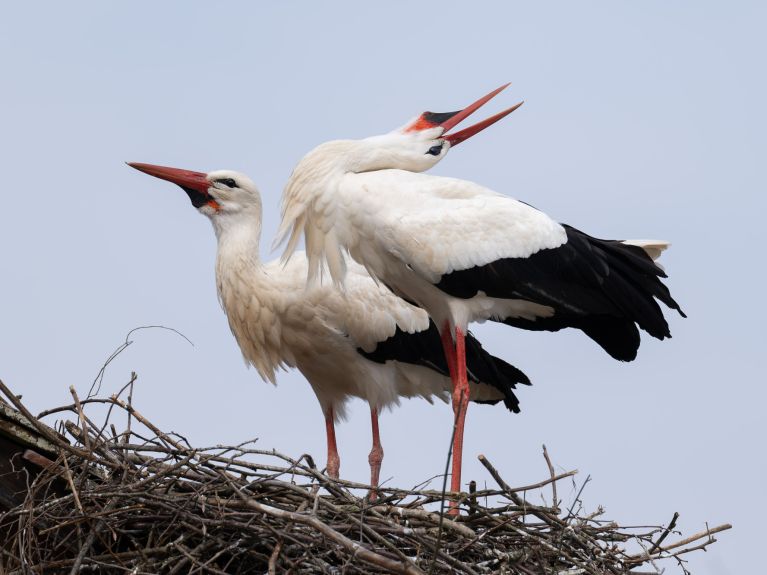
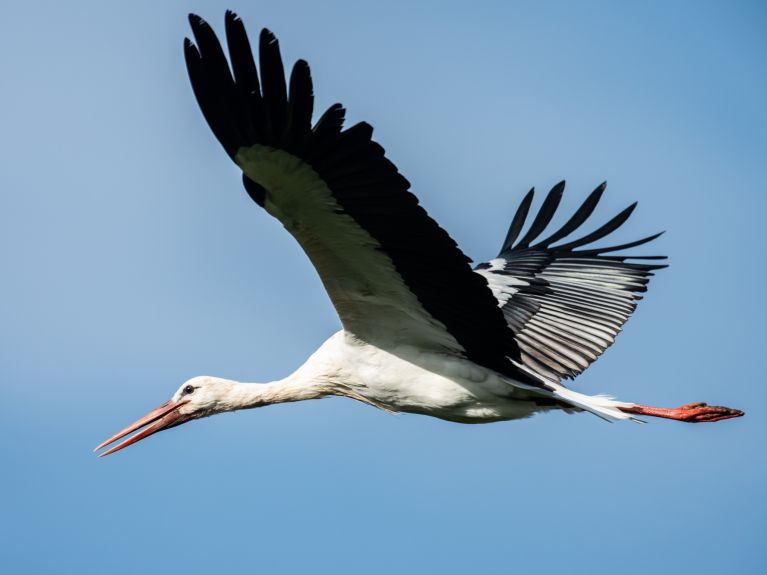
White storks are classed as ‘hemerophiles’, animals that make their homes in areas of human habitation, and in pastures, meadows and fields. They have lived around us for centuries, and often return to the same nesting place. It is this characteristic of coming back to a nest year after year that fosters a sense of familiarity. In addition to this, farmers considered storks to be welcome heralds of spring and a sign of better times to come. People have been captivated by the majestic sight of the birds in flight, too. The pioneering aviator Otto Lilienthal even adopted the stork as a model for his attempts at flight. The birds’ constant presence in everyday life led to the emergence of the legend in the 17th and 18th centuries, that the birds delivered babies. Blushing parents told their children that babies were brought by storks.
By the 1980s, storks had largely disappeared from Germany, and there were even fears they might become extinct. What had gone wrong?
In the aftermath of the Second World War, the landscape was transformed by intensive farming practices. Wetlands were drained, ponds and lakes disappeared, while the use of fertilisers and insecticides rose rapidly. As a consequence, storks had less and less to eat and some were even poisoned by their prey.
Today, NABU, the German Nature and Biodiversity Conservation Union estimates there are 15,000 pairs in Germany – five times more than in the 1980s. So how was this comeback possible?
It was thanks to the help of passionate conservationists who re-natured wetlands, retained water, set up conservation areas and bird sanctuaries, and created sites where the birds could nest. In addition to this, the white stork is a remarkably adaptable bird. Storks found new sources of food in places such as landfill sites, which offered a rich larder of things to eat, such as mice and insects, along with discarded human food such as sausages and meat. Rice-growing areas in Spain also offered a plentiful source of sustenance, which allowed many storks to spend the winter in southern Europe, instead of having to make the long and dangerous journey to West Africa.
The stork connects countries across Europe along its route, from Spain to Germany and Poland. Is there a joint strategy to protect these animals?
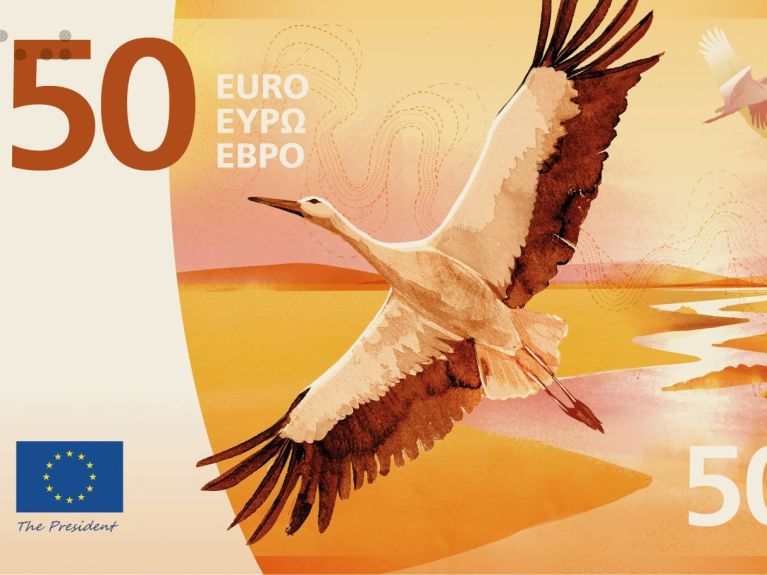
The white stork really is a European bird, which makes its home in Germany, Poland, Spain, Turkey, the Baltic states, Sweden, France and England. Everywhere, people are captivated by these great animals. And efforts to protect the storks are as extensive as their own migration routes. Even ornithologists from Ukraine and Russia have continued to work together, in spite of the war. In Frankfurt, the European Central Bank has asked the public to vote on new designs for euro banknotes. It’s no surprise that the white stork is in the running to feature on the €50 note.
How widespread is the stork in Germany compared to the rest of Europe?
Germany is looking pretty good, as the River Elbe and the upper reaches of the Rhine are among the most important breeding grounds in Europe. The Hessian Ried, a low-lying area in the Upper Rhine Plain in the federal state of Hesse holds top spot in Germany, though. With 90 breeding pairs spread across 100 square kilometres, it’s on par with the most densely populated regions in Poland or Spain for storks.
Storks love to build their nests on electricity poles. If the population is clearly on the up, why are people in a flap about it?
It’s a serious question, and it’s one I have to deal with in my work advising power companies. When white storks breed on high-voltage pylons it can cause short circuits, killing storks and leading to huge disruptions and enormous costs. Whether you look at the problem from the perspective of conservation or power grid safety, the conclusion is the same: it makes sense to remove nests from pylons – for the good of people and storks alike.
As stork numbers increase, so does the noise, dirt and points of conflict. Are storks seeing their image start to change?
It’s something we have to take seriously, even if it is possible to resolve most conflicts. If a stork nests on your roof and its droppings land on your car roof – or you, for that matter – that’s annoying, I get it.
The clattering is another example of a point of conflict. If there are 40 or 50 storks clattering away in a village and someone says they cannot sleep, that is not something to take lightly. Then there’s what’s known as ‘image fighting’, which happens when storks see what they believe to be a competitor reflected in a window pane or car paintwork and try to attack it. What can you do? Park elsewhere and cover your windows.
What would you like to see people in Germany and Europe doing to help storks?
I would like us not to lose the joy that storks bring us, and for us to find pragmatic ways of resolving conflicts. Nowadays the white stork is doing well, so we shouldn’t worry too much if we sometimes have to move them away from some areas. The stork remains a symbol of how people and nature can live together successfully.
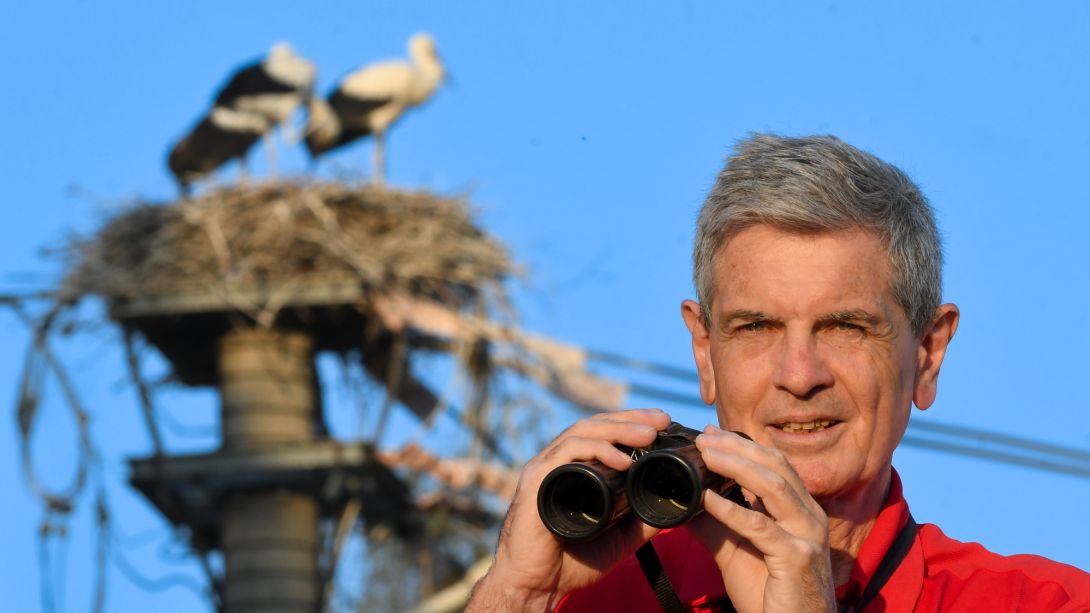
Bernd Petri is an ornithologist who lives in Büttelborn in Hesse, one of the areas of Germany with the largest populations of storks. He is the deputy state chair of NABU in Hesse and national spokesperson of the White Stork Protection working party, which monitors white stork numbers in Germany on an annual basis.