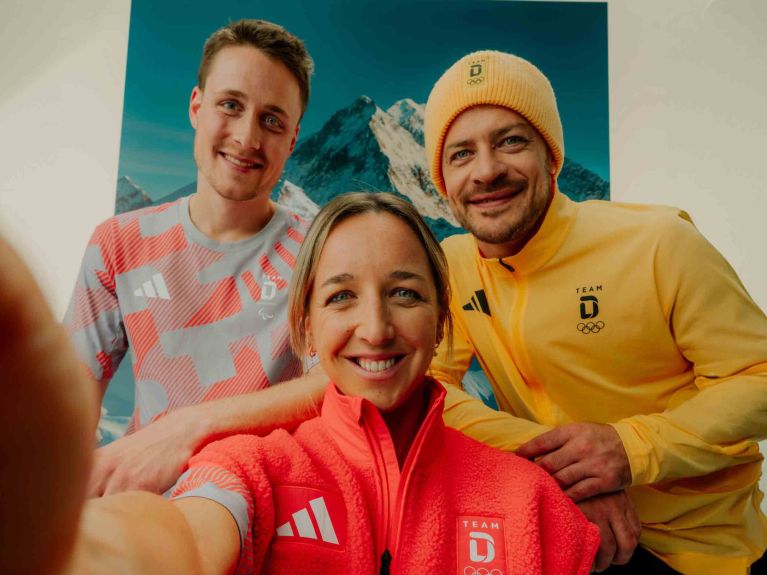
Heading for gold: Germany’s Winter Olympic stars
From biathlon to bobsleigh: these are the disciplines and athletes Germany is pinning its hopes on at the 2026 Winter Olympics in Milano Cortina.
 Clara Krug
 Franziska Preuß stands at the shooting range, her skis strapped on and her breathing calm. One final glance, then the shot - smack in the middle of the black target. The biathlete from Bavaria has been world-class for years, despite injuries and setbacks. When the Winter Olympics begin in Milano Cortina on 6 February 2026, she will be one of the athletes Germany hopes will be bringing home medals. According to the German Olympic Sports Confederation (DOSB), 188 athletes have been nominated for the German Olympic team. In the all-time Winter Olympics medals table, Germany is the undisputed number one. Read these FAQ to discover which Germany’s strongest disciplines are and who might scoop gold in Milano Cortina.
Dieses YouTube-Video kann in einem neuen Tab abgespielt werden
YouTube öffnenThird party content
We use YouTube to embed content that may collect data about your activity. Please review the details and accept the service to see this content.
Open consent formWhich disciplines are particularly important for the German team?
Germany is virtually unbeatable on the ice track - according to the DOSB, German athletes have so far won 144 of a possible 349 medals in bobsleigh, luge and skeleton. The US are in second place with 42 medals. The luge is Germany’s most successful discipline at the Winter Olympic Games, the country having chalked up 86 medals. Germany also has a good chance of ending up on the podium in the biathlon, in the Nordic disciplines, and in speed skating, figure skating and ski jumping.
Who does Germany have its hopes pinned on?
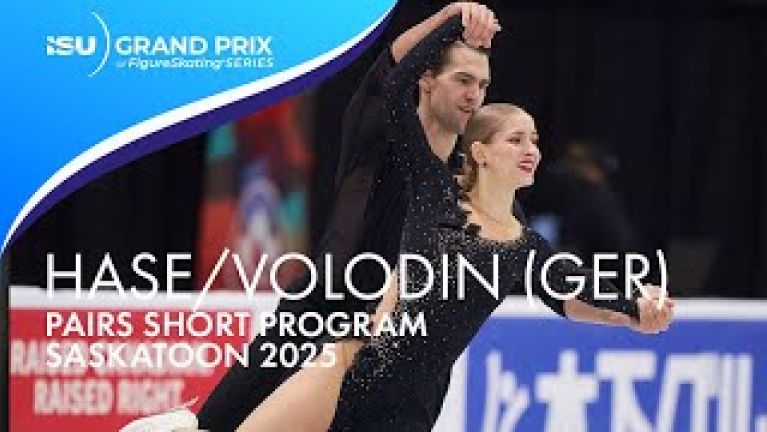
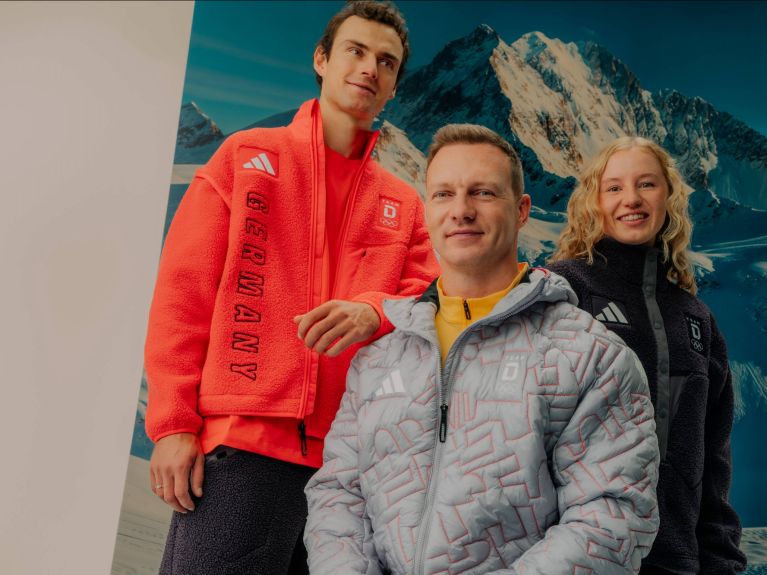
Minerva Hase and Nikita Volodin in figure skating, bobsleigh athletes Francesco Friedrich and Laura Nolte, Nordic combined athlete Vinzenz Geiger, biathlete Franziska Preuß and lugers Felix Loch, Max Langenhan and Julia Taubitz are among those who have good chances of winning medals. In alpine skiing, Emma Aicher is in the spotlight, while Katharina Hennig Dotzler is the one to watch in cross-country skiing. Then there are the para athletes Leonie Walter (biathlon) and Anna-Lena Forster (alpine skiing).
How are athletes supported in Germany?
Funding and support are provided by a dense network of clubs, regional and national centres and foundations. Working with specialist associations, the DOSB coordinates training, supervision by experts in sports science and young talent development. TheBundeswehr (the German armed forces), the police and the German Customs also offer athletes the chance to embark on a dual career by combining top-level sport with vocational training or a career in the civil service.
What role does the Paralympic Movement play in Germany?
Paralympic winter sports are a firm fixture of top-class German sport. Inclusion and accessibility have been improved with targeted measures in recent years. Internationally, Germany is one of the nations that shaped the Paralympic Movement.


