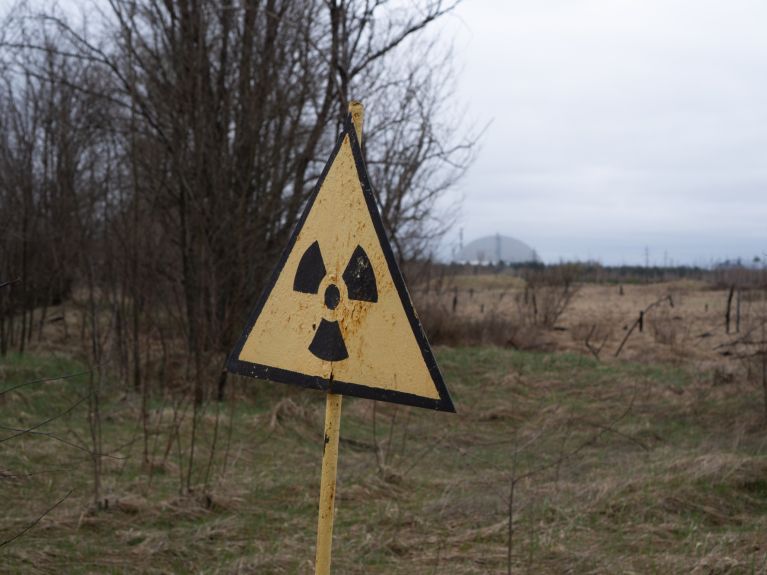
Chernobyl and Germany: a shock that continues to resonate
40 years ago, the reactor disaster in Chernobyl changed the German perspective on nuclear power – an issue that is now subject to renewed debate.
You could not see, smell or taste the danger, but it was measurable. In the night before 26 April 1986, the Chernobyl power plant went out of control during a test causing a reactor to explode. Chernobyl is located in Ukraine, and was part of the Soviet Union at the time. Radioactive materials were released into the atmosphere and distributed across large parts of Europe by air currents. The disaster did not stop at any national borders, and it was also a communication crisis right from the start, as the Soviet leaders did not issue any information until about two days after the incident. At this point measurements taken outside of the Soviet Union already suggested the extent of the catastrophe.
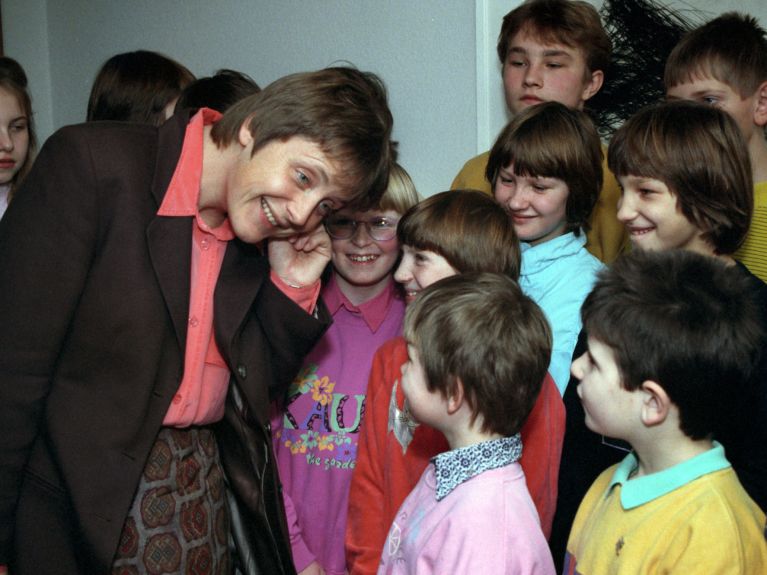
The consequences for the population of the directly affected regions were grave: emergency personnel in particular were exposed to enormous levels of radiation, and many of them developed cancer later on. Among other forms of support, Germany provided medical aid and invited many children and teenagers from contaminated regions to stay with host families in Germany to recover from the disaster.
Great uncertainty in Germany
The reactor catastrophe dominated the news in the then Federal Republic of Germany for weeks and months. These reports dealt not only with the incident itself, but also with its practical consequences for everyday life. Many people can recall this time even now: the alarming weather forecasts, asking themselves whether kids should be allowed to play outside, and great concerns regarding possibly contaminated foodstuffs, such as milk, lettuce and mushrooms. New measurement and threshold values were issued daily, and the experts’ recommendations kept changing based on the data and weather situation.
From today’s perspective, experts believe that the overall additional radiation exposure that occurred in Germany due to the Chernobyl disaster was too low to cause any health impact. Nevertheless, long-term traces do exist. One thing is certain: the reactor catastrophe was a profound experience for many Germans, and Chernobyl became symbolic of the risks associated with nuclear energy.
GDR: a politically controlled catastrophe
The disaster was handled quite differently in what was then the German Democratic Republic (GDR). Reactivity was measured here, too, and the population was also affected. However, the leaders of the socialist dictatorship passed on only limited information and understated the level of risk to prevent unrest. It was this discrepancy between the official appeasement and the actual exposure that undermined the population’s trust and encouraged environmental groups and oppositional circles to step up their activities.
The long road towards nuclear phaseout
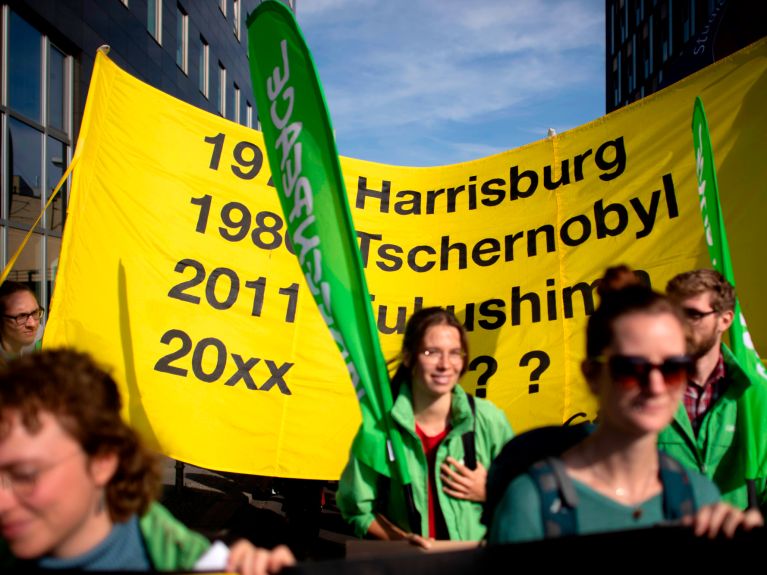
The end of nuclear power generation in Germany in 2023 was the result of a political process that took decades, and was therefore not directly linked to the Chernobyl reactor catastrophe. The disaster did, however, add new momentum to the anti-nuclear power movement and gave rise to a society-wide debate. The political approach remained stable at first: the Federal Government at the time was unwilling to give up nuclear power.
The decisive moment that led to the already planned phaseout being accelerated and fixed in law was the 2011 disaster in Fukushima in Japan. Germany’s last three nuclear power plants were disconnected from the grid in April 2023. The issue remains enormously challenging, as the power plants need to be dismantled and solutions must be found for interim and final storage of radioactive materials.
The debate is back
The issue feels surprisingly topical on this 40th anniversary of the Chernobyl reactor catastrophe: politicians and experts are once again discussing, whether the phaseout was the right decision and whether “phasing out the phaseout” should be considered. The possibility to resume using nuclear power was debated in the Bundestag in March 2026. Those in favour of doing so refer to supply reliability in connection with the geopolitical situation, as well as to base load capability and the reduction of carbon emissions in electricity generation. Those who are against this step argue that putting existing plants back into operation is unrealistic, construction of new ones is an expensive and lengthy process, as well as that safety risks are high and the problem of final storage remains unsolved, and they also refer to Chernobyl.


