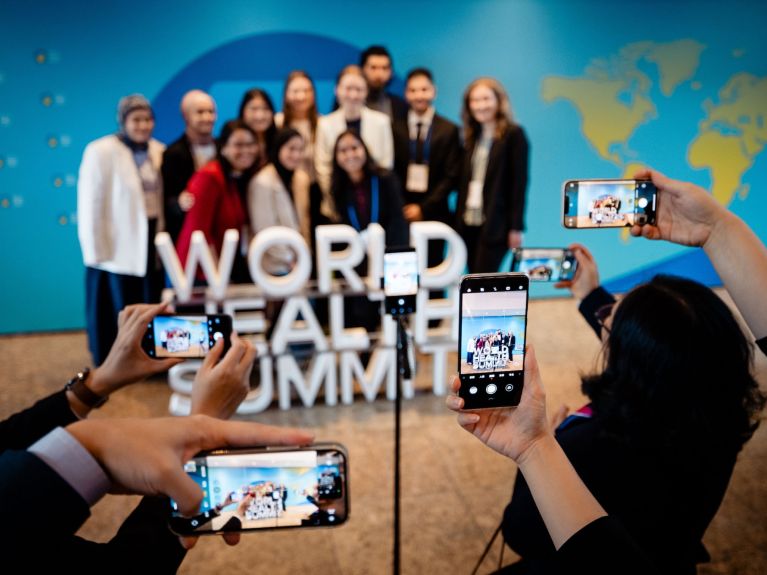
Berlin: a centre for global health policy
Leading figures from politics and academia are discussing global health issues at the World Health Summit 2026. What role does Germany play?
 Wolf Zinn
 Health knows no borders. When pandemics, wars and climate crises put healthcare systems under pressure, health becomes a matter of political stability and international cooperation. This is precisely what the World Health Summit (WHS) 2026 in Berlin is about. The theme is “From Crisis to Resilience: Innovating for Health”.
Founded at Charité in 2009, the WHS turns Berlin into a major international meeting place for global health policy every October. In 2026, more than 4,000 people are attending in person, with around 45,000 joining online. More than 400 experts will be attending more than 75 events to discuss how to make healthcare systems more resilient.
Global health under pressure
The agenda covers everything from reforming global health governance to medical innovations, pandemic prevention, the health of women, children and young people, conflicts, environmental and climate risks, and funding.
The World Health Organization (WHO) plays a key role. It sets international standards, coordinates cooperation in response to cross-border health threats and helps countries develop their healthcare systems. Following the withdrawal of the USA, the organisation is under considerable financial pressure. WHO Director-General Tedros Adhanom Ghebreyesus is attending WHS 2026 and is co-patron of the event alongside Federal Chancellor Friedrich Merz. Federal Health Minister Carsten Linnemann and Federal Development Minister Reem Alabali-Radovan are giving presentations and taking part in panel discussions.

Dieses YouTube-Video kann in einem neuen Tab abgespielt werden
YouTube öffnenThird party content
We use YouTube to embed content that may collect data about your activity. Please review the details and accept the service to see this content.
Open consent formGermany as a major donor and political player
The summit is particularly important for Germany – and Germany plays a major role in the summit. According to the Federal Ministry of Health, Germany is now the WHO’s largest donor. It has pledged almost US$400 million for the period from 2025 to 2028, including more than US$260 million in new voluntary contributions. A further €25 million will be provided in 2026, primarily to combat cross-border disease outbreaks.
Development cooperation is also closely linked to global health. Germany supports the development of robust healthcare systems and programmes to combat AIDS, tuberculosis and malaria. Since 2002, it has contributed around €5.68 billion to the Global Fund.


