Development cooperation: Germany is the world’s biggest donor
According to provisional OECD figures for 2025, Germany is the world’s number one donor for the first time, having provided around 26 billion euros in public development funding.
What does ODA stand for?
ODA stands for Official Development Assistance. This is the internationally recognised measure of government funding used to promote economic and social development in partner countries. The rules are laid down by theOECD’sDevelopment Assistance Committee (DAC). ODA is sometimes also referred to as development cooperation.
How much did Germany spend on development cooperation in 2025?
According to the OECD’s provisional calculations, Germany made 26 billion euros (over 29 billion US dollars) in public development funding available in 2025. This amounted to 0.56 percent of its gross national income (GNI). This saw Germany continue to fall short of the internationally agreed UN target of 0.7 percent - as did most of the current 34 DAC states.
Is Germany the biggest ODA donor?
Yes. According to provisional OECD figures, Germany was the world’s largest ODA donor in absolute terms in 2025. With spending of 29.1 billion US dollars, the OECD puts Germany in first place, just ahead of the US at 29.0 billion US dollars. Despite budgetary constraints, Germany thus remains a reliable international partner when it comes to overcoming crises and combating poverty, hunger and climate change.
How is the money used?
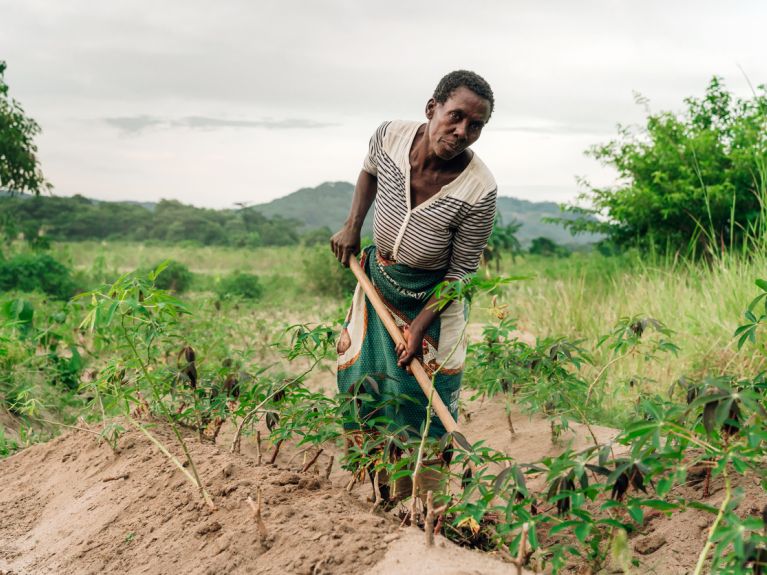
Part of the funding flows directly to partner countries, for example to rebuild energy infrastructure in Ukraine, to finance water and employment programmes in Jordan or to ensure food security and sustainable agriculture in Ethiopia. In 2023, German bilateral development cooperation saw 5.7 billion US dollars go to Africa, 3.9 billion US dollars go to Asia (excluding the Middle East) and 2.8 billion US dollars go to the Middle East.
At the same time, Germany provides funding for international aid and development programmes via organisations such as the World Food Programme, UNHCR and UNICEF. In addition, there is expenditure at home that also counts towards ODA funding, especially money spent on refugees in the first year after their arrival in Germany. Amounting to roughly 4.3 billion euros, this accounted for around 17 percent of German ODA spending in 2025. Funding provided by Germany’s federal states to cover some of the higher education costs for students from developing countries likewise counts towards total ODA spending; in 2025, this accounted for a provisional 2.2 billion euros, or 8.5 percent of the total.
Where does the money come from?
According to the provisional figures, around 39 percent of German funding in 2025 came from the budget of the Federal Ministry for Economic Cooperation and Development (BMZ). Other funding sources include the Federal Foreign Office and the Federal Ministry for Economic Affairs and Energy, as well as Germany’s contribution to EU development cooperation.
Important actors in German development cooperation include the German promotional and development bankKfW, the Deutsche Gesellschaft für Internationale Zusammenarbeit (GIZ), the German Academic Exchange Service (DAAD) and numerous associations and organisations.


