Skip to main content
Open meta menu
Menu
Go to the homepage
+
Keywords
+
Open settings
Close menu
+
Keywords
+
News
Politics
Life
Knowledge
Business
Culture
Careers
Germany and the world
Social Media
Services of our partners
Digital magazine
deutschland.de app
Germany and the world
Africa
Asia
Europe
Israel
North America
Social Media
Instagram English
TikTok
Facebook
Bluesky
LinkedIn
Threads
Weibo
X News
X Service
YouTube
Services of our partners
Facts about Germany
Goethe Institut
Deutsche Welle
Research in Germany
Germany Trade & Invest
Make it in Germany
GIZ
Digital magazine
Careers in the skilled crafts and trades – talented people wanted!
Getting Started in Germany
Opportunities – Working in Germany
Language selection
Deutsch
English
Display and barrier-free access
Dark Mode
Enlarge text
deutschland.de in sign language
In focus:
Working
Studying
Day-to-day life
German language
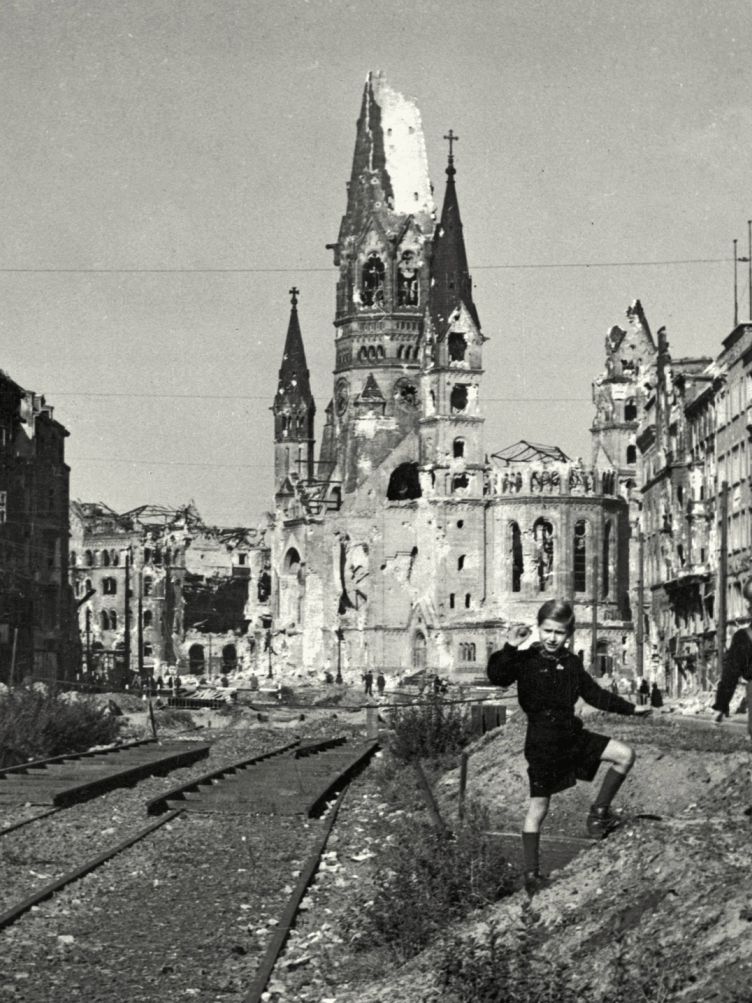
Post-war period
© dpa
History part 3: The path to democracy
The new beginning after the Second World War: The USA supported Germany in establishing a democratic society.
Faces and moments: Post-War period
Following the Second World War the USA assumed a decisive role in the reconstruction of Germany.
“Our friendships have become like a second family”
Sister cities since 1957: Firefighter Christopher about the Rockville-Pinneberg partnership and a special gift to German firefighters.
“We stand united like brothers”
Pinneberg and Rockville are sister cities since 1957. Firefighter Jan from Pinneberg talks about the difference to firefighters in the USA.
The new beginning – where it took place
In the post-War period, key historical events took place in these German cities.
Wolfgang Koeppen: ‘Death in Rome’
Nearly a decade after World War II, the ghosts of Germany's past return to haunt the streets of Rome. Wolfgang Koeppen's novel captures the German psyche at that time like no other.
W.G. Sebald: ‘Austerlitz’
A Jewish scholar crisscrosses Europe as he searches for his forgotten past, with the journey taking him to the edge of his limits. The book is considered one of the most important works of post-WWII literature.