Rapid help for endangered cultural assets
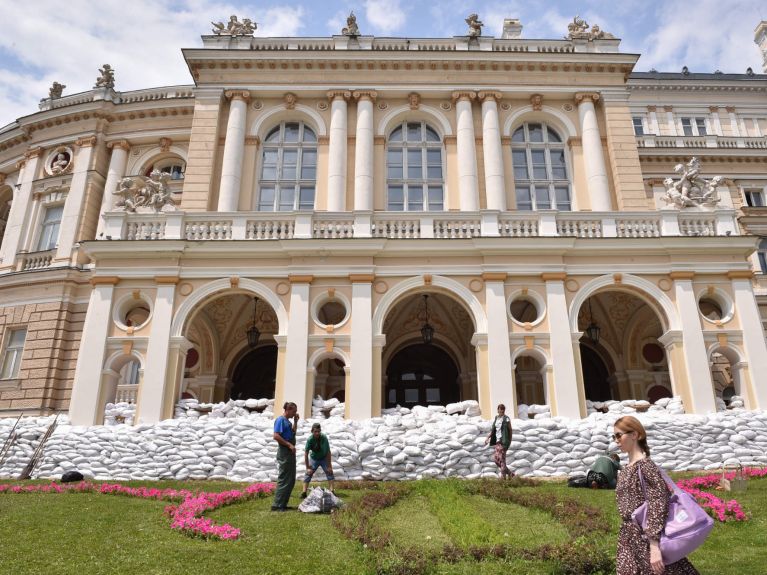
The German KulturGutRetter project helps protect acutely endangered cultural assets all over the world - for example in Ukraine.
In 2022, nine articulated lorries carrying 290 pallets rolled into Ukraine to protect cultural assets there. Bubble wrap, archiving boxes, sandbags and fire extinguishers were transported from Germany to museums, archives, libraries and other cultural institutions in the war-ravaged country in order to protect monuments and artworks. The aid could be supplied thanks to a logistical network in which the KulturGutRetter project played a central part.
Around the world, wars, earthquakes, flooding and fires endanger the cultural heritage of regions and countries. Swift help is needed in such crisis situations, which is where the KulturGutRetter project, which was set up in 2019, comes in. Its partners are the German Archaeological Institute, the German Federal Agency for Technical Relief and the Leibniz-Zentrum für Archäologie. Germany’s Federal Foreign Office supports the project.
Dieses YouTube-Video kann in einem neuen Tab abgespielt werden
YouTube öffnenThird party content
We use YouTube to embed content that may collect data about your activity. Please review the details and accept the service to see this content.
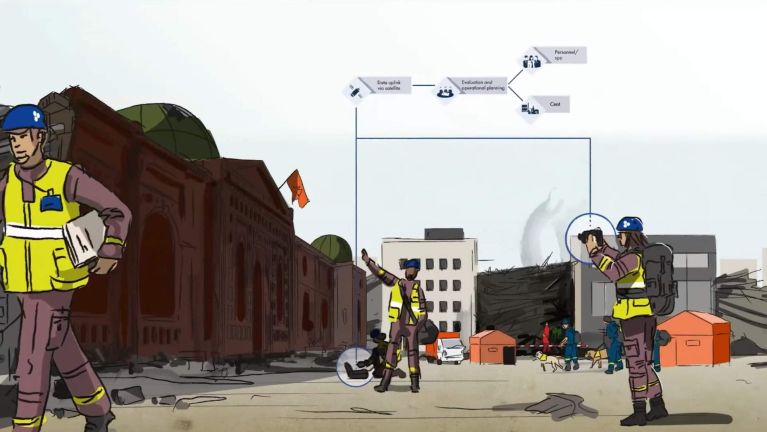
Open consent formIn the event of a crisis, experts from Germany, as part of international disaster relief operations, are sent in to document and assess the damage in the country. It is also a question of rapidly protecting buildings, or indeed valuable collections and archives, in an emergency.
To this end, experts at the Leibniz-Zentrum für Archäologie have developed multifunctional and easily transportable rescue modules that can help with documentation and initial protection. An illuminated photo table for instance can be used to document the condition of the cultural asset in question. Other modules are intended for cleaning or transport.
The experts also offer digital help, for example with backing up research data. In Ukraine, this allowed a total of seven terabytes (TB) of research data relating to the country’s cultural heritage to be secured in 2022.
Any questions? Search with our AI assistant
- How does the political system in Germany work?
- How much does it cost to study in Germany?
- Which traditions and festivals are typical of Germany?
- What is the best way to learn German?
- Who governs Germany?
- Which industries are particularly important to the German economy?
- Which political parties are there in Germany?
- Why is Germany considered a leading exporting nation?
- How do I apply to study in Germany?
- What opportunities does Germany offer international startups?
- How diverse is the German cultural scene, and what role do art, music and literature play?
- What cultural differences are there between Germany's regions?
- Which degree programs and universities are especially popular in Germany?
- How can I find a job in Germany as an international skilled worker?
- Why was Germany divided after World War II?
- What requirements do I need to meet to be allowed to work in Germany?
- Do I need to speak German to work in Germany?
- How high is the cost of living in Germany?
- How does the German healthcare system work?
- What should I keep in mind when moving to Germany?
- How did reunification come about?
- How does Germany deal with its National Socialist past?
- What level of German do I need to study in Germany?
- In which countries is German spoken?


