How did Germany become an export nation?
Merchants, machines and markets: how Germany became such a strong export nation on the back of regional trade, industrialisation and innovation.
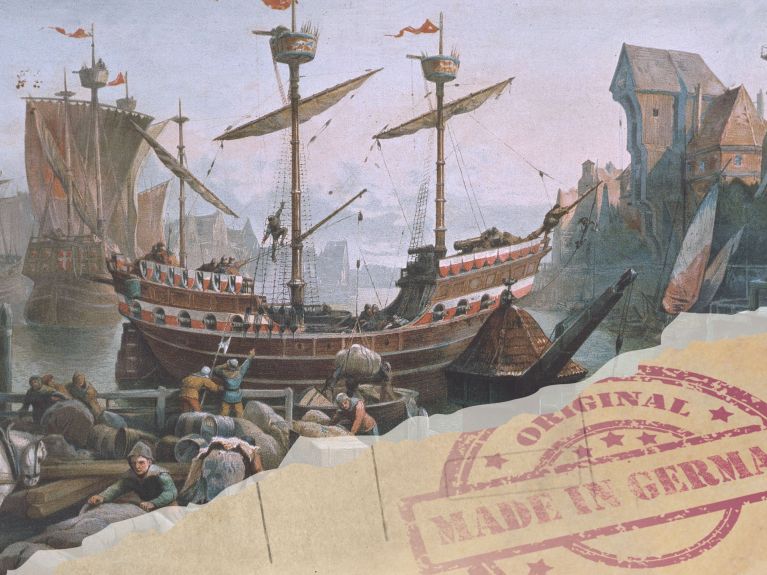
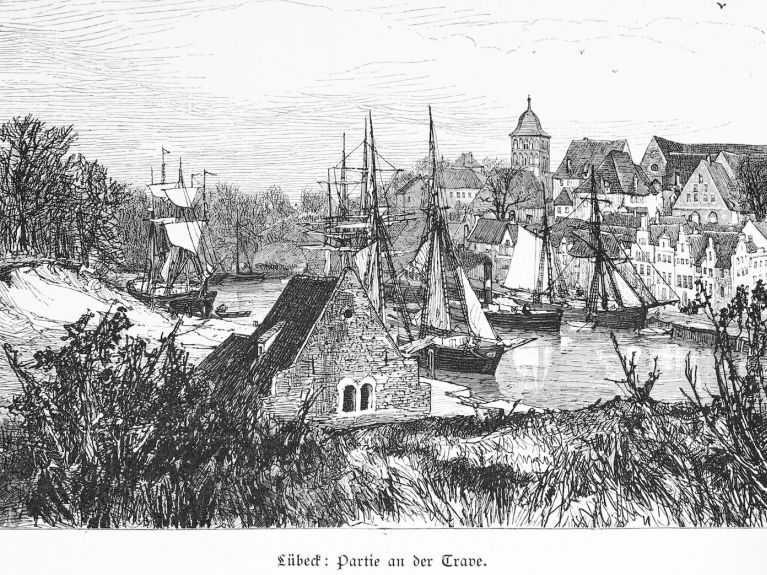
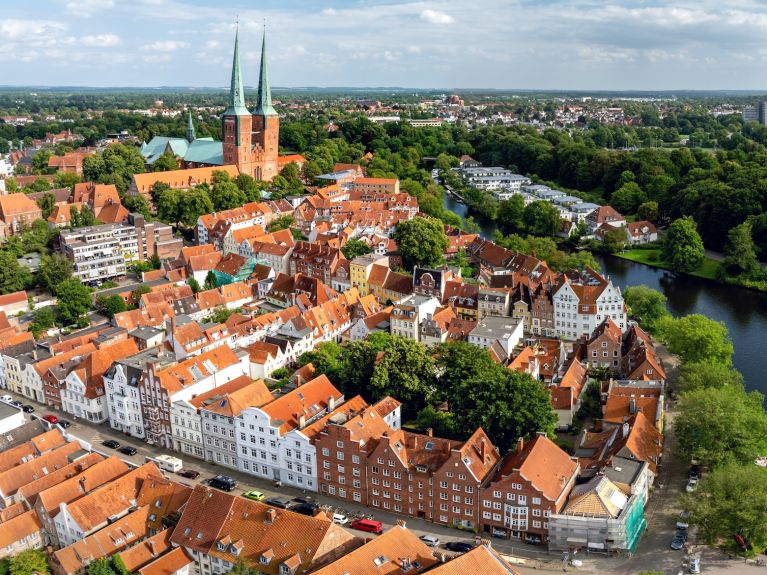
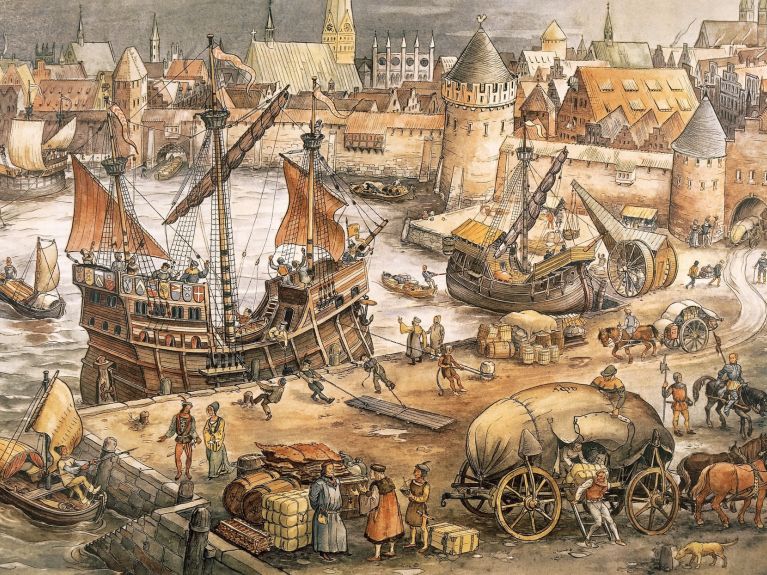
Lübeck in the late Middle Ages. The port of this North German Hanseatic city is buzzing with activity: sailors and dock labourers unload cargoes while merchants haggle over prices. From here, grain, cloth, fish, furs, wax, salt and timber are transported across the Baltic Sea and all over Europe. Lübeck is one of the central hubs of the Hanseatic League - a commercial network that extended all the way to London and Flanders, the Baltic states and to Novgorod in present-day Russia.
What does the Hanseatic League have to do with Germany’s history as an export nation?
From the twelfth century onwards, merchants - and later also towns - band together to organise trade across large distances and to advance their common interests. Foreign trading posts, known as kontors, are set up in major towns. This is where goods are stored, business deals are concluded and contacts are forged.
The Hanseatic League is thus an early precursor to the system of cross-border trade. The key step towards a modern economy is only taken in the nineteenth century, however. Agreed in 1834, the German Customs Union removes many of the tariffs and trade barriers between German states, creating a large economic area.
What makes German industrial products so internationally competitive?
At the same time, the world of work is changing radically: where skilled craftspeople would previously have manufactured goods one at a time, steam engines are now being used to power large machines. Factories allow production to take place on a much larger scale, while railways enable goods to be transported more quickly. The industrial revolution begins in Great Britain in the late eighteenth century, but the German states are initially slow to catch up. Political fragmentation, different economic rules and smaller markets put the brakes on development. However, during the course of the nineteenth century they close the gap as the Customs Union facilitates trade and production grows. When the German Reich is founded in 1871, Germany evolves to become one of the leading industrial nations.
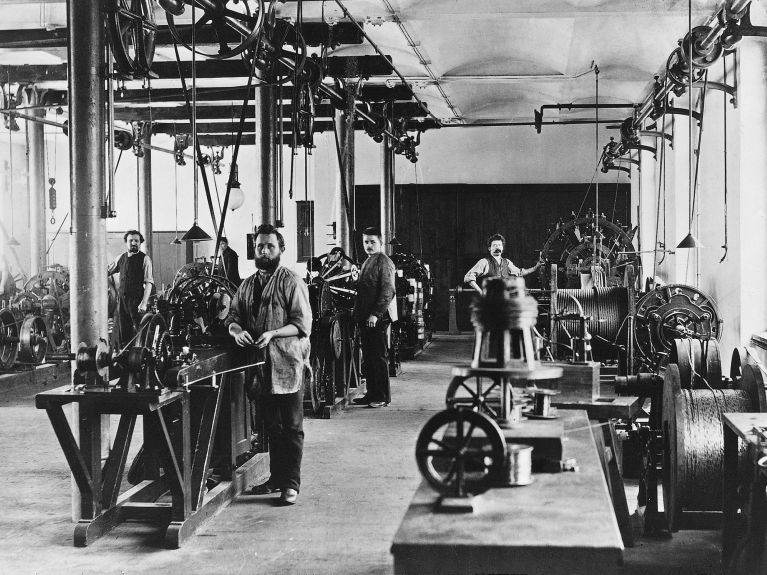
New industries such as mechanical engineering, chemicals and electrical engineering are particularly successful. German companies specialise in making technically sophisticated products that are increasingly in demand abroad, too. Well trained workers and a close link between science and industry give Germany a competitive edge. Companies like Bayer and Siemens invest in research and transform industrial production with technological innovations.
Great Britain of all places illustrates just how seriously the competition from Germany is now being taken. In 1887, the Merchandise Marks Act makes it compulsory to indicate the origin of imported goods so as to protect British industry. This means that the origin of German products also has to be declared. As German industrial products becoming increasingly successful, however, the label “Made in Germany” becomes a mark of quality.
Why does Germany focus so heavily on exports after 1945?
Post-1945, Germany is a country scarred by war. In West Germany, however, production gets up and running again amazingly quickly. A currency reform, the Marshall Plan and a social market economy pave the way for an economic revival. German companies benefit from the technological know-how and industrial structures already in place. Exports increase.
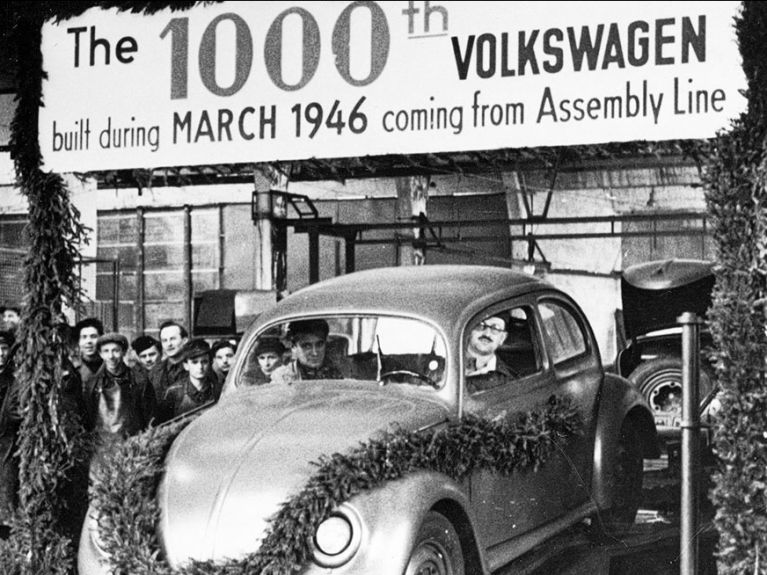
At the same time, Western Europe forges ever closer economic ties. The Federal Republic of Germany is one of the founding members of the European Coal and Steel Community in 1951 and of the European Economic Community in 1957. Tariffs and other obstacles to trade are gradually abolished, leading to a growing market. Exports become a key pillar of economic success for West German industry, and for the reunified Germany after 1990.
Are German exports still a success story?
In 2025, German companies export goods worth 1.56 trillion euros to countries around the globe. After China and the US, Germany is the third-largest export nation - and enjoys an excellent reputation thanks to its innovative strength and product quality. There is particularly high demand for itsvehicles and vehicle components, machines and chemical and pharmaceutical products.
Nonetheless, the fact that the German economy is so export-oriented also makes it vulnerable: many companies are reliant on open markets, international supply chains and stable demand from abroad. They are particularly hard hit by trade conflicts, new tariffs and geopolitical tensions. In addition, they are facing increasing competition from new rivals - especially from China.
This fascinating evolution from the merchant ships of the Hanseatic League in the Middle Ages to the globally interconnected industrial companies of today shows how deeply rooted cross-border trade is in Germany’s economic history.


