
Why Germans struggle to define their national identity
From Germanic myths to the Kaiser and the Nazi era, our nation’s history is multifaceted, and our legacy is complex.
 Wolf Zinn
 Many Germans would rather talk about democracy, the Basic Law or Europe than about German identity, the nation or the “fatherland”. The obvious reason for this is the crimes committed under National Socialism. But that is only part of the story. German national identity has been a complex issue for centuries.
Where does the Germanic myth come from?
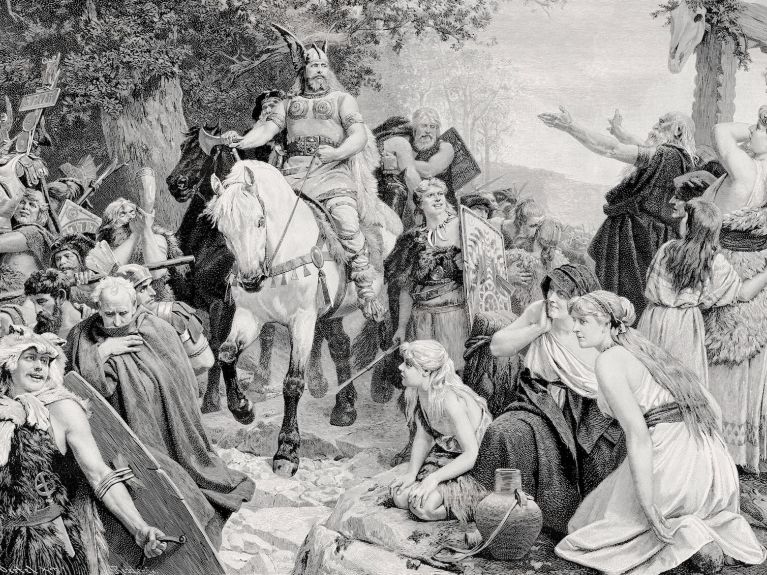
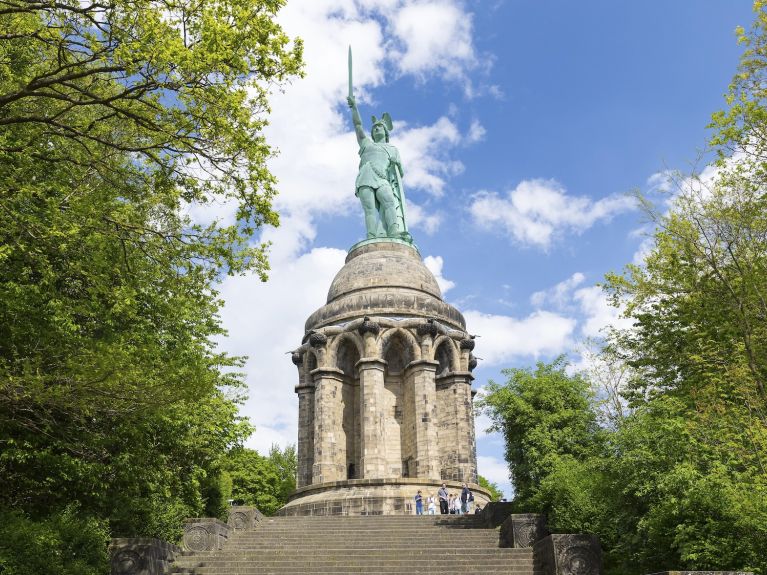
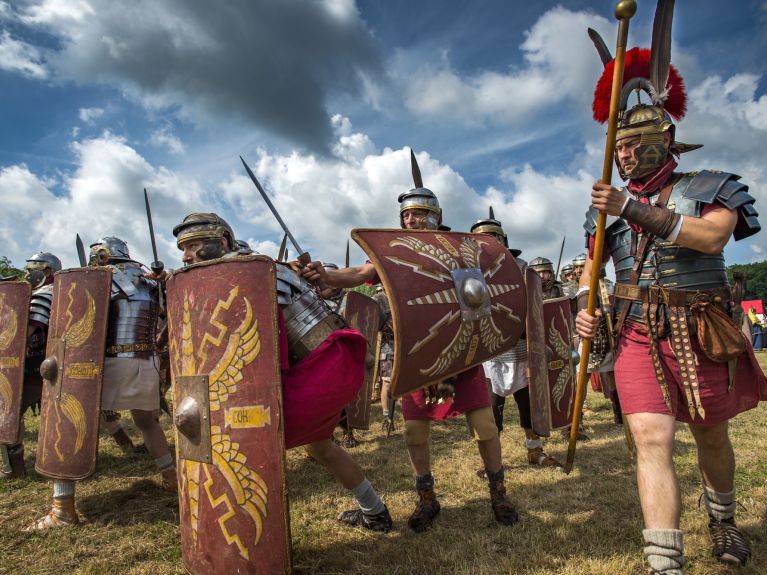
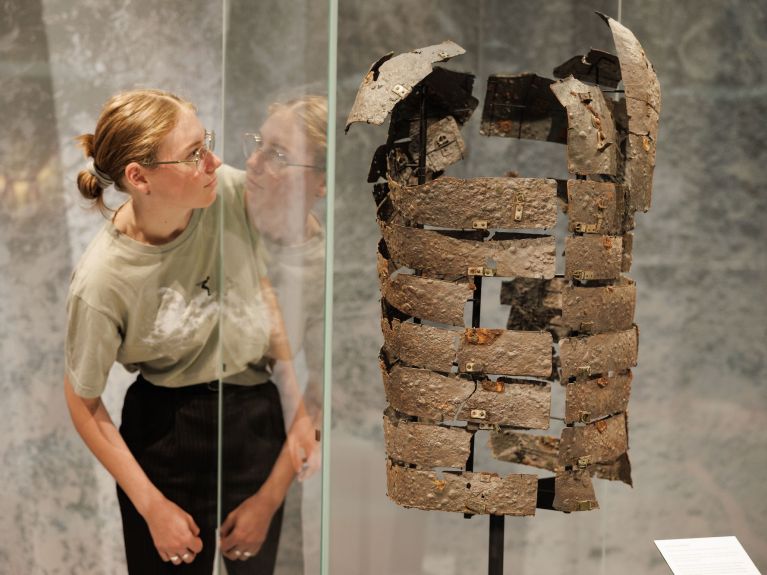
Some trace Germany’s origins back to AD 9, when Germanic tribes under Arminius defeated the Romans in the Battle of the Teutoburg Forest, in what is now Lower Saxony. In reality, however, this was not a “German” victory, as Germany did not yet exist. Even so, later poets and nationalists transformed Arminius into “Hermann”, turning a tribal conflict into the supposed beginning of German freedom. Written under the shadow of Napoleonic occupation, Heinrich von Kleist’s 1808 drama Die Hermannsschlacht (“The Battle of Hermann”) reinterpreted the struggle against Rome as a call for national resistance. The idea of German unity was likewise projected back into antiquity by the Hermann Monument, which was inaugurated in 1875 in the Teutoburg Forest.
Did a German nation exist in the Middle Ages?
The Middle Ages offer no straightforward story of German origins either. Crowned emperor in AD 800, Charlemagne ruled over a Frankish Empire rather than a German one. The Holy Roman Empire bore the supplement “of the German Nation” in its title from the late Middle Ages onwards: it was not a nation state, however, but a loose association of small entities. People in other countries spoke of “the Germans”, yet Bavarians, Saxons, Swabians and Rhinelanders actually lived in principalities, bishoprics, imperial cities and numerous other small territories. This political fragmentation limited central authority, and for a long time regional and local identities outweighed any broader sense of German nationhood.
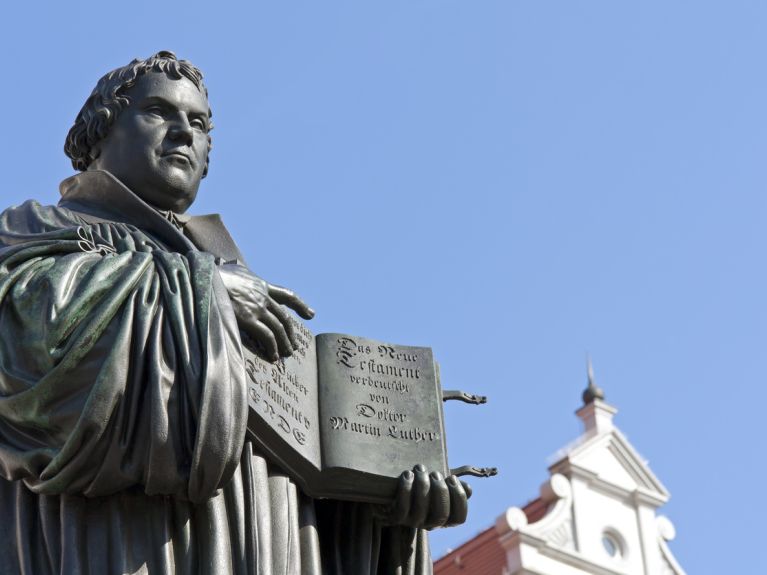
It was not until the invention of the printing press in the 15th century and the Reformation that a clearer idea emerged of what it meant to be “German”. Martin Luther’s translation of the Bible established a common written language across regional dialects. In this sense, the German nation first developed primarily as a shared linguistic and cultural space.
Why did the German nation state emerge so late?
When Napoleon redrew much of Europe’s political map in 1806, the national question became a political one: should the German territories be united in a single state? During the Wars of Liberation between 1813 and 1815, aspirations for freedom, hostility towards France and the desire for unity came together. The colours black, red and gold, later the symbol of German democracy, originated to some extent in the uniforms of a volunteer corps and were adopted by the national movement.
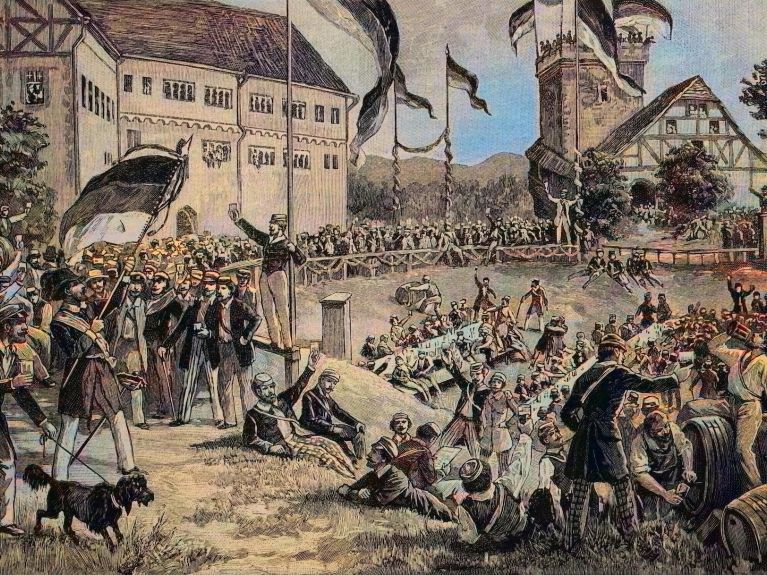
At the Wartburg Festival in 1817 and the Hambach Festival in 1832, students and citizens called for national unity, a constitution and fundamental rights. The Deutschlandlied, written in 1841, also emerged from this movement. Today, only its third verse serves as Germany’s national anthem – with the famous words “unity and justice and freedom”. The Revolution of 1848–49 produced Germany’s first all-German parliament in Frankfurt’s St Paul’s Church, but this ultimately failed in the face of resistance from the old powers. It was not until 1871 that a German nation state came into being – not through a democratic citizens’ movement but through Otto von Bismarck’s power politics and Prussia’s victory in the Franco-Prussian War. This origin itself made the nation an ambivalent project: unity was achieved, but not through the triumph of freedom.
How did German nationalism lead to a breakdown of civilisation?
After 1871, nationalism in the German Empire became increasingly associated with militarism, authoritarian rule and exclusion. Germany’s defeat in the First World War (1914–1918) was followed by bitterness, myths of victimhood and dreams of revenge. Founded in 1919 as a democratic state, the Weimar Republic might have marked a new beginning, but it collapsed when the National Socialists seized power in 1933. They promised a “people’s community”, but instead delivered exclusion, totalitarian control, racist ideology and war. An unprecedented breakdown of civilisation, the Holocaust led Germans to question their national identity more profoundly than ever before.
What does German patriotism mean today?
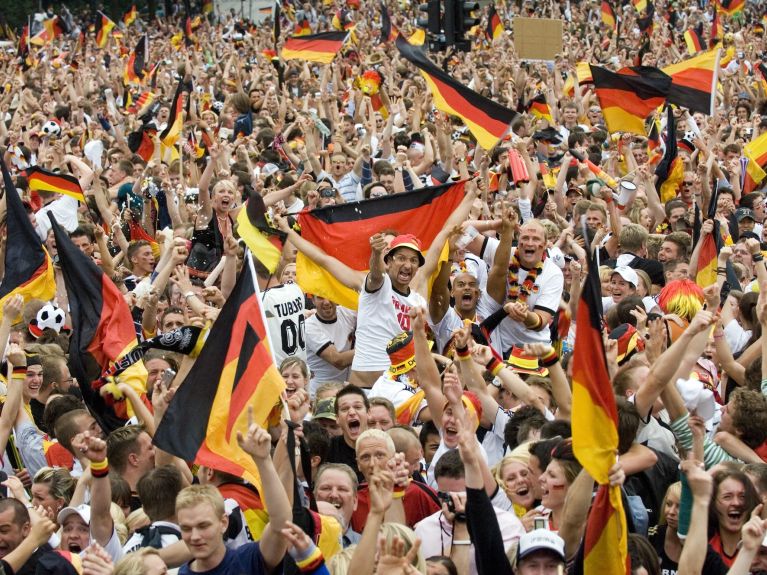
Germany’s surrender in 1945 was followed by occupation, a fresh start and the division of the country. The Federal Republic developed into a democratic state governed by the rule of law, while East Germany became a socialist dictatorship with state-imposed anti-fascism. When Germany was reunified in 1990, some feared a resurgence of nationalism. Yet by the time of the 2006 FIFA World Cup, the country had developed a far more relaxed attitude towards expressions of national identity than previous generations. At the same time, however, far-right groups continue to try to appropriate German symbols such as the black-red-gold flag. The appropriate response is widely seen as a sober, republican form of patriotism: Germany regards itself as a democratic, federal and open society precisely because it understands where excessive nationalism can lead.


