Why Germany has 16 federal states
Germany’s political order is the result of nearly 1,000 years of history. Discover what mediaeval castles have to do with German federalism.
 Stefanie Hardick
 German federalism in four steps
- Historical roots: For centuries, Germany was made up of numerous small principalities and towns. This continues to influence regional structures and identities to this day.
- The path to a nation state: A unified Germany was established in 1871, yet the individual states retained a substantial degree of autonomy.
- Lessons learned from the Nazi dictatorship: The Nazis abolished the federal order. Post-1945, a conscious decision was taken to redistribute political power across different levels.
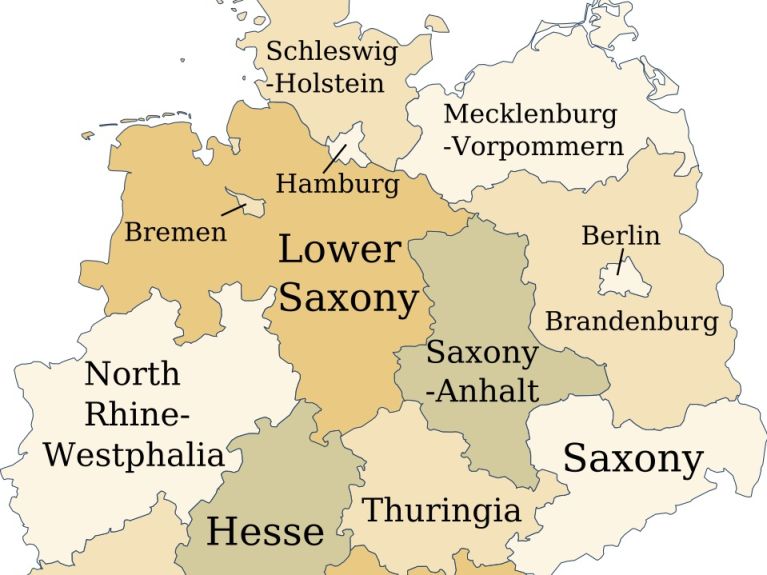
- Federalism today: Ever since reunification in 1990, Germany has comprised 16 federal states. They take decisions on matters relating for example to education, culture and the police, and also have a say in national politics via the Bundesrat.
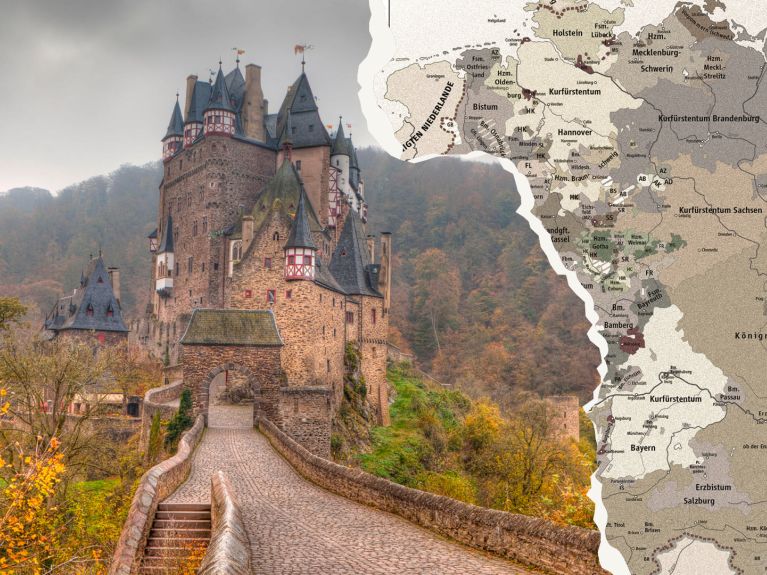
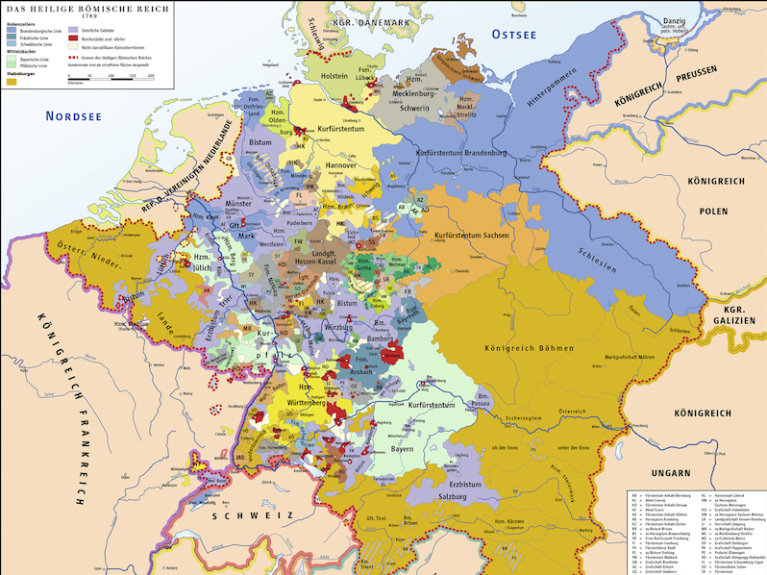
Forget “Game of Thrones” - let’s delve more deeply into German history: Until 1871 there were German kings and emperors but no German nation state. For a time, the empire was made up of more than 1,000 domains - some the size of entire states, others covering just a few square kilometres. Kings, princes, counts and dukes battled for power and influence. Archbishops and other religious rulers also played an important political role. And in between, towns vied for control over trade routes and spheres of influence. Meanwhile, any self-respecting knight would build a castle: there were more than 13,000 scattered across the territory of modern-day Germanyin the High Middle Ages.
What do these castles tell us about Germany’s political history in the Middle Ages?
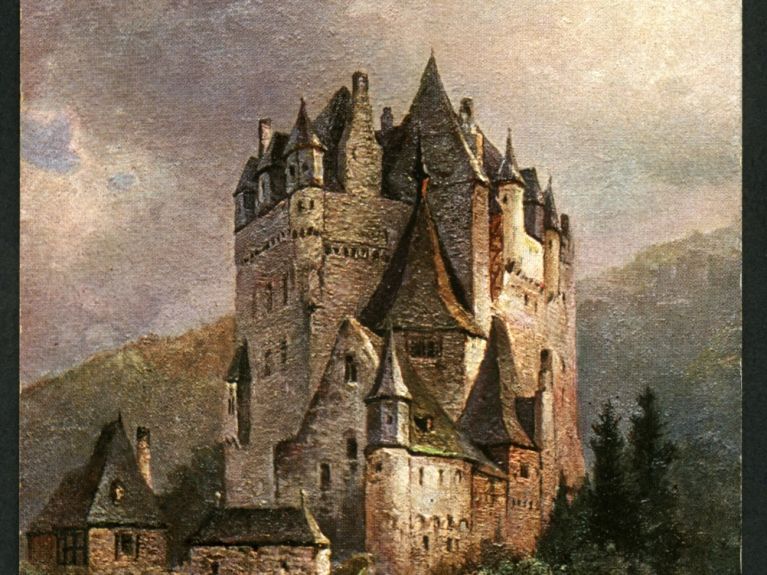
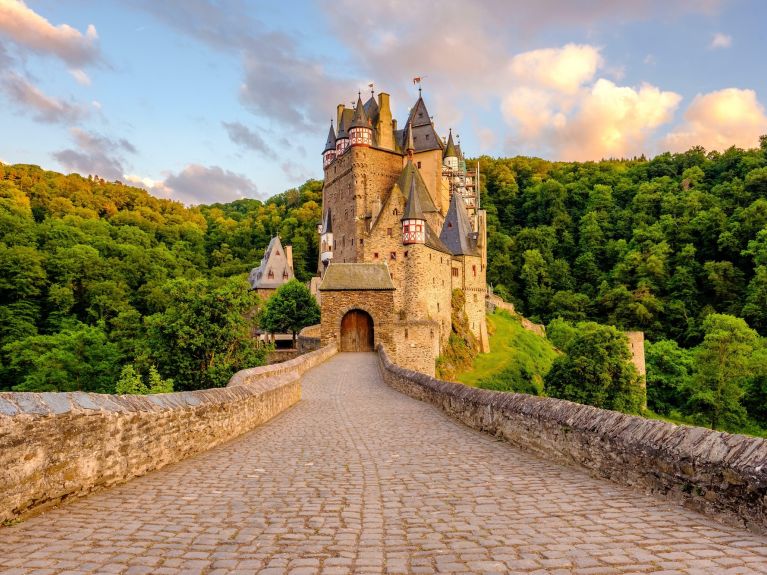
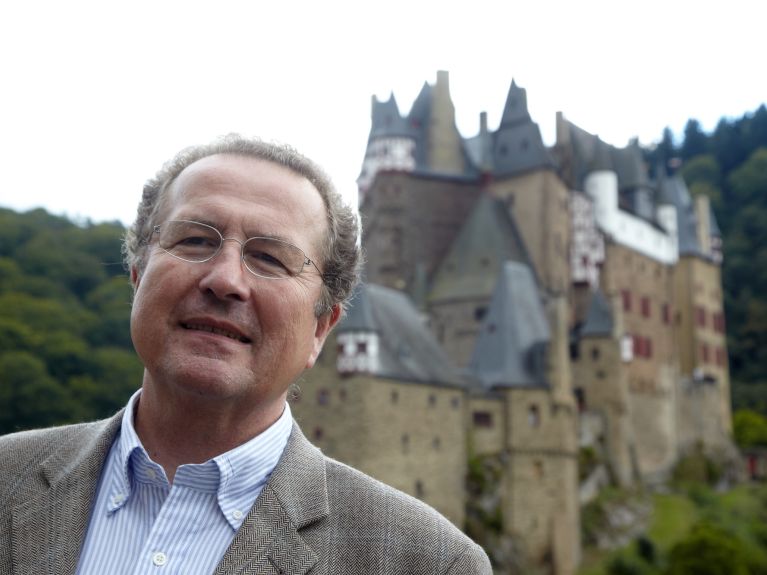
Eltz Castle is like something out of a Disney film. Hidden deep in the Elzbach valley, it perches on a rocky outcrop in the forest. Today, the area between the Eifel mountains and the Mosel and Rhine rivers belongs to Rhineland-Palatinate. In the twelfth century, the House of Eltz ruled over its own small realm here. Such local systems of rule played an important role in imperial power politics. Count Karl of Eltz, the lord of the castle, explains: “Emperor Barbarossa provided financial support to hundreds of families of knights to create a counterweight to his powerful rivals.”
No central state apparatus existed that would have allowed the emperor to rule the entire empire. When he wasn’t holding court in a particular region himself, he was reliant on local rulers: they would exercise their sovereign rights, collect taxes and provide soldiers.
What was life like in a territorially fragmented conglomeration of small states?
The political diversity could prove pretty annoying for travellers and merchants. Different laws, currencies and units of measurement were in use and customs duties were levied at every border. As an example, Count Eltz talks about the fir wood that timber merchants would transport from the Black Forest to Rotterdam via the Rhine: there were as many as 40 customs points along the way, with duties to be paid every time. “Because the duties were imposed on a per-raft basis, the timber merchants eventually started building rafts that were up to 500 metres long and 70 metres wide.”
There was also a positive side to this fragmentation, however. The local lords expanded their residences and competed for artists and musicians. That’s why Germany today boasts many regional cultural centres rather than a single dominant capital. “Furthermore, it was often easier to rule a small area than a larger territory,” says Count Eltz. “There was a certain sense of ‘closeness’ between rulers and their subjects. They knew and were reliant on one another.”
How did this political patchwork evolve to become a unified Germany?
In the early nineteenth century, the old order began to crumble. The Napoleonic Wars fundamentally disrupted and permanently transformed Europe’s political order. The Holy Roman Empire ended in 1806. Following Napoleon’s defeat, the German Confederation - a loose association of 39 states - was established in 1815. At the same time, the German national movement became significantly more prominent. There was a growing desire for a joint nation state, especially among the educated middle classes. Many people wanted to be more than “just” Bavarians, Saxons or Rhinelanders: they saw themselves as Germans, linked by a common language and culture. “The present still wasn’t a particularly happy time, however, which is why people glorified the past,” says Count Eltz. “Mediaeval castles, and especially Eltz Castle, became places of romantic yearning.”
In 1871, a German nation state was finally established under Prussian leadership and without Austria. Wilhelm I was proclaimed the German emperor. The new empire was also organised along federal lines: its individual states retained a considerable degree of autonomy and were involved in German Reich politics via the Bundesrat.
When the National Socialists came to power in 1933, they began gradually dismantling this federal structure. They stripped the constituent states of their power and political autonomy. A centralist Führer state replaced the federal structures.
Why did Germany become a federation again after 1945?
After the Second World War, the aim was to ensure that political power in Germany could never again become so concentrated in the hands of one person. The Allies therefore imposed a federal order and restored the federal states. Some largely resembled their pre-war shape, while others were newly carved out of different regions.
The Federal Republic of Germany was founded in 1949. It’s already clear from its name that the new state was not intended to be a centralist unitary state but a federation of states. And in this context Eltz Castle appeared once again in a somewhat surprising place: it later adorned the reverse side of the 500 deutschmark note. “It was a great honour for us,” says Count Eltz. “Though I would have preferred it to be the 100 deutschmark note. Then more people would have seen it.”
Things developed rather differently in the German Democratic Republic (GDR). In 1952 the states were to all intents and purposes abolished and replaced by 14 districts. Only in 1990 did the People’s Chamber - the country’s parliament - restore the five East German states. When German reunified on 3 October 1990, West Germany’s federal order was extended to encompass the whole of Germany. Ever since, 3 October has been celebrated as the Day of German Unity.
What does federalism mean today?
Germany today comprises 16 federal states. Political tasks and responsibilities are shared between the federal and state governments. The state-level governments have a say in national politics via the Bundesrat. In key areas such as education, culture and the police, the federal states take decisions largely independently. That’s why school systems or the laws governing the police can differ from state to state.
The federal system sometimes makes political decision-making more complicated. At the same time, it distributes power and ensures that policymaking is informed by different regional interests. For this reason, there are frequent discussions about how well the interplay between the federal and state governments works and where reforms are needed.
Perhaps this explains why the system is such a good fit for a country whose regions were independent for centuries. Bavarians, Saxons, Berliners or North Germans cultivate their distinct regional identities to this day. And Eltz Castle? It is still situated deep in the forest above the Elzbach river - one of the few German castles never to be destroyed or conquered.


