Germany in space: Seven fascinating facts
ESA, astronauts, missions to the moon and cutting-edge research: this is how Germany contributes to space research.
Aerospace research has a significant impact on our everyday lives. Technologies such as the internet, television and navigation would be impossible without space travel. It is a key technology that is vitally important to Germany’s economy.
- Germany is a founding member of the ESA
As a founding member of the European Space Agency (ESA), Germany has actively helped to shape European space research from the very start. The ESA includes 23 member states and has been Europe’s gateway to space since 1975. The German Aerospace Centre (DLR) represents Germany’s interests.
- 13 German astronauts have already been in outer space
The first German in space was Sigmund Jähn in 1978, an officer in the NVA (the former GDR army). Alexander Gerst was the first German commander of the ISS in 2018. Rabea Rogge flew into space in 2025 – the first German woman to do so.
- Germany is the major contributor to the ESA
Germany financed around 23 per cent of the ESA’s overall budget in 2025, which makes it the major contributor ahead of France and Italy. Germany is particularly involved in ESA programmes that prioritise technological sovereignty, climate protection and New Space (the emerging private space industry).
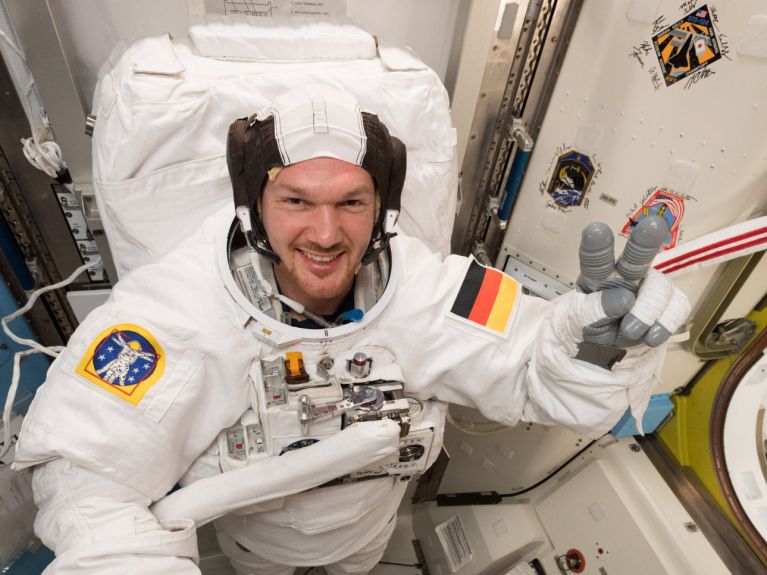
- Germany is a strong European partner to the ISS
The ISS is a significant international technology project with active German participation. Germany currently provides 39 per cent of European participation.
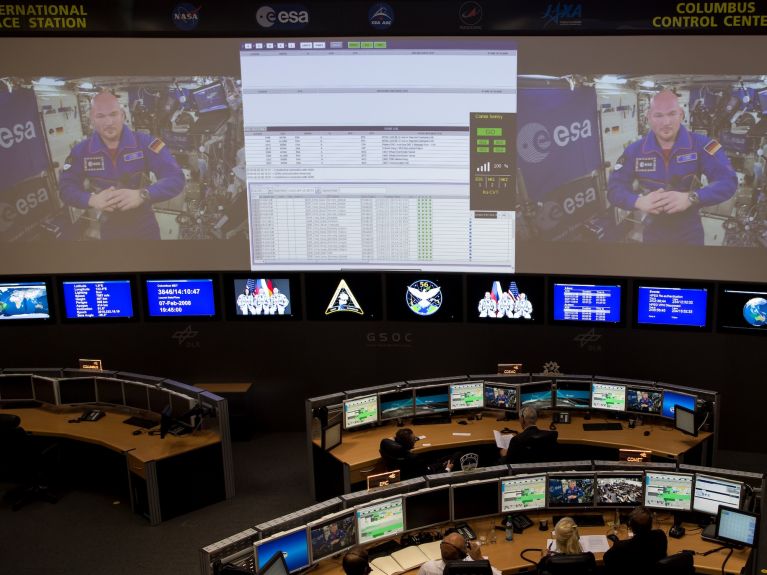
- Germany is a prime location for European space research
Many national and international institutions that conduct space research are based in Germany. The ESA operates its astronaut training centre in Cologne and its European Space Operations Centre, the ESOC, in Darmstadt. The DLR is Federal Germany’s research centre that conducts aerospace research.
- Germany is taking part in NASA’s Artemis II moon mission
Germany is playing an important part in NASA’s Artemis programme, which will see humans return to the moon. Germany is supplying key components to the Artemis II mission - the first crewed flight to the moon in over 50 years - including the service module for the Orion space capsule and important navigation sensors.
- Germany’s space travel industry is seeing dynamic growth
The German aviation and space travel industry is one of the country’s most important high-tech sectors. In 2024, it generated a total revenue of around 52 billion euros and employed some 120,000 people.


