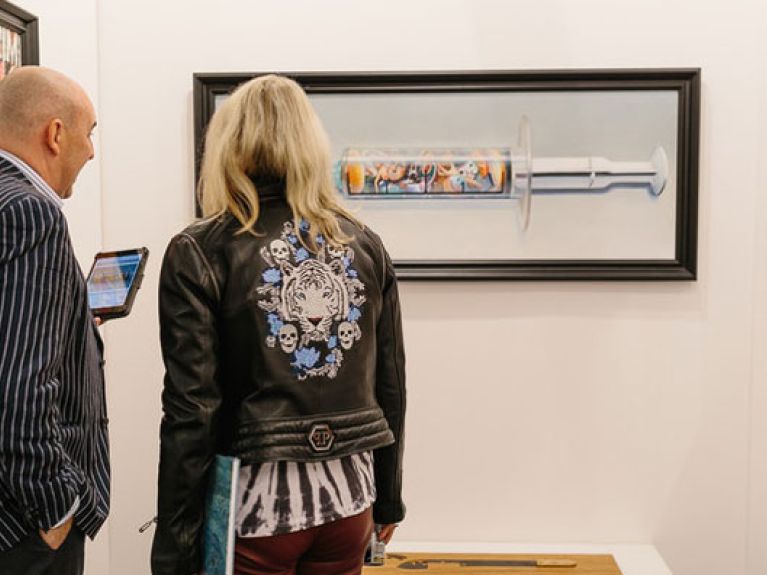
Stage for Taiwanese art
Art Fair Cologne is creating a special dedicated “Taiwan Contemporary Art Show”.
The art market is swiftly becoming a world market and conquering an ever greater number of regions. On the heels of the huge “China8” show with some 500 works by 120 contemporary Chinese artists in the Ruhr region, in September Cologne’s Art Fair is showcasing the Taiwanese art scene. Taiwanese art has in recent decades constantly repositioned itself: After a long period of work in traditional Chinese genres such as calligraphy, the focus on Western and Japanese styles led to a new experimental phase characterised by installations and video art.
New positions
One representative of this trend is Chen Chieh-jen, born in 1960. He created a series of video works in an effort to visualise the neoliberal contemporary reality in Taiwan. In Germany, his installations “Empire’s Borders I and II” went on show in spring 2015 in Berlin’s Neue Gesellschaft für bildende Kunst (nGbK). The exhibition “Forbidden Images – Control and Censorship in East Asia’s Democracies” is also dedicated to his compatriot, Ching-Yao Chen, born in 1976. Themes often repeated in his oeuvre are games of disguise, pretence and collage. His “Soap Bubble Commando” is a prime example of this other trend in contemporary Taiwanese art, which seems both playful and amusing. The at times cartoon-like thrust of this art is epitomised by Teng-Yuan Chang’s garishly colourful albums. In many of them, strange figures with parrot heads and white lab coats dissect the world like extra-terrestrial scientists.
Photographer Ching-Hui Chou creates theatrical, surreal settings, where his figures embody the roles of modern civilisation in an absurd manner. Tang Jo-Hung paints technically perfect oils, such as still lifes, in a seemingly traditional Western idiom. Only on closer inspection do we see that there is an unsettling level to these images. Ida Losin is inspired by the art of indigenous peoples. She focuses on ethnic identity in her portraits. The Cologne exhibition does not sidestep traditional Chinese calligraphy entirely, as it emerges among others in the zestful paintings of Hsu Yung-Chin, who has been experimenting with brush and ink for over 40 years now.
13th Art Fair Cologne – from 24 – 27 September 2015
Any questions? Search with our AI assistant
- How does the political system in Germany work?
- How much does it cost to study in Germany?
- Which traditions and festivals are typical of Germany?
- What is the best way to learn German?
- Who governs Germany?
- Which industries are particularly important to the German economy?
- Which political parties are there in Germany?
- Why is Germany considered a leading exporting nation?
- How do I apply to study in Germany?
- What opportunities does Germany offer international startups?
- How diverse is the German cultural scene, and what role do art, music and literature play?
- What cultural differences are there between Germany's regions?
- Which degree programs and universities are especially popular in Germany?
- How can I find a job in Germany as an international skilled worker?
- Why was Germany divided after World War II?
- What requirements do I need to meet to be allowed to work in Germany?
- Do I need to speak German to work in Germany?
- How high is the cost of living in Germany?
- How does the German healthcare system work?
- What should I keep in mind when moving to Germany?
- How did reunification come about?
- How does Germany deal with its National Socialist past?
- What level of German do I need to study in Germany?
- In which countries is German spoken?