
The man in the hat who made Germany laid-back
Udo Lindenberg is a musician, cult figure and political voice. He made rock music with German lyrics popular and has been a defining influence for decades. He now turns 80.
 Wolf Zinn
 Anyone who wants to understand Germany should be familiar with Udo Lindenberg. Celebrating his 80th birthday on 17 May 2026, the singer is a very German cultural phenomenon. First, there is his distinctive appearance: always with his hat pulled low over his face, sunglasses, relaxed gestures and an elastic, almost dancing gait. In Germany, his silhouette is instantly recognisable. Another trademark is Lindenberg’s rough-edged, laid-back way of speaking: with a slurred, nasal voice and plenty of wordplay, he fires off one line after another, which can be very funny and a little exhausting – Lindenberg always sticks to his own personal style.
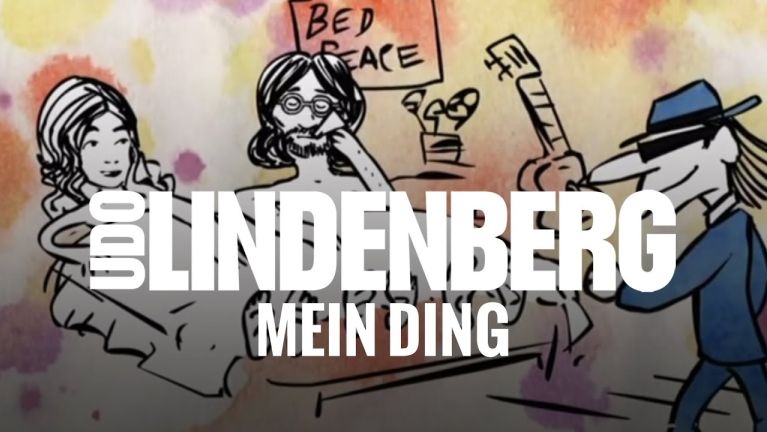
Dieses YouTube-Video kann in einem neuen Tab abgespielt werden
YouTube öffnenThird party content
We use YouTube to embed content that may collect data about your activity. Please review the details and accept the service to see this content.
Open consent formHis motto "keine Panik" (“no panic!”) elevates calmness to a way of life – it became a catchphrase in Germany as early as the 1970s. His casual tone also appears in many of his song lyrics, but “Panic Udo” has another side, too: he tells moving stories, and he’s unsparingly honest as he explores themes of longing such as love, freedom and wanderlust. He also takes a political stand: supporting peace and combating right-wing extremism. All of this is borne by a wide range of musical styles – from catchy pop melodies and driving rock tracks to gentle ballads and complex arrangements.

One thing is certain: if you did a street survey in Germany, you would easily find people who could sing or quote Lindenberg songs off the cuff – from children to old-age pensioners. But how did this phenomenon come about?
How a provincial boy made pop history
Born and raised in modest circumstances in the small Westphalian town of Gronau, the glamorous rock star life was not handed to Lindenberg at birth. Aged just 15, he left the provinces and immersed himself in the Hamburg music scene – first as a drummer, then as a singer, and finally as a brand in his own right. Lindenberg describes his “master plan” with a healthy dose of grand ambition: “I want life to follow my dreams, not the other way around.”
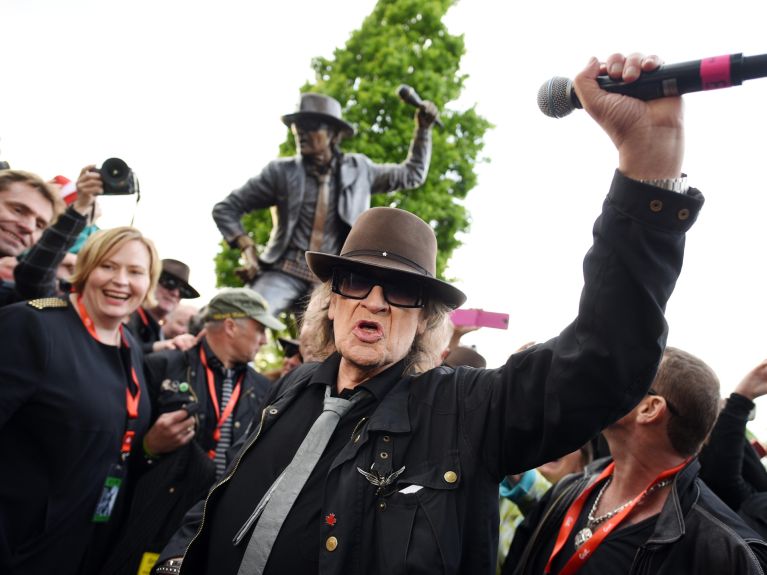
In the early 1970s, he started doing something that is taken for granted today but was pioneering at the time: he sang in German rather than English. Up until then, this had largely been reserved for lighter Schlager, yet Lindenberg saw himself as a rocker. And he succeeded in making German lyrics sound neither stiff, preachy, sentimental nor embarrassing. Quite the opposite, in fact. They feel totally laid-back, as if Lindenberg had just scribbled them on a napkin while the band next door was starting to play – and it’s precisely this that gives them pace, wit and authenticity.
“Little Udo” and East Germany
This blend proved popular across Germany – also in East Germany, the former German Democratic Republic (GDR). But the leaders of the socialist dictatorship viewed everything that came from the West with great suspicion, quickly labelling it as “hostile and decadent”. This applied particularly to Lindenberg’s work, since his songs also addressed Germany’s east-west divide. In his 1973 track Mädchen aus Ost-Berlin, he tells the autobiographical story of two young people who want to live out their love despite the border regime – with the refrain: Wir wollen doch einfach nur zusammen sein (“We just want to be together”).
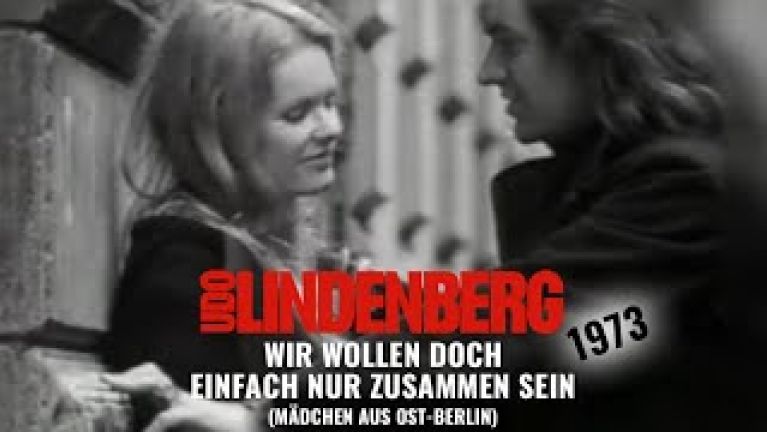
Dieses YouTube-Video kann in einem neuen Tab abgespielt werden
YouTube öffnenThird party content
We use YouTube to embed content that may collect data about your activity. Please review the details and accept the service to see this content.
Open consent formSonderzug nach Pankow from 1983 is Lindenberg’s provocative musical response to being denied permission to perform in the GDR for years. In this highly successful song, he addresses GDR leader Erich Honecker directly, calling on him to finally allow “little Udo” to perform in East Germany, spicing up the lyrics with plenty of irony and disrespect towards Honecker, who he calls “Honey”. But Honecker had no sense of humour: the song was banned in the GDR. Paradoxically, Lindenberg was nevertheless allowed to perform at the Palace of the Republic in East Berlin in October of the same year. The GDR leadership was in a dilemma: the singer was seen as a symbolic figure of the West German peace movement – and the socialist rulers wanted to appropriate this for their own ideological aims.
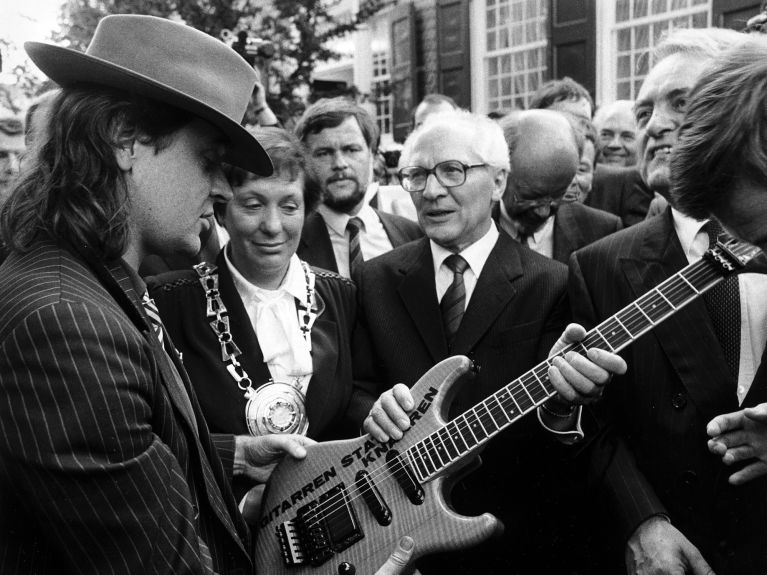
Lindenberg and Honecker finally met in Wuppertal in West Germany in September 1987, two years before the fall of the Berlin Wall. It was the first official visit by a GDR head of state to West Germany. Lindenberg presented Honecker with an electric guitar as a symbol of peace.
No panic about getting older
Udo Lindenberg has also been successful as a painter for many years. His works are colourful, sketch-like and humorous – in small scenes and quick strokes he creates a distinct world that is not concerned with art theory but with impact.
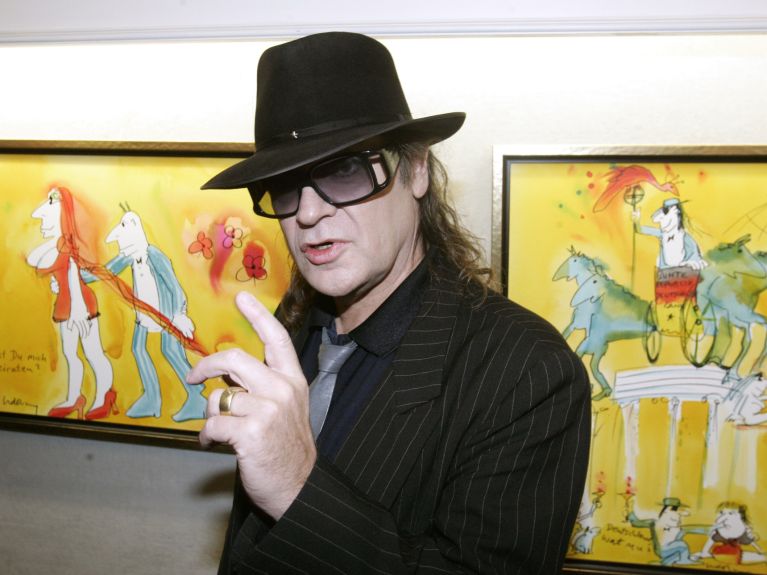
With around 60 albums, countless shows, films and documentaries about him and featuring him, musicals, books and numerous awards and honours, Lindenberg has built a unique career – despite numerous excesses and alcoholism.
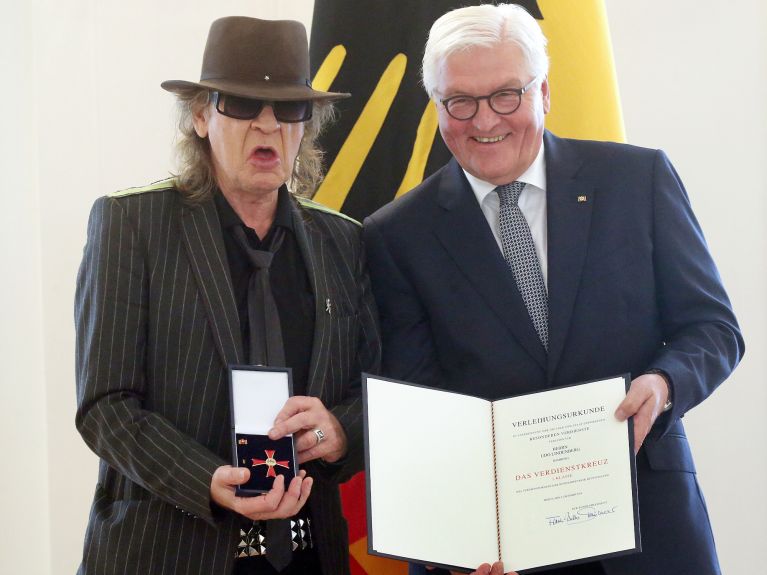
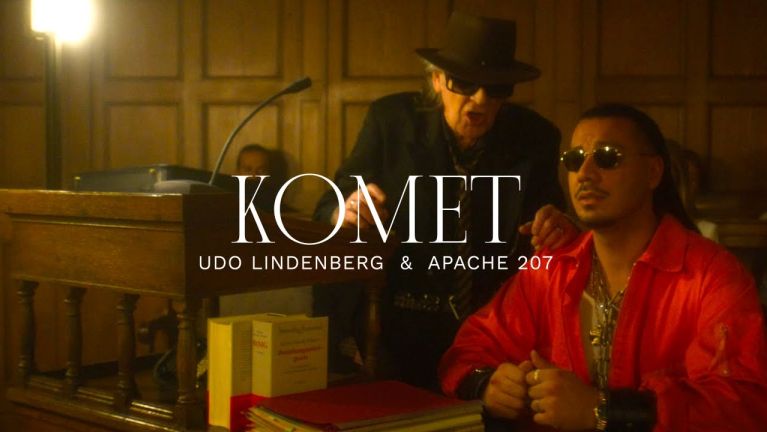
To many German artists he is an icon, an inspiration and a role model. Even at an advanced age, Lindenberg not only retains a striking presence but continues to reach a large audience, primarily in the German-speaking world. In 2023, he landed a number one hit with Komet, together with the rapper Apache 207.
Dieses YouTube-Video kann in einem neuen Tab abgespielt werden
YouTube öffnenThird party content
We use YouTube to embed content that may collect data about your activity. Please review the details and accept the service to see this content.
Open consent formAsked about his 80th birthday, Lindenberg says he thinks the number “isn’t that sexy”. But he immediately adds: “It’s not just the young who are wild – you can be old and wild, too. I remain curious and on the lookout.”


