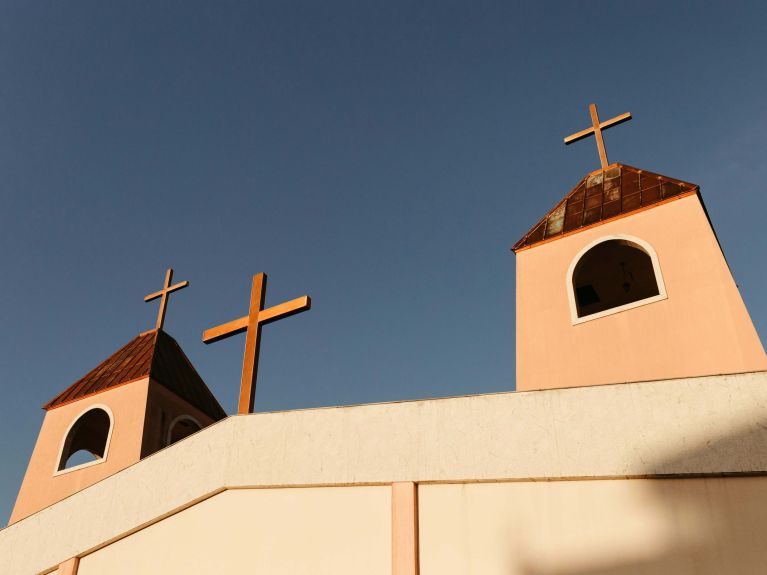
Do churches have too many privileges?
Nearly half of Germans have no religious affiliation. Churches enjoy privileges nonetheless. Which reforms are secular associations demanding?
 Wolf Zinn
Germany has no state church and is ideologically neutral according to its Basic Law. Nonetheless, the churches do exert influence on education, enjoy special rights and receive substantial public funding. “Policymakers must ensure that no religion can place itself above the laws that apply to everyone,” says Michael Schmidt-Salomon, spokesperson of the Giordano-Bruno-Stiftung – one of numerous organisations and associations that represent the interests of nonbelievers in Germany. They want to see church privileges abolished and are calling for non-discriminatory employment law and ideologically neutral education.
Secular associations have around 400,000 members in total, which is a fairly small number given how many people in Germany have no religious affiliation: according to the Research Group on Worldviews in Germany (fowid), 48 percent of the population already described themselves as having no religion at the end of 2025, while only 44 percent still belonged to the Catholic or Protestant Church – a figure that is continuing to decline.
Public funding, church rules
Among other things, the associations criticise the close ties between the state and churches in Germany when it comes to their funding. For example, the state inland revenue offices collect church taxes in return for a fee. Because church members can set this tax off against their income, the state loses out on billions in tax revenues. Furthermore, the state-level budgets for 2026 include nearly 670 million euros in state funding for churches - funding that is not tied to any particular purpose.
Many church-run hospitals, schools, nurseries and social organisations are financed for the most part by public funding and social insurance payments. Nonetheless, church organisations, which with around 1.8 million employees are among Germany’s largest employers, can dictate particular requirements in terms of religious affiliation, loyalty and conduct by invoking their right as a church to self-determination. This can entail professional disadvantages for those with no religious affiliation, even though court verdicts are increasingly limiting such disadvantages.
Freedom of belief begins with children
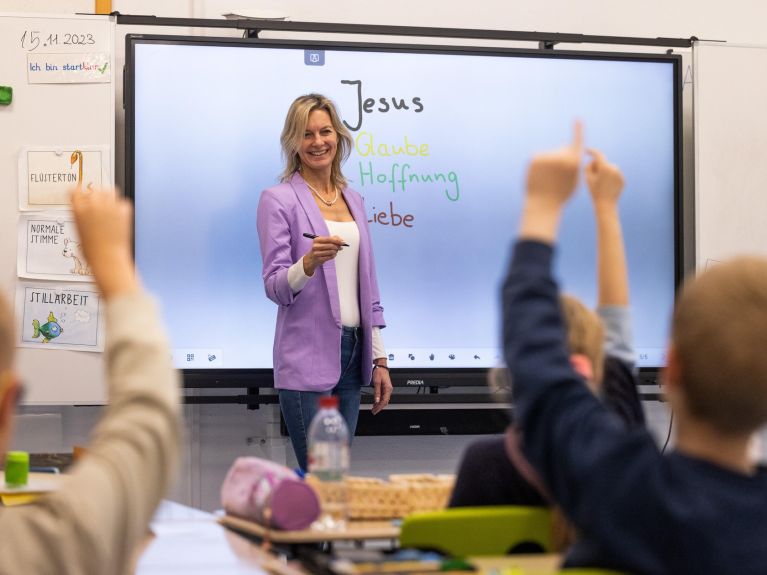
Church critics also believe that there is too much religious influence in education and that this already begins at a very young age - churches run nearly a third of all nursery schools in Germany, which are also open to the children of nonbelievers and those of other faiths. Many schools divide children up according to denomination for religious instruction, even though a GfK survey in 2022 found that around 72 percent of respondents would prefer joint ethics classes - in turn, two thirds of them are in favour of additional voluntary religious instruction.
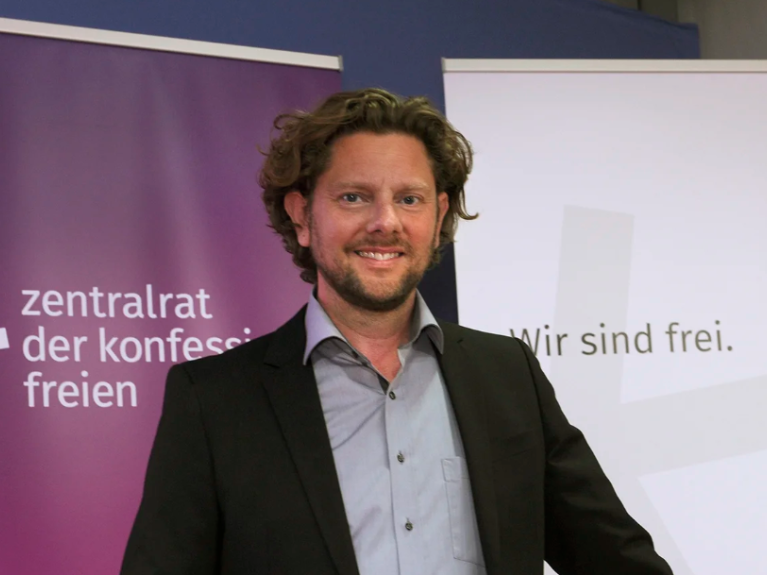
The baptism of infants also raises questions about their right to religious self-determination. “There’s no such thing as religious children, there are only children of religious parents,” says Philipp Möller, chairman of the Zentralrat der Konfessionsfreien, the central council for nonbelievers. He believes that baptism makes children church members without their consent. Only once they reach the age of 14 are adolescents allowed to leave the church of their own volition - even against the will of their parents.


