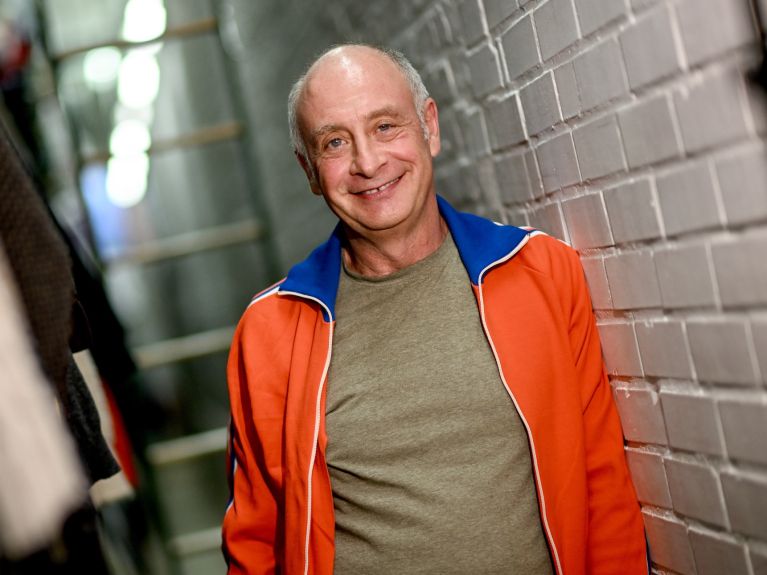
“They can say anything they like, even things that shock me”
Franco-German comedian Alfons talks to young people about extremism and democracy. What did his grandmother teach him about reconciliation?
 Interview: Ina Brzoska
Alfons, you were born in France and are now also a German citizen. What does Franco-German friendship mean to you personally?
I used to think it was a boring subject. We’re friends – everyone knows that. Schoolchildren often say the same thing: “Oh, not that again!” But it’s actually remarkable that this friendship has become something we take for granted. We weren’t just enemies; we were arch-enemies and fought many wars against each other. The fact that our friendship now seems almost boring is an extraordinary achievement on the part of earlier generations.
Could this reconciliation serve as a model for other countries?
Yes, absolutely! An article I wrote about Franco-German friendship was once published with Arabic subtitles. Afterwards, I received emails from Iraq and other countries. The message was essentially this: if you managed to become friends after being arch-enemies, then so can we.
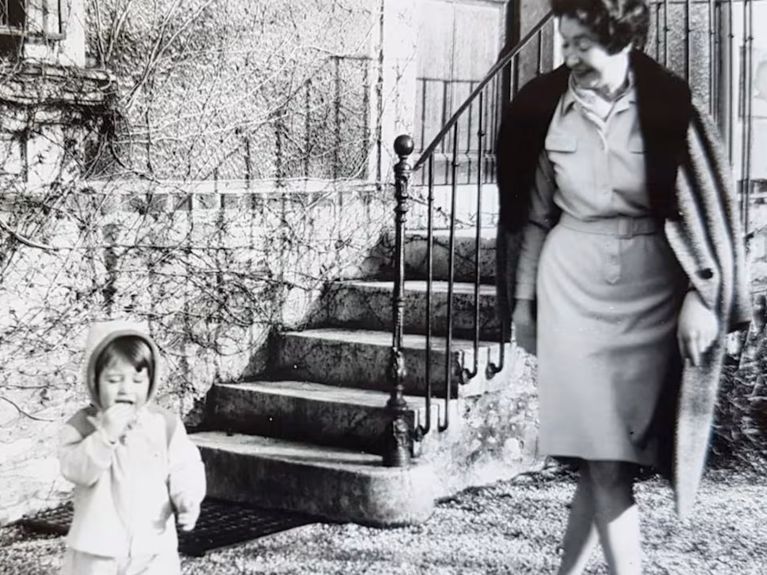
Your grandmother survived Auschwitz. What did she teach you about reconciliation?
My grandmother managed not to hate the Germans. As a child, I couldn’t understand that. I kept asking her why she felt no hatred after everything she had been through. She would simply reply: “You’ll understand when you’re older.” Today, I understand her attitude better. She wanted to prevent anything like National Socialism from happening again. To do that, she believed it was important not to condemn entire nations, but always to see the individual human being in others.
Disagreement is part of democracy. What matters is that we treat one another with respect and listen to each other.
These days, you talk to young people about democracy. What do you hope to achieve?
Through my Grand-Mère Foundation, I want to raise young people’s awareness of democracy. School classes first come to see my stage show. The following day, I spend two hours discussing it with them. They can say anything they like, even things that shock me. Sometimes we have heated arguments. But disagreement is part of democracy. What matters is that we treat one another with respect and listen to each other.
Dieses YouTube-Video kann in einem neuen Tab abgespielt werden
YouTube öffnenThird party content
We use YouTube to embed content that may collect data about your activity. Please review the details and accept the service to see this content.
Open consent formIs there an encounter that has particularly stayed with you?
Once a pupil said he wished Germany were a dictatorship. The others were outraged, but I insisted that we hear him out. Then I asked whether anyone had ever lived under a dictatorship. Three girls from Eritrea, Syria and China spoke about their experiences. By the end, we all had tears in our eyes. After the others had left, the boy came up to me and said: “Thank you. I think I might have to reconsider.” That was when I knew why I do this work.
What can we all do to protect our democracy?
No constitution in the world can be strong enough to protect us on its own. Ultimately, it is we, the citizens, who protect democracy. So my most important piece of advice is: don’t isolate yourselves. When you keep your worries to yourself, you can sometimes feel like a deer caught in the headlights. You can see the danger but have no idea what to do. As soon as you talk to other people about it, you can work out together what to do. Together we are stronger.
Emmanuel Peterfalvi, born in Paris in 1967, is a Franco-German comedian and television presenter who performs under the stage name Alfons. He has lived in Germany for more than 30 years and became a German citizen in 2017. Through his Grand-Mère Foundation, which promotes humanity and democracy, he works to counter extremism, particularly in schools.


