Democracy begins in the classroom
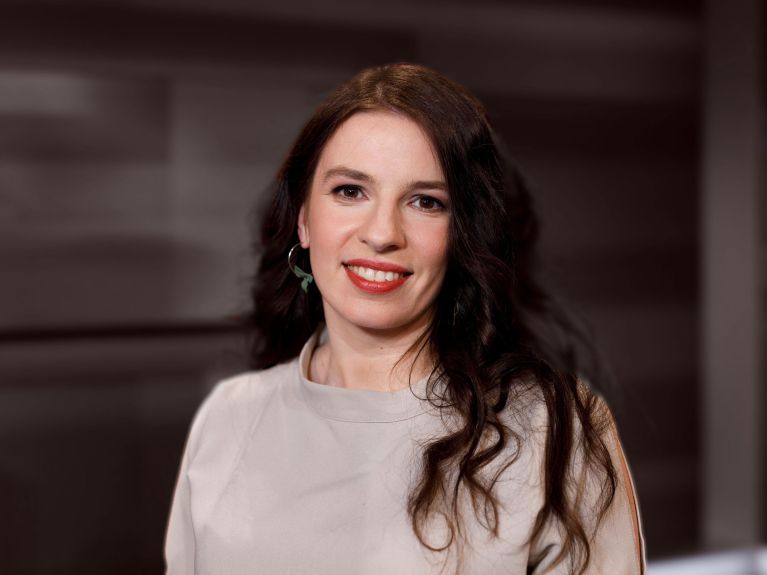
Marina Weisband is teaching children democracy by engaging them in debates, rather than instructing them. A core message is that their young voices count.
 Wolf Zinn
 Democracy doesn’t begin in polling booths, political parties, parliaments or protest movements, but in families and in the classroom. For Marina Weisband, this is a key political question: only if children and young people realise that their voices are being heard will they understand the value of democratic processes.
Weisband, born in Kyiv in 1987, grew up in a Jewish family and moved to Germany with her parents in 1994. A psychology graduate, she now lives with her family in Münster, has German and Ukrainian citizenship and works part-time as a freelance artist. She became a household name in Germany, first as the political director of the Pirate Party and later as a sought-after guest on political chat shows, an author and a speaker at events. Ever since Russia invaded Ukraine, she has frequently talked publicly about the war – in her capacity as someone whose biography is associated with both countries.
Hands-on democracy
Her most important project is entitled aula. Weisband created this digitally supported participation concept for schools and is continuously refining and expanding it. It aims to give children and young adults a say in their everyday lives: about rooms, rules, break-times, purchases, events. Not in the sense of a simulation game, but as a real experience of responsibility.
“I never had the feeling that I was important or had a voice that could make a difference,” Weisband once said about her own time at school. This is what prompted her to come up with an alternative model. aula is about “radically taking pupils seriously”. Even absurd suggestions are not simply dismissed, but investigated: What are the arguments in favour? What is it going to cost? Is it compatible with the rules? This allows the youngsters to experience democracy: they can listen to each other, explain their thoughts, argue, vote, agree to compromise and find solutions.

Fighting impotence
When it comes to the debate about children and social media, Weisband is concerned above all about participation. She certainly sees the potential dangers - addictive mechanisms, hatred, bullying, fake news and radicalisation. However, she believes it is fundamentally wrong to seek to protect children and young adults without asking and involving the youngsters in question, “because you can only learn about responsibility when you are given responsibility”.
At Buchenwald, a former Nazi concentration camp near Weimar, Weisband said in 2025: “We must not only defend democracy, we must expand it!” This is also the essence of her opposition to the far-right party AfD, which is enjoying growing support in Germany. Weisband doesn’t see giving up as an option. In an interview, she says: “One must stay and fight against the fascists.”


