Ready for the field: training for UN staff in crisis areas
Near Stuttgart, UN relief workers are taught to remain calm in a crisis - and how to approach unwelcoming villagers or armed guards at checkpoints.
 Miriam Hoffmeyer
In the early morning light, a small group has gathered on a meadow that is still damp with dew: the village elder, two traders, women in long robes. They are arguing because the situation is catastrophic: there isn’t enough water or food, not even for the indigenous population or the internally displaced people who have been living here for years. Now civil war has broken out in the neighbouring country and hundreds of refugees are pouring across the border. When a United Nations team approaches the group, they are met with distrust: “Who are you? You are not welcome.”
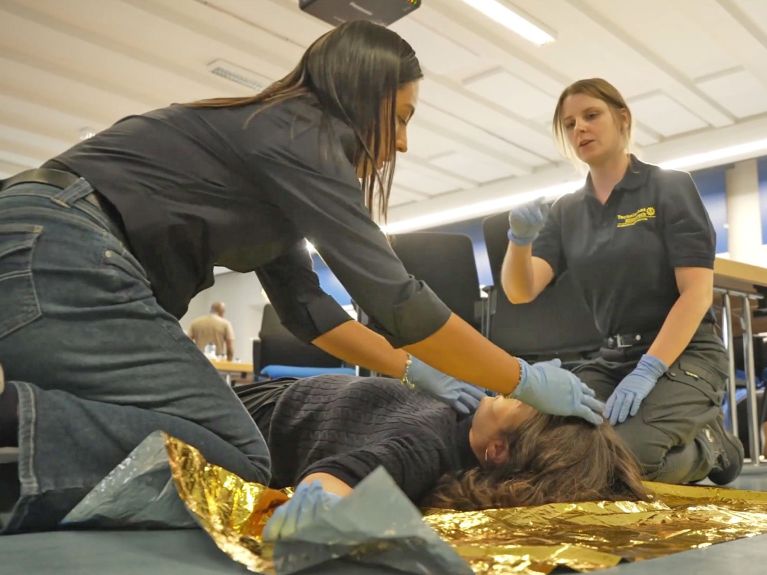
This encounter in October 2026 didn’t take place in a crisis region but in Neuhausen auf den Fildern, a small town to the south of Stuttgart. For their Emergency Management Partnership Programme (EMPP), four UN organisations are for the first time jointly training 40 members of staff there in preparation for emergency humanitarian missions. The training centres around realistic simulations. The seven-day workshop aims to give participants the best possible training to provide assistance during the first days and weeks of a crisis.
THW as host and partner
The Federal Agency for Technical Relief (THW), Germany’s civil defence and disaster relief organisation that provides emergency technical assistance in Germany and abroad and is mainly volunteer-based, is hosting and partnering the workshop.
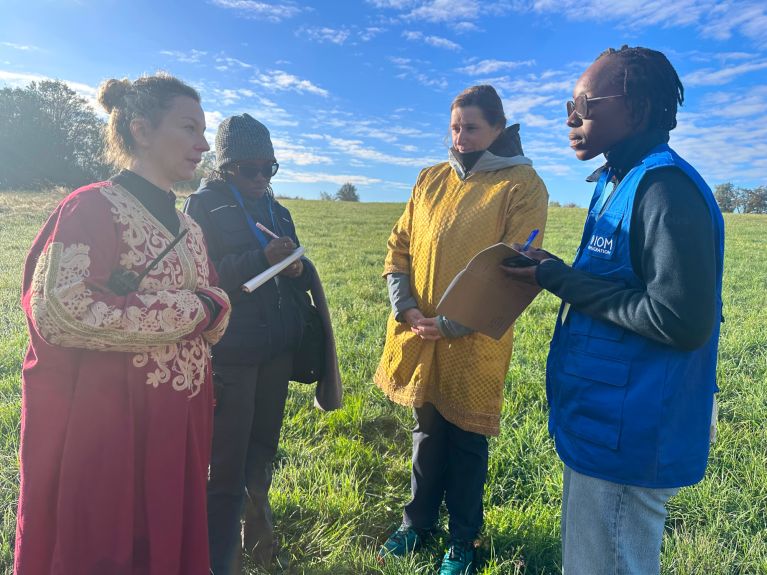
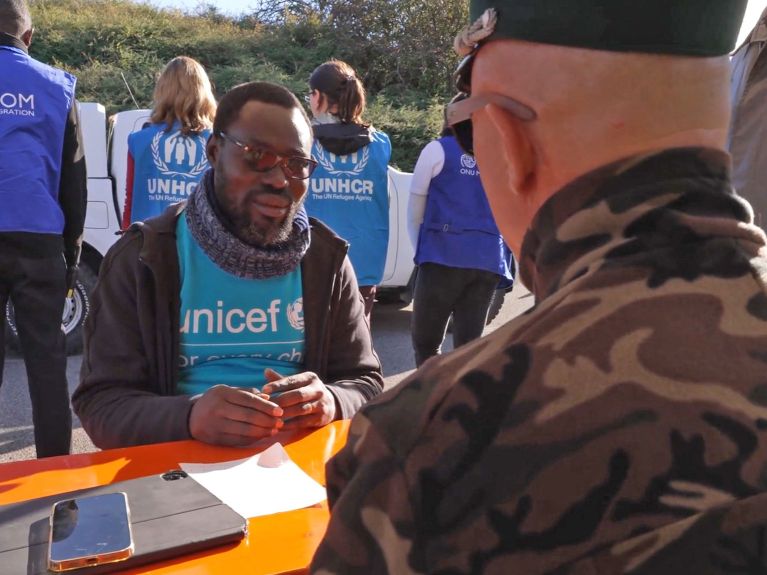
Local volunteers from Neuhausen and the surrounding area are also the actors taking part in the simulated village assembly in the field. By showing a mixture of respect and perseverance, the UN relief workers manage to get into conversation with the initially unwelcoming villagers. Michèle Nyamokami takes the women off to one side to find out what their most pressing concerns are. One of them describes how dangerous it is - especially for women - to walk the long distance to the nearest functioning water point and begs for a solution to be found. “We won’t let you down,” replies Nyamokami and makes a note of the woman’s mobile phone number.
It’s very important to talk directly to the people affected by a crisis.
“It’s very important to talk directly to the people affected by a crisis. They themselves know best what they need,” says Michèle Nyamokami. Employed by the International Organization for Migration (IOM), she works in a peacekeeping programme in West Africa. She also had a number of ideas during the simulation, she explains: “One could train young people to repair and maintain the water point in the village.”
Before the EMPP was established, the IOM would train its own staff for such missions - as would the UN Refugee Agency (UNHCR), the UN Children’s Fund (UNICEF) and the World Food Programme (WFP). “It really makes sense to design the training courses together given that the organisations also work together on the ground,” says Jeff Wilkinson, who is responsible for capacity building in emergency humanitarian assistance at UNHCR. “What is more, the fact that the organisations specialise in different areas makes sharing experience and knowledge extremely valuable - not only between participants but also between the instructors.”
German support is more important than ever these days.
The workshop is also one contribution to the UN80 reform programme. Launched in 2025, its aims include leveraging synergies in response to the UN’s funding problems. Germany is one of the UN’s leading donor countries. “This support is more important than ever these days,” says Wilkinson. He also says that he’s very grateful for the support received from the THW. The THW not only organises and funds meals, vehicles and the camp where the participants spend the night in tents, but also handles administrative matters, visa issues and liaison with German authorities.
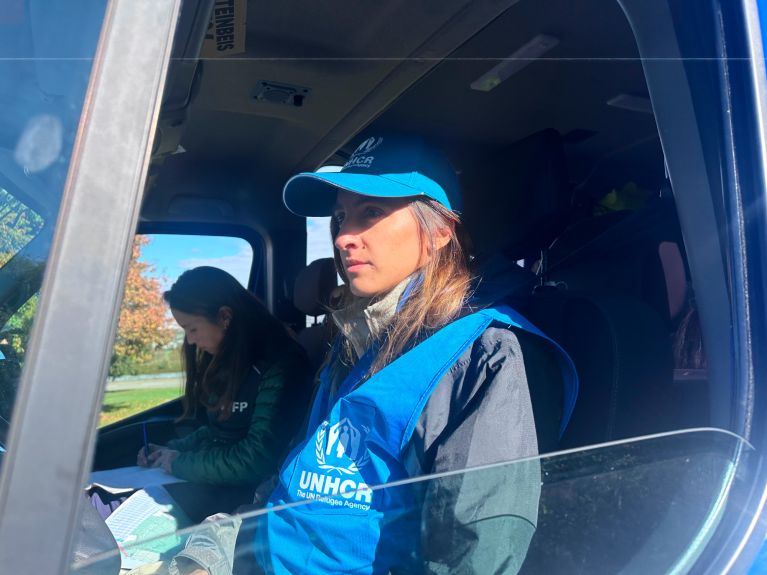
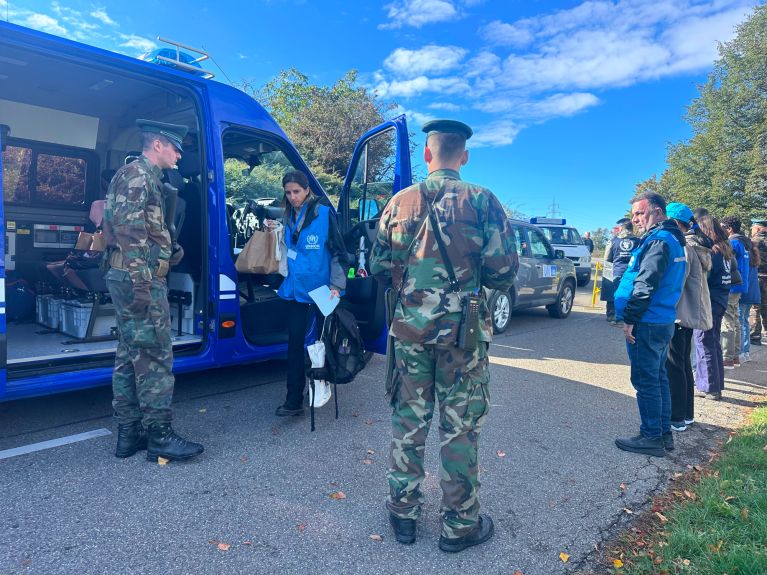
Why such liaison is necessary becomes apparent during another simulation in which a public driver training facility is transformed into an army checkpoint in the fictitious crisis-stricken country of Telan. Five glowering THW volunteers wearing camouflage uniforms and their leader in a officer’s overcoat have taken up position and are carrying genuine machine guns and pistols. “Get out! Everyone in a line!” barks one of them when the UN team approaches in two vehicles. Somewhat nervously, the ten women and men line up next to one another. When the vehicles are to be searched, Evie Prastakou, the driver of the van, asks very politely whether she could be present during the search. She is given permission and herself opens all the bags and rucksacks ready for inspection.
The situation at the checkpoint felt very realistic.
“The situation at the checkpoint felt very realistic,” says Prastakou, a donor relations officer at UNHCR. “We learn that it is crucial to remain calm: first observe and understand what’s happening, then decide and act. This mantra naturally sticks in your mind much better if you’ve actually practised it in this kind of situation.” Prastakou has also worked in a refugee camp in Greece for UNHCR. “I saw a great deal of suffering there. That motivates me to do whatever I can to help,” she says.
Anyone on the UNHCR Emergency Response Team’s roster has to be ready at all times to be sent within 72 hours to a crisis region anywhere in the world and then to stay there for three months. This doesn’t put Evie Prastakou off: “As a member of the Emergency Response Team, I work wherever I am needed the most.”


