How the asylum procedure works in Germany
From initial reception to residence permit: a step-by-step guide for asylum seekers in Germany.
 Kim Berg
 Can I apply for asylum in Germany?
You can apply for asylum in Germany if you are subject to political persecution in your home country or face serious threats to life, limb or liberty (e.g. as a result of war or torture).
Your prospects of being granted asylum depend to a large extent on your country of origin and your individual reasons for fleeing: people from countries with a high level of persecution or conflict have better chances of success, whereas applicants who cannot provide plausible grounds for protection tend to be rejected.
How do I apply for asylum in Germany?
You report to an initial reception centre or authority and state that you wish to apply for asylum.
In certain cases, your application for asylum may already be examined there in an accelerated procedure. If your application is rejected, you can be sent directly back to your country of origin from the external border.
Only if it is deemed that your application warrants further examination will you be sent on to an EU member state.
If your procedure is to take place in Germany, you will be registered, your fingerprints will be taken and you will be sent to a competent reception facility.
Who decides in Germany whether I will receive asylum or protected status?
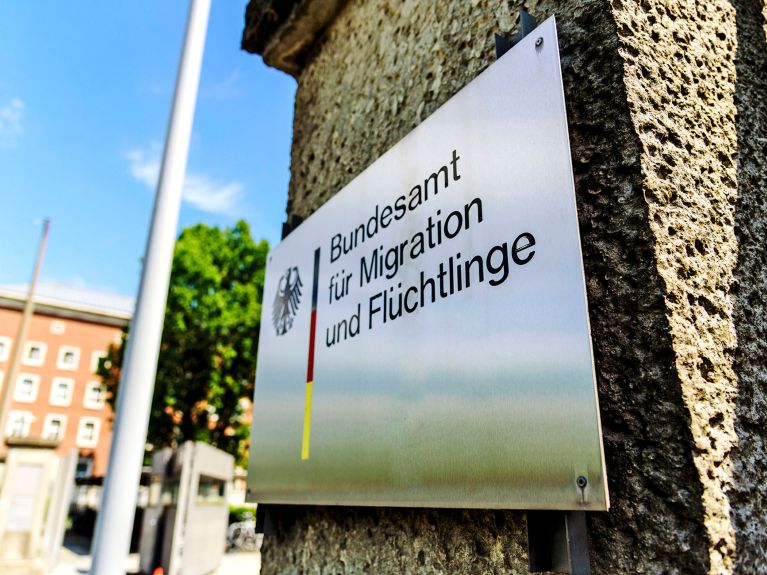
In Germany, the Federal Office for Migration and Refugees (BAMF) decides whether you will be granted protection. The BAMF examines whether one of the forms of protection applies (e.g. asylum, refugee protection, subsidiary protection or ban on deportation).
How do I prepare for the BAMF asylum hearing?
You will be invited to a personal interview at the BAMF. During this interview, you will explain your reasons for fleeing: What happened? When and where did it happen? Who threatened you? Why can you not return?
The BAMF will examine whether the information you have provided is coherent, detailed and plausible. It will compare your statements with documents and with information you have previously provided (for example during registration or at the border).
Which documents and proof do I need for the asylum procedure?
It is helpful to have identity documents, letters or threats, photographs, screenshots or chats, evidence of party membership or religion and medical certificates. If you are unable to provide much documentation, clear details and consistent information will be especially important.
What happens if I do not have a passport?
It is still possible to apply for asylum. However, you will have to assist the authorities with establishing your identity and procuring the necessary documents. A failure to provide such assistance can negatively affect the outcome.
When does BAMF initiate a Dublin procedure and what does it mean for asylum seekers?
The BAMF initiates the Dublin procedure if there are indications that another Dublin state (EU member state or, as a rule, Norway, Iceland, Switzerland or Liechtenstein) may be responsible for processing the asylum application. This is the case if your fingerprints have already been registered in another state where you have already applied for asylum, or if you have a visa or other residence permit in a Dublin state. In this case, you may then be returned to that country.


